


David De Haen
b. 1585, Amsterdam
d. 1622, Rome
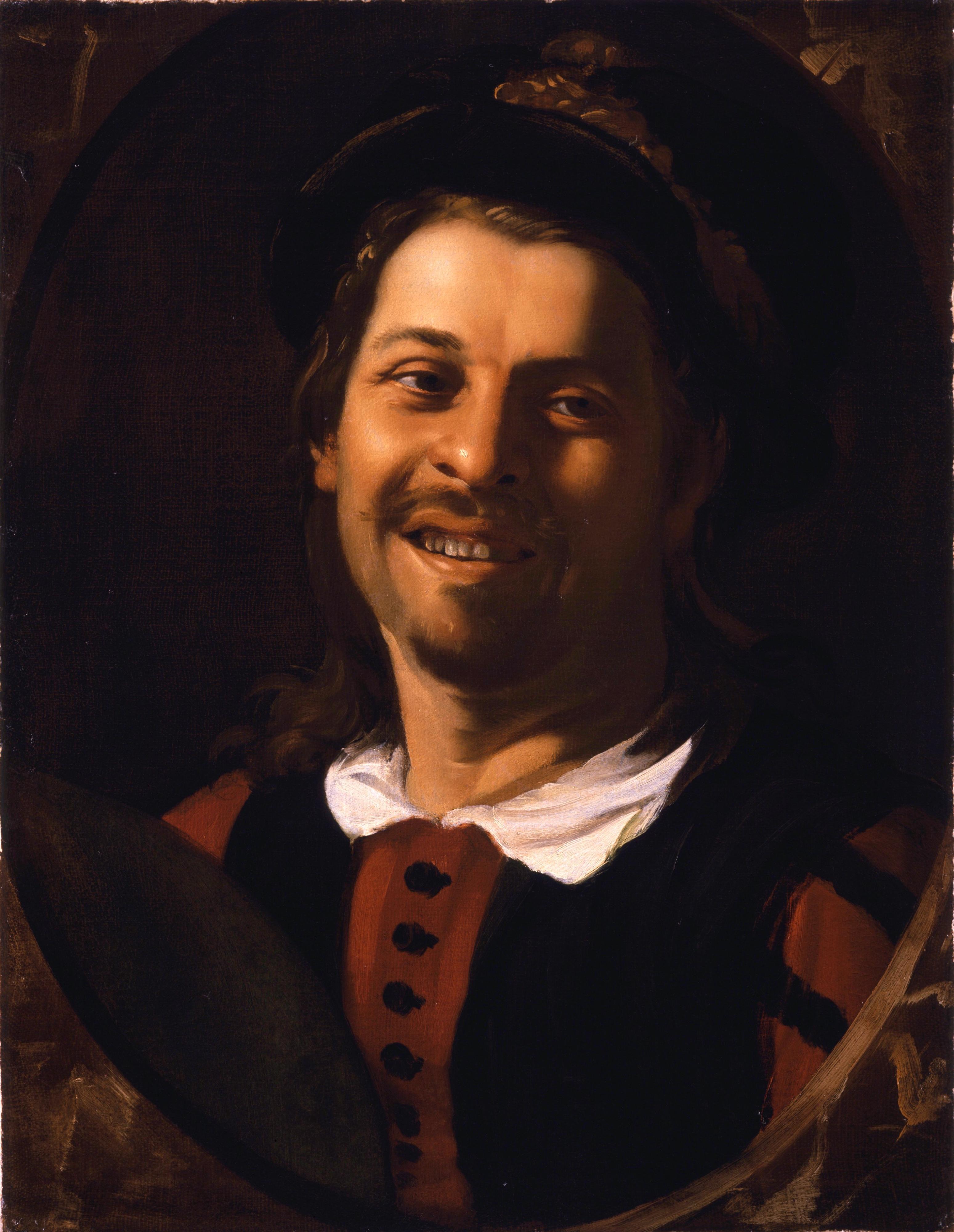
Self-Portrait
1617–19
Oil on canvas
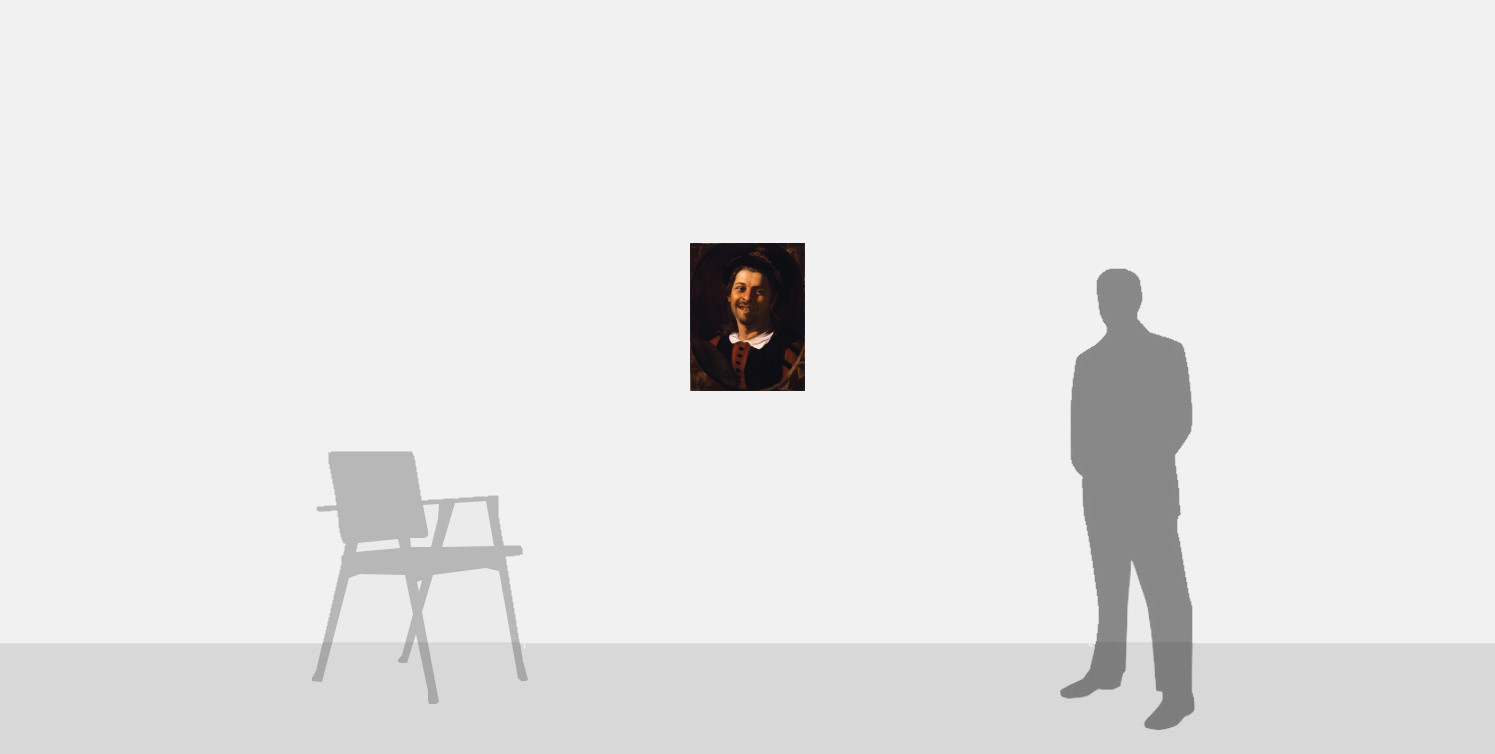
65.8 x 51 cm (25 7/8 x 20 1/8 in.)
Provenance
Sotheby’s, New York, 17 May 1995, lot 89a,
with Piero Corsini, New York, 1995,
with Galerie Pitchaul, Paris, 1999,
Bonhams, London, 7 December 2005, lot 68,
with Marco Voena, London-Milan,
Koelliker collection, Milan.
Literature
C. Grilli, 'David de Haen, Dutch painter in Rome', Paragone XLVIII, 563 (99), January 1997, p. 43, fig. 38.
Etats d'Ame. Mirror and Soul, exhibition catalogue, Gallerie Pitchaul, Paris, 2000, pp. 42–43.
C. Grilli in Caravaggio e l’Europa, exhibition catalogue, Palazzo Reale, Milan, 2005, p. 497.
C. Grilli in French, Dutch, and Flemish Caravaggesque Paintings from the Koelliker. Part II, exh. cat. Turin, 2007, pp. 30−33, no. 8, and p. 34, fig. 1.
G. Papi, Ribera a Roma, Soncino, 2007, p. 198 fig. 33.
C. Grilli in G. E. Sperone and M. Voena, eds., Portraits / Self-Portraits from the 16th to the 21st Century, exh. cat. Robilant+Voena at Sperone Westwater, New York, 2012, pp. 42–43.
C. Grilli in In Pursuit of Caravaggio, Robilant+Voena, exh. cat. Robilant+Voena, London, 2016, pp. 54–55.
Description
Recorded by Giulio Mancini in his Viaggio di Roma per vedere le pitture (1626), David de Haen was likely one of Dirck van Baburen's earliest collaborators, and he is listed in records of 1619/20 as living with Baburen in the parish of Sant'Andrea delle Frate. The details of his life are scant. We can suppose he was born in Amsterdam since a drawing exists of the Flaying of Marsyas, now in the Gabinetto degli Uffizi, Florence, which is signed “David Han da Amsterdam”. He died in Rome on 31 August 1622 although the date of his arrival in the city is not known, and neither is that of his birth, though scholars have placed it around 1585. His surviving oeuvre, which has only recently been rediscovered, consists of only about ten pictures. His first known work, signed and dated 1616, is a portrait of a gentleman now in a private collection in Amsterdam. Between 1617 and 1619 he worked with Baburen on the chapel of San Pietro in Montorio, in which he completed a lunette with the Mocking of Christ, and in the same period he painted a Prometheus for Gaspar Roomer in Naples, now in a private collection in Rome. He later worked for Pietro Cussida, Spanish envoy to Rome, having already decorated the Cussida chapel in San Pietro in Montorio and later making a number of replicas of the altarpiece for it (Centraal Museum, Utrecht, Bob Jones University Art Gallery, Greenville, South Carolina, University of Michigan Museum of Art, Ann Arbor, and private collection, Milan). De Haen also painted a series of the Evangelists in La Seo cathedral in Zaragoza, Spain, at Cussida’s behest. He died of a high fever in the Roman palazzo of the MarcheseVincenzo Giustiniani, for whom he had painted an Entombment (formerly in the Kaiser Friedrich Museum, Berlin, destroyed in the Second World War).
The present painting was long considered to be a self-portrait by Gerrit van Honthorst but was later given to De Haen by Leonard Slatkes. The picture was first published as De Haen by Cecilia Grilli and the attribution has since been confirmed by Fred Meijer. The painting can be dated between 1617 and 1619 when the influence of Baburen is evident in De Haen's work.
The sitter, portrayed in a trompe l’oeil oval stone frame or niche, sports a hat embellished with a feather. He is laughing heartily and clearly displays, according to a specialist dentist consulted, a set of unhealthy teeth and gums, suggestive of heavy alcohol consumption and the effects of a dissolute life. Such a lifestyle, according to records of the time, was by no means uncommon among the many foreign artists then living in Rome. The man portrayed in the painting is about thirty-five years of age. He seems to project beyond the parameters of the painting, gazing joyfully outside the frame in order to capture the attention of whomever happens to be the subject of his attention—a popular pictorial trope throughout the seventeenth century among Northern artists and made perhaps most famous by Rembrandt in his Girl at a Window (Dulwich Picture Gallery, London).
The artist likely captured his own visage using his reflection in a mirror, and a drawing in the Musées Royaux des Beaux-Arts de Belgique in Brussels confirms definitively that the man portrayed in the painting is none other than the artist himself. A comparison between the drawing and the present painting shows that the latter is painted with the same narrowed eyes with their shadowed undereye bags and strongly emphasized eyelids (for the drawing see D. Bodart, “Quelques peintures caravagistes d'apres les dessins de la collection de Grez” Bulletin des Musées Royaux des Beaux Arts de Belgique 21, 1972, plate 38, ill. 4).
De Haen would have painted the present self-portrait when he was working as an assistant of his compatriot Baburen in San Pietro in Montorio, and there is a stylistic resemblance between it and the abovementioned portrait of a gentleman painted in 1616, with the play of light and shade being similar. There are, however, also noticeable differences from this slightly earlier style, such as the sustained use of a brush enriched with a touch of white lead to depict the highlights on the tip of the nose and in the collar. This technique is used to move from light to shadow with a greater diffusion of light. Meanwhile, the subject's posture, with the slight torsion of the neck to the left, creates a sense of movement that projects the portrait 'outside' the painting just as it does in the earlier portrait of 1616.
We would like to thank Cecilia Grilli for confirming the attribution of this work and for sharing her research.