Thomas Patch was a view painter, caricaturist, connoisseur, and dealer who spent his adult life in Italy, featuring prominently in Johann Zoffany’s Tribuna of the Uffizi (London, Royal Collection). Born in Exeter in 1725, Patch was the son of a distinguished doctor and was expected to become an apothecary. He had not completed his medical studies when he undertook the Grand Tour, journeying to Rome in 1747 with Richard Dalton, who would become the librarian to George III. In Rome, Patch met Joshua Reynolds who, at the time, was producing a number of caricature groups. He decided to pursue a career as a painter, initially working in the studio of Joseph Vernet, undertaking pastiches of Vernet’s work and his own views of Tivoli. During his time in Rome, Patch enjoyed the patronage of the Irish peer James Caulfeild, 1st Earl of Charlemont, renowned among Grand Tourists of the day for his intellectual pursuits and refined taste in classical art. Lord Charlemont commissioned from the young Patch a number of views of Rome and its surroundings, including the View of Tivoli (New Haven, Yale Center for British Art) and the View of Rome from the Fontanone del Gianicolo (Rome, Banco di Roma Collection), in which the influence of Vernet is clear.
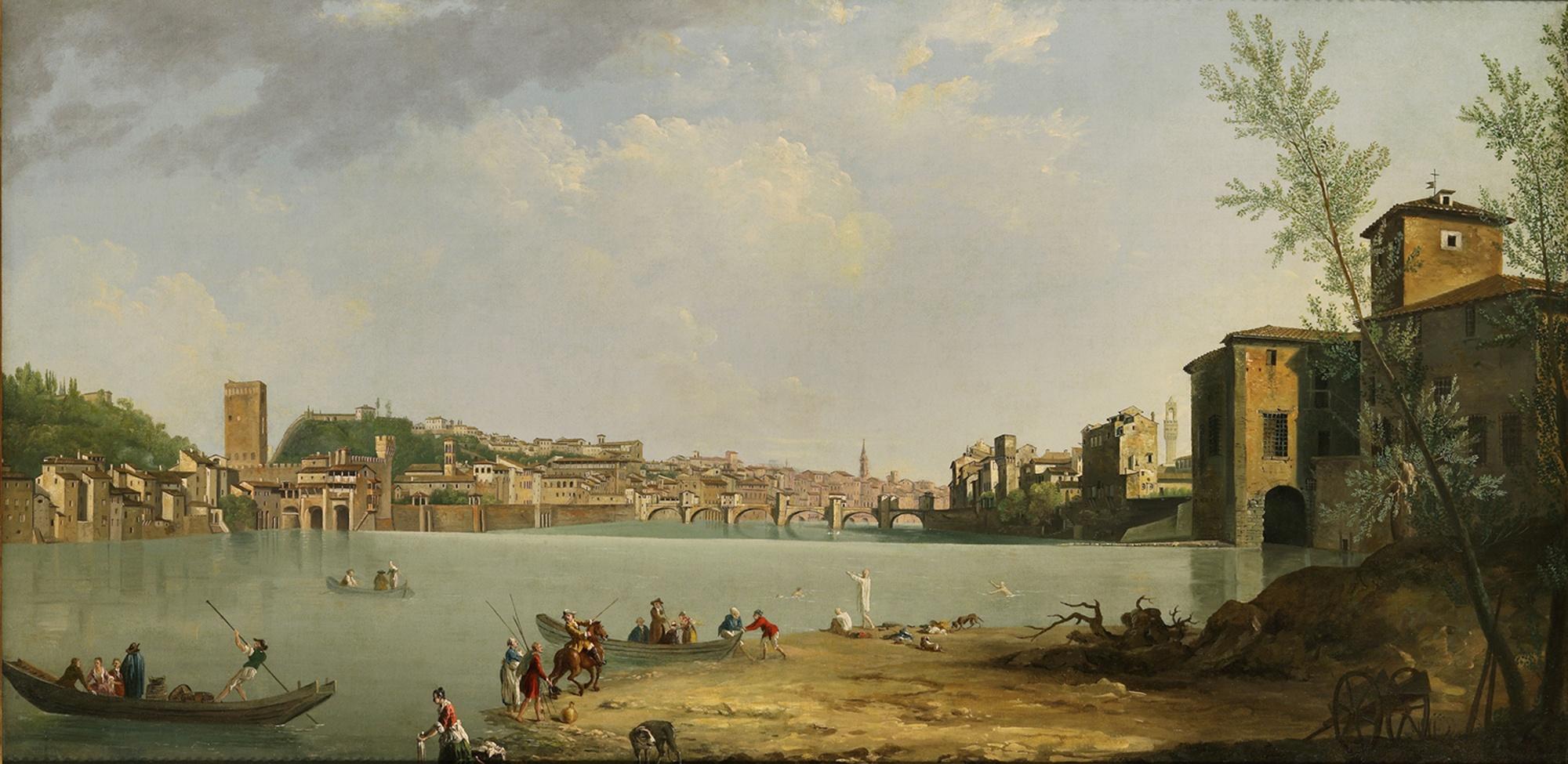
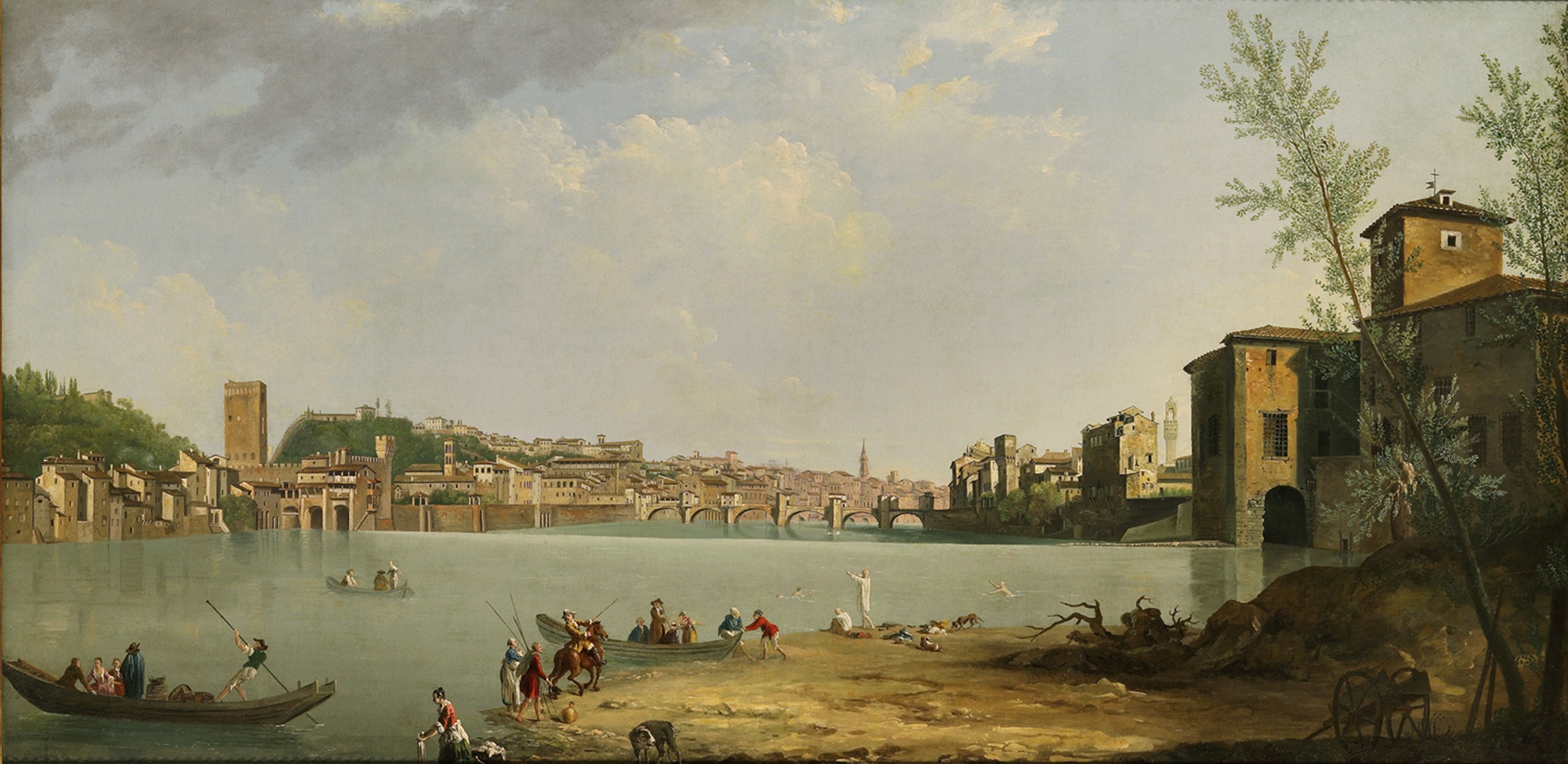
Patch remained in Rome until 1755, when he was expelled by the Tribunale della Santa Inquisizione on grounds of religious or sexual indiscretion (or both). In Florence, the patronage and friendship of Sir Horace Mann offered him introductions to the visiting British Grand Tourists, who commissioned from him copies after the Old Masters and views of the city. During the 1760s he painted a series of caricature groups of the painters, dealers, and tourists of Anglo-Florentine society, which remain among the most noteworthy and individual contributions to British eighteenth-century painting. Patch’s views of the city, meanwhile, clearly drew upon his experiences in the atelier of Vernet in Rome and can be seen as a sort of parallel to Canaletto’s views of Venice, especially in a city relatively ill-served by view painters save the native Giuseppe Zocchi (1716–1767), whose designs, collected in a series of prints entitled Scelta di XXIV vedute delle principali contrade, piazza, chiese e palazzo della Citt di Firenze (published 1744), Patch often copied. Although his views, chiefly along the river Arno, found a ready market among the British visitors to the city, and his patrons included the Duke of York and Horace Walpole, and three such works were purchased by George III for the Royal Collection as early as 1764, Patch thought little of them beside his more scholarly interests in Quattrocento art, and even derided them as mere “bridge painting”. Nevertheless, though Patch may have painted them for business rather than pleasure, his vedute of Florence constituted a unique and invaluable record of the city for its visitors. As Mrs. Piozzi pronounced in a famous remark of 1785, “Florence is the loveliest city I ever saw…but perhaps I said that before—I say it all day long!”