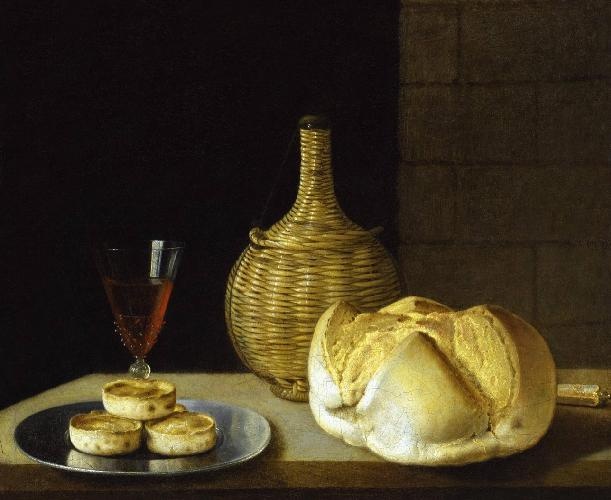
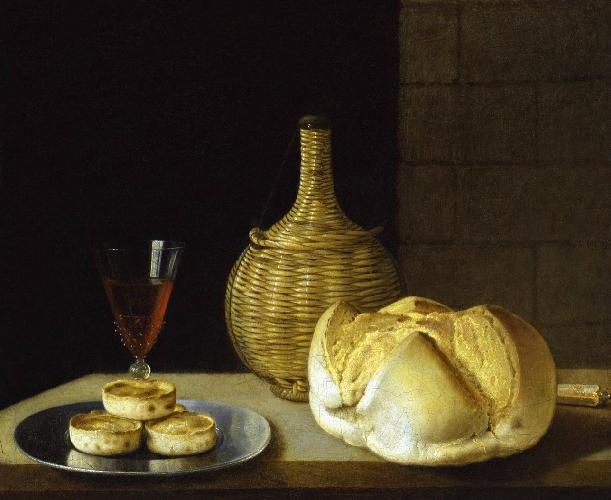
Sebastian Stoskopff was from Alsace and brought up in the independent Protestant republic of Strasbourg. In 1615, after serving his apprenticeship in the studio of the miniaturist and engraver Friedrich Brentel the Elder, he became the pupil of the painter and architect Daniel Soreau (d. 1619) in Hanau, near Frankfurt-am-Main; after Soreau's death Stoskopff completed the paintings left unfinished in his master's studio. He remained in Hanau until 1621. There he came across examples of still-life painting from Flanders and the Netherlands, an influence so strong that he devoted himself to that gernre for the remainder of his career.
In 1621, he went to Paris, remaining there until 1640, leaving only in 1629 for a trip to Venice, where he met his future biographer, the historian Joachim von Sandrart. Like other Protestant painters Stoskopff frequented the SaintGermain-des-Prés district of Paris and came into contact with the still-life painters Lubin Baugin and Jacques Linard. In 1641 he settled in Strasbourg, where he was accepted as a master. In the work of his maturity, much of it done for his patron, Graf Johann von Nassau-Idstein, Stoskopff began to employ more overtly moralizing themes, with little pretence at the narrative element found in his Paris paintings. Stoskopff's paintings fall into two types: those done in Paris, which are more clearly influenced by the French school; and the later works, where the German aspect of his artistic background reasserts itself.
