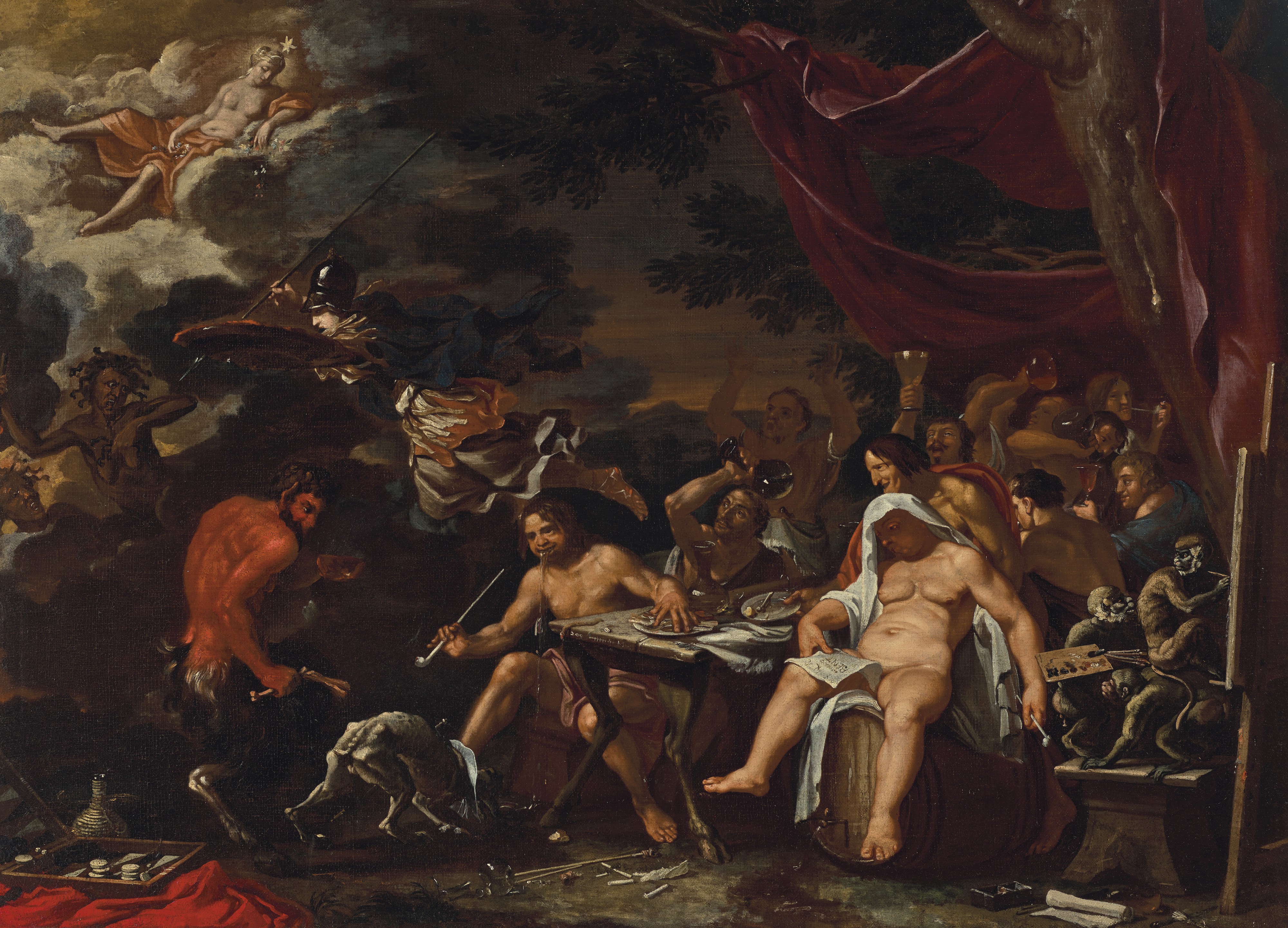
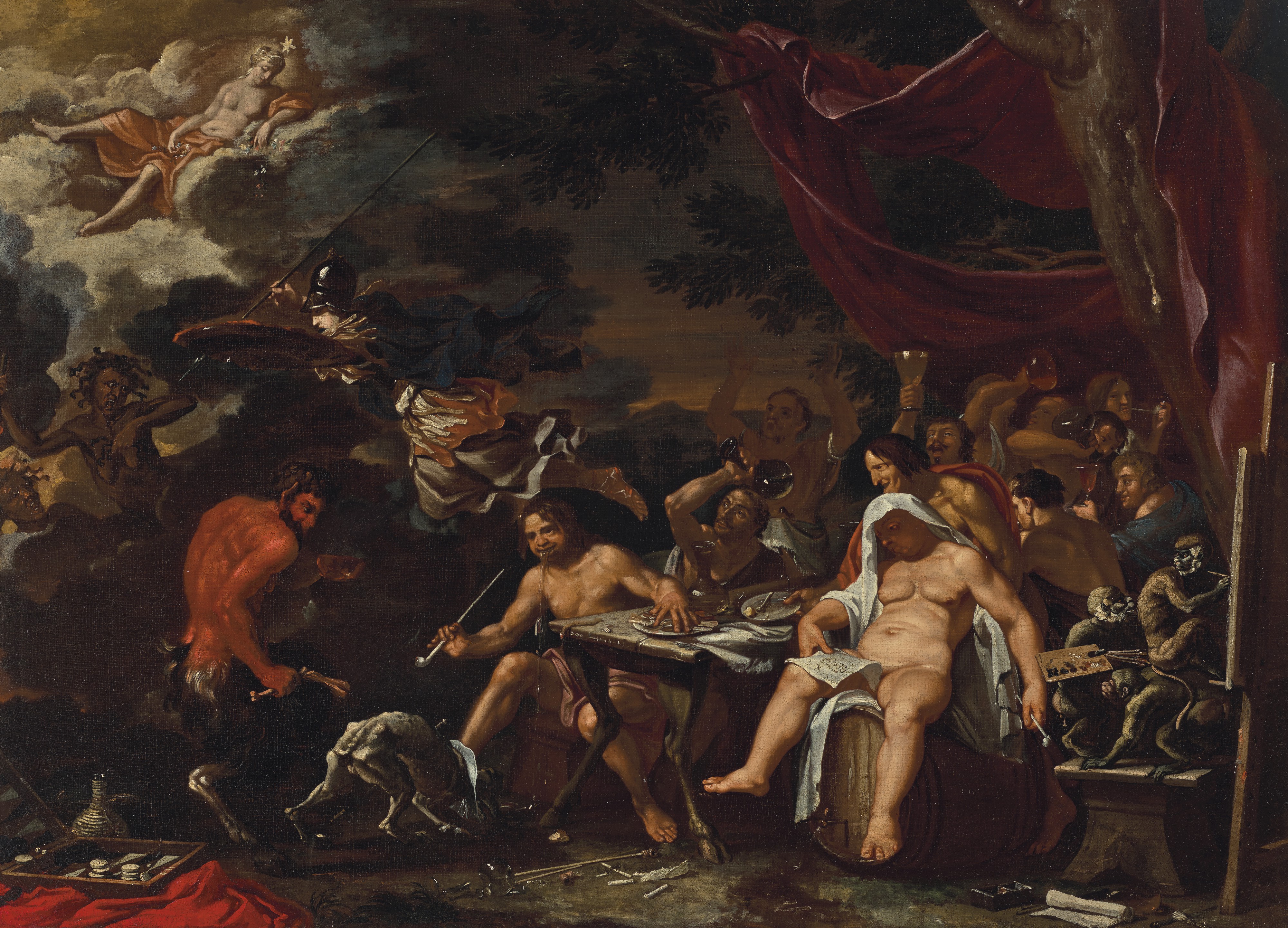
Restless and anticipator of styles and motifs, Pietro Testa, known as il Lucchesino, was born in Lucca in 1612 and died in Rome in 1648.
He moved to Rome in 1630, the year in which he started training with some of the most famous artists of the 17th century Roman scene, including Domenichino and Pietro da Cortona.
The last one will mark the most incisive influence, together with his frequentation of the so-called antiquarian circles where a rediscovery of a severe classical taste took place.
To understand the development of Testa's artistic career, it is essential to mention his parallel activity as an engraver.
'Landscape with Satyrs' and 'Idyllic Landscape' are among his earliest paintings, and we witness the style of Testa's early manner.
Around 1633, he painted a 'Madonna di Loreto' for the Church of San Rocco in Fermo, with reminiscences of Guercino's painting style and a striking naturalist landscape.
One of Pietro Testa's most important works is the "Strage degli innocenti" (Massacre of the Innocents) painted between 1635 and 1637: the subject is treated on a fantastic and at the same time dramatic register.
From the same period is the creation of the work - on engraving and in painting - 'The Adoration of the Shepherds', commissioned by Monsignor Gerolamo Buonvisi of Lucca. The painting presents a composition so complex that it reveals a sophisticated and conceptual approach to art.
The dark tones anticipate the paintings of the 1940s, characterised by accentuated chiaroscuro, severe classicism, rigid forms, and broken rhythms. One has the impression that during the elaboration of the image, alongside the joyful theme of birth, that of death has made its way in.
Other works in the style of Caravaggio date back to the years after 1640: "the Miracle of St. Theodore", for the church of San Paolino in Lucca, and the "Presentation of the Virgin in the Temple".
On the contrary, to his last period of activity belong "the Allegory", clearly influenced by Nicolas Poussin.
The profound discordance between the classical intent with a constant taste for strangeness and the predilection for bizarre subjects, with a harsh and contracted treatment of the pictorial material, highlight a melancholic and restless temperament, considered a foretaste of Romanticism, exemplified by his later works.