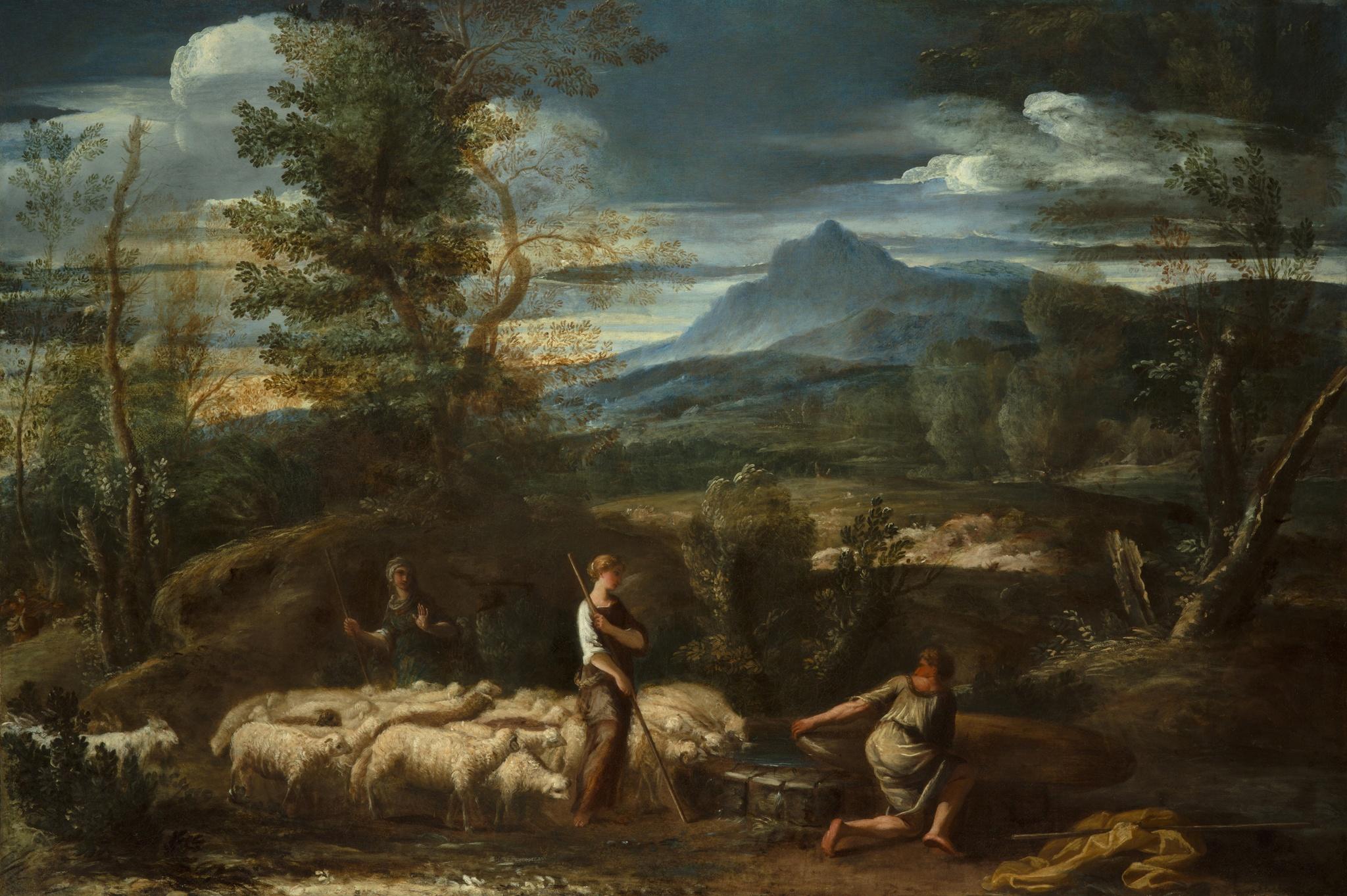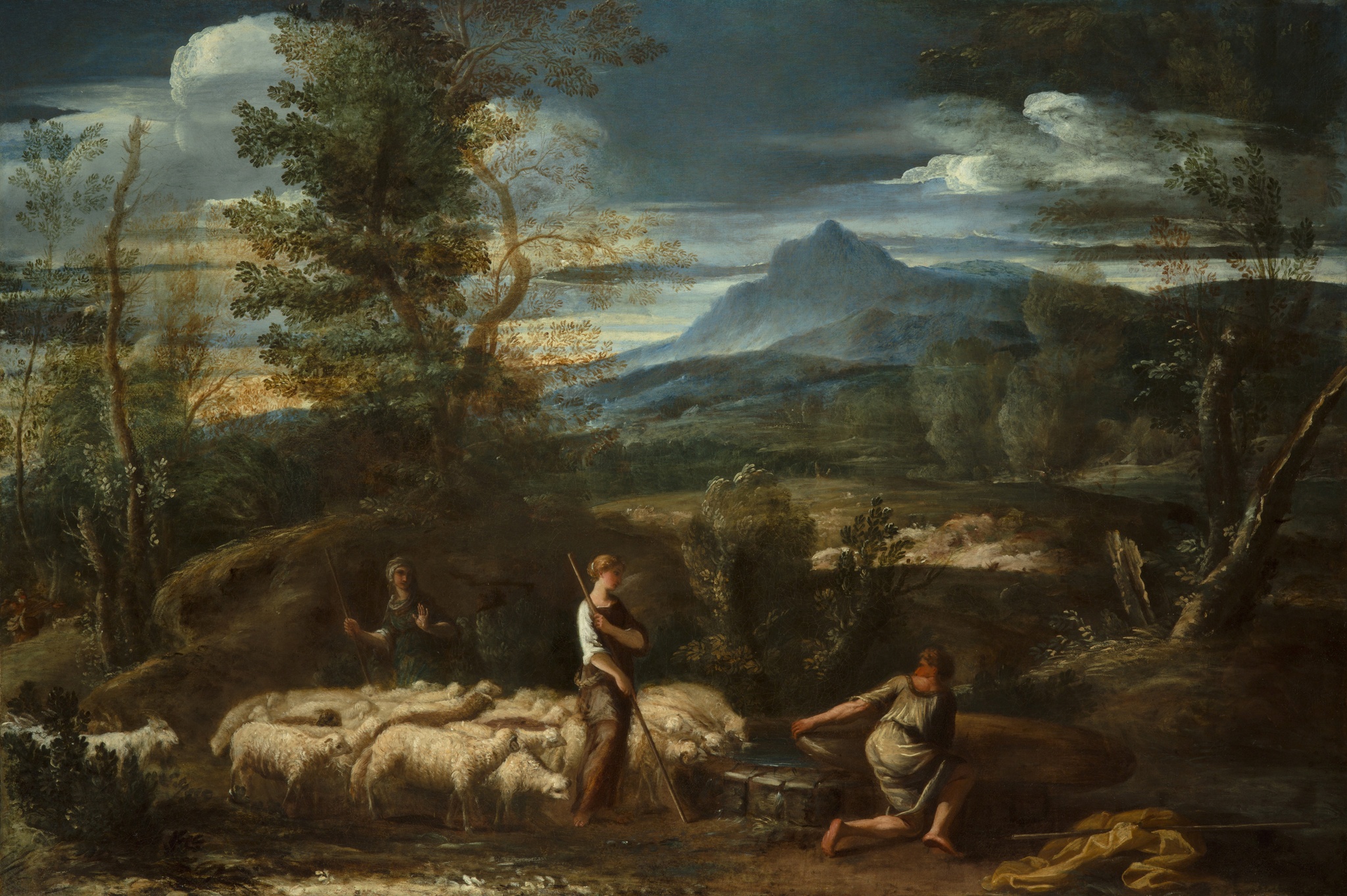
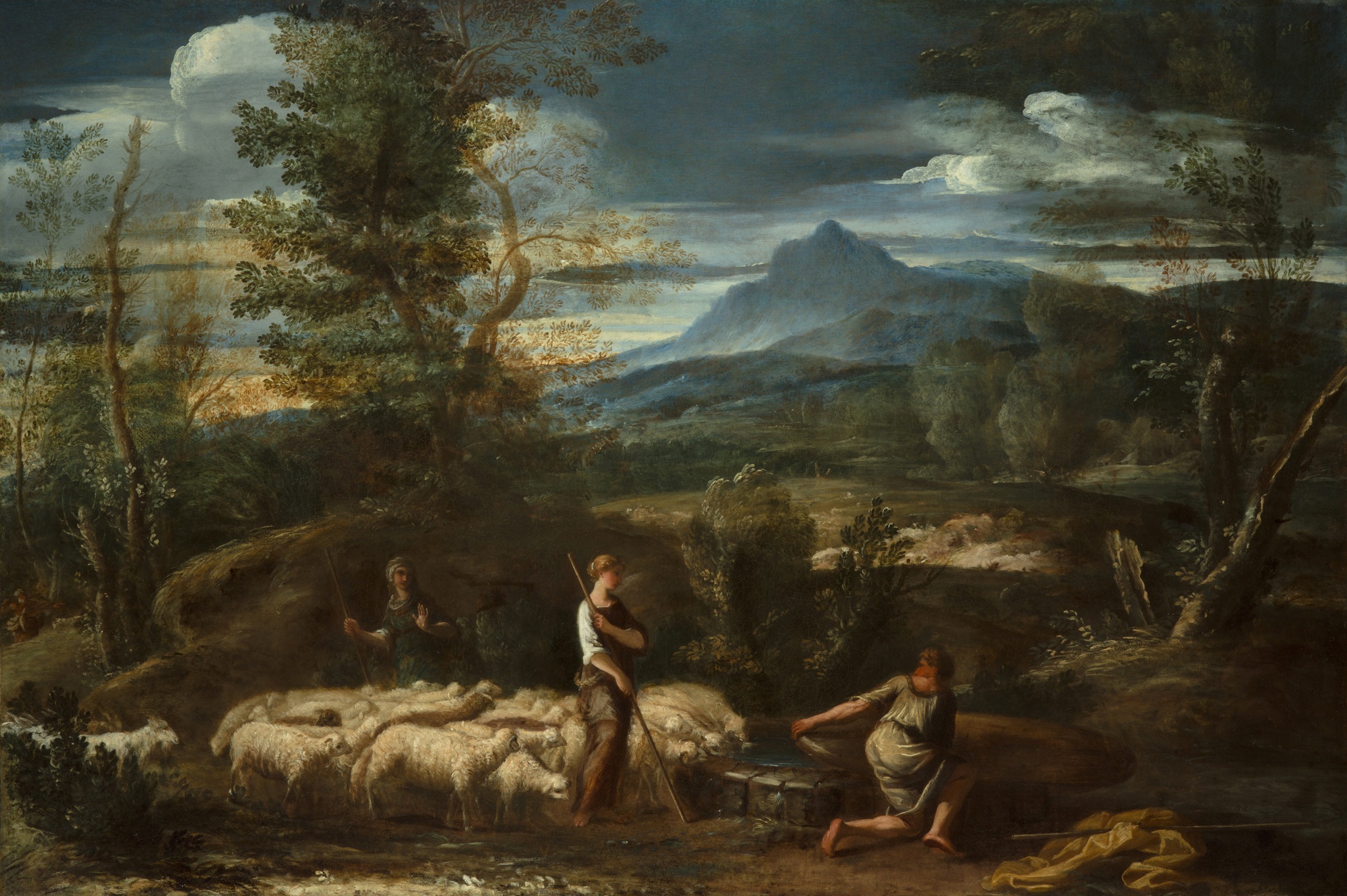
A painter of great national and international reputation, Pier Francesco Mola was born in Coldrerio in 1622 and died in Rome in 1666. The son of the famous painter and architect Giovanni Battista Mola, biographical and stylistic information come from Passeri and Pascoli, who were his contemporaries. Passeri specifically had a personal friendship with the artist. Fundamental to Mola's future was his move with his family to Rome in 1616, a period during which he became familiar with the works of the Carracci brothers, Guercino, Poussin, Pietro da Cortona and above all the Neo-Venetian style. The stay lasted until 1633, the year in which Pier Francesco decided to expand his cultural background by leaving the city and beginning a period of peripatetic training. During his training, Mola had the opportunity to work with some of the great artists, such as Albani in Bologna and Guercino in Venice.
During this period, from 1633 to 1641, Mola received numerous commissions and jobs, such as Mercury and Argos and The Adoration of the Magi. These are works in which Mola's youthful artistic style is manifest: one can see how the human figure begins to assume a primary role with respect to the landscape, but what is particularly striking is his unusual interpretation of the mythological subject. It is represented following an idyllic-pastoral setting, but with attention to a certain realism. Mola's iconographic material was wide and varied, confirming his "omnivorous" nature as a scholar and experimenter: religious, landscape, mythological and literary subjects, portraits of famous contemporary figures, are just some of the themes that his work touched upon.
In 1641, he went temporarily to Coldrerio, until the end of 1642, where he painted a fresco for the church of the congregation of the Blessed Virgin of Carmel. During his stay in Venice in the 1640s, Mola was busy with other commissions, and his style changed greatly. He temporarily abandoned the references to the style of Albani and Guercino, towards something more obscure, as is visible in the work Socrates or The Dormant Turk. Then, in 1646, Passeri confirmed Mola's definitive return to Rome and there was no absence of important and official assignments, such as working for the Costaguti’s family. Probably through the Costaguti family, between 1650 and 1651, he was commissioned to paint the frescoes in the cloister of the seminary of the sanctuary of S. Maria della Quercia, where the landscape backgrounds confirm them as Pier Francesco's most Baroque works. Particularly interesting is the production of so-called 'heads' or a series of half-bust portraits: famous is God the Father. From1653-1657 were particularly important years for Mola's fame. In addition to a joint participation with Pietro da Cortona in the decoration of St. Mark's church, he was first appointed as an appraiser of painting at the academy of San Luca and later became its prince in 1662.
The decoration of the gallery of Alexander VII at the Quirinal Palace, a work that further confirmed the artist's fame, dates to those years. In the last years of his life, Mola, limited by his health, entrusted many of his commissions to his assistants, except for his collaboration with the Chigi family, The Ecstasy of St. Bruno together with a group of four canvases depicting mythological subjects are the last incomplete productions. The sketches in the group manifest a decidedly philosophical and meditative atmosphere. Mola's legacy constitutes a truly remarkable iconographic, stylistic, and content-related “mare magnum”: the corpus inherited from the Nordic artist counts a great number of sketches and drawings, which confirm that drawing, for Mola, was not simply a working method but a form of investigating environments. His genius is further confirmed by his ability to reinterpret ideas he had over the years, recreating them in such a way that it seems impossible to frame them in a single school of painting.