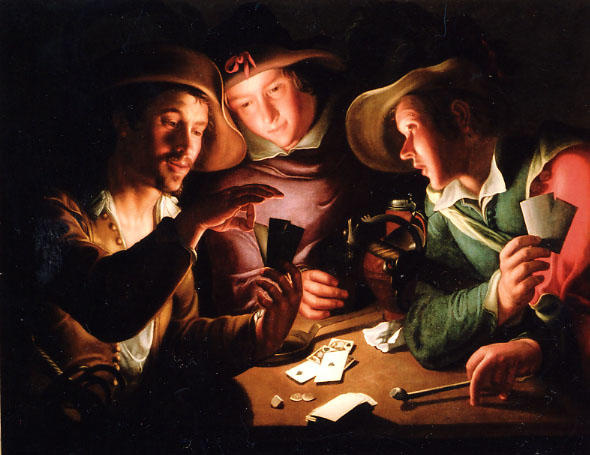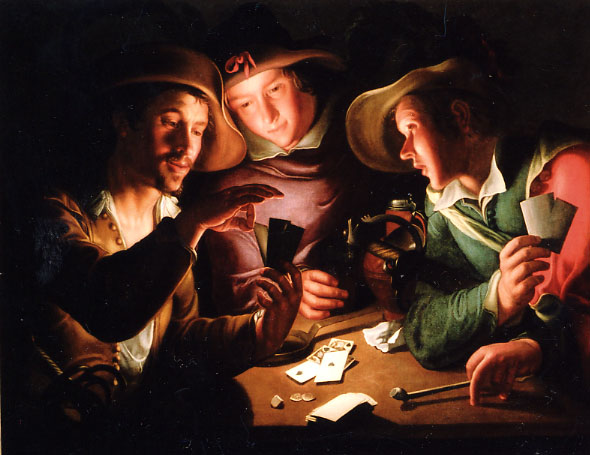
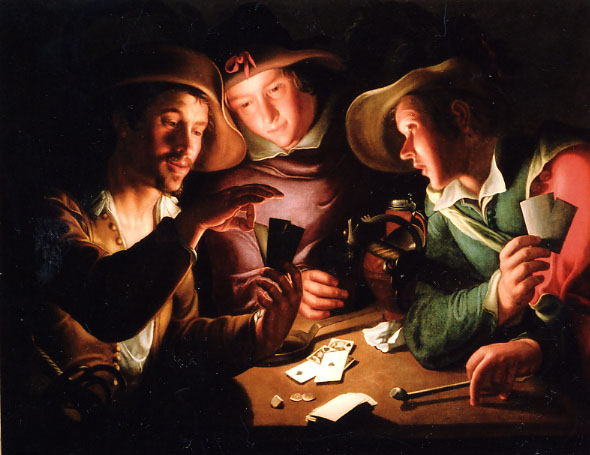
Peter Wtewael was the eldest son of the Utrecht mannerist painter Joachim Wtewael, who was probably his first and only teacher. His relatively small oeuvre consists of five signed paintings and around twenty-five attributed works, and the dated paintings fall between 1623 and 1628. He apparently gave up painting around 1630, a fact that was lamented by Joachim von Sandrart in his Teutsche Academie, published in the 1670s: “One of his [Joachim Wtewael’s] sons practiced this profession also, and came along far in it, and would have achieved great learning in this art, if he had remained active in it.” Von Sandrart, who visited the Wtewael family studio in the 1620s and probably again on a short visit to Utrecht in 1637, informs us that Peter’s priorities came to focus instead upon the family flax business, in which they “made a fine fortune.” Later, the sometime artist also devoted his energies to municipal politics.