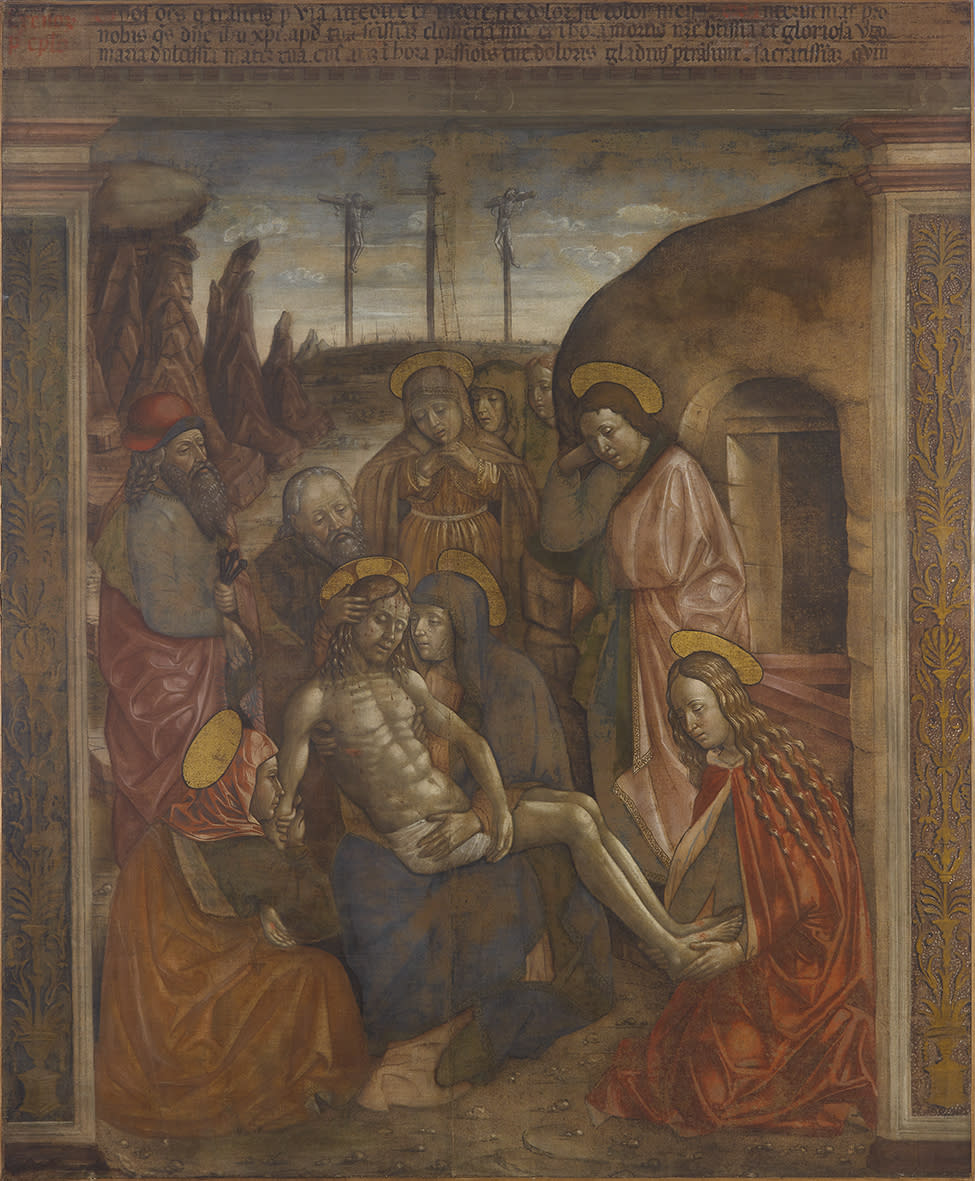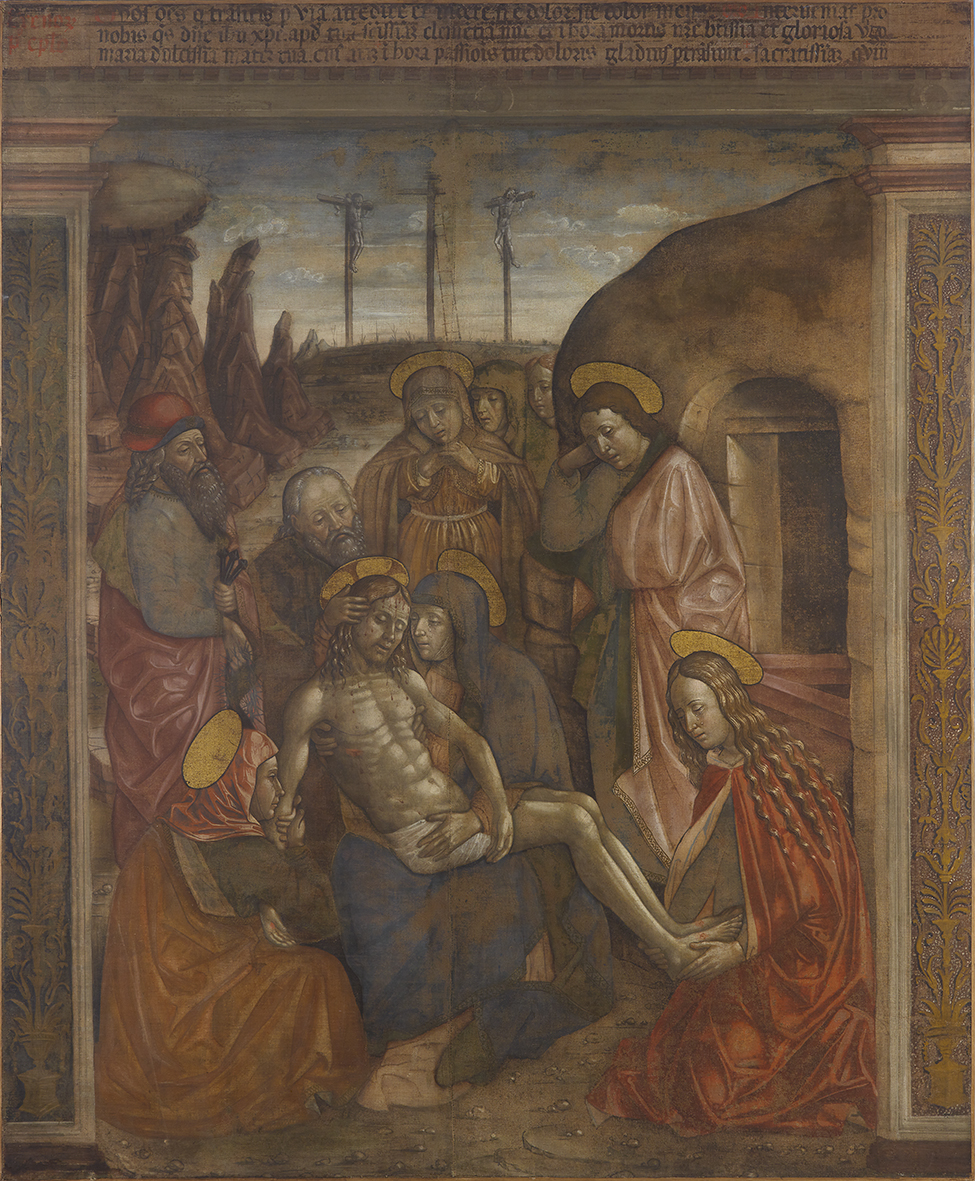
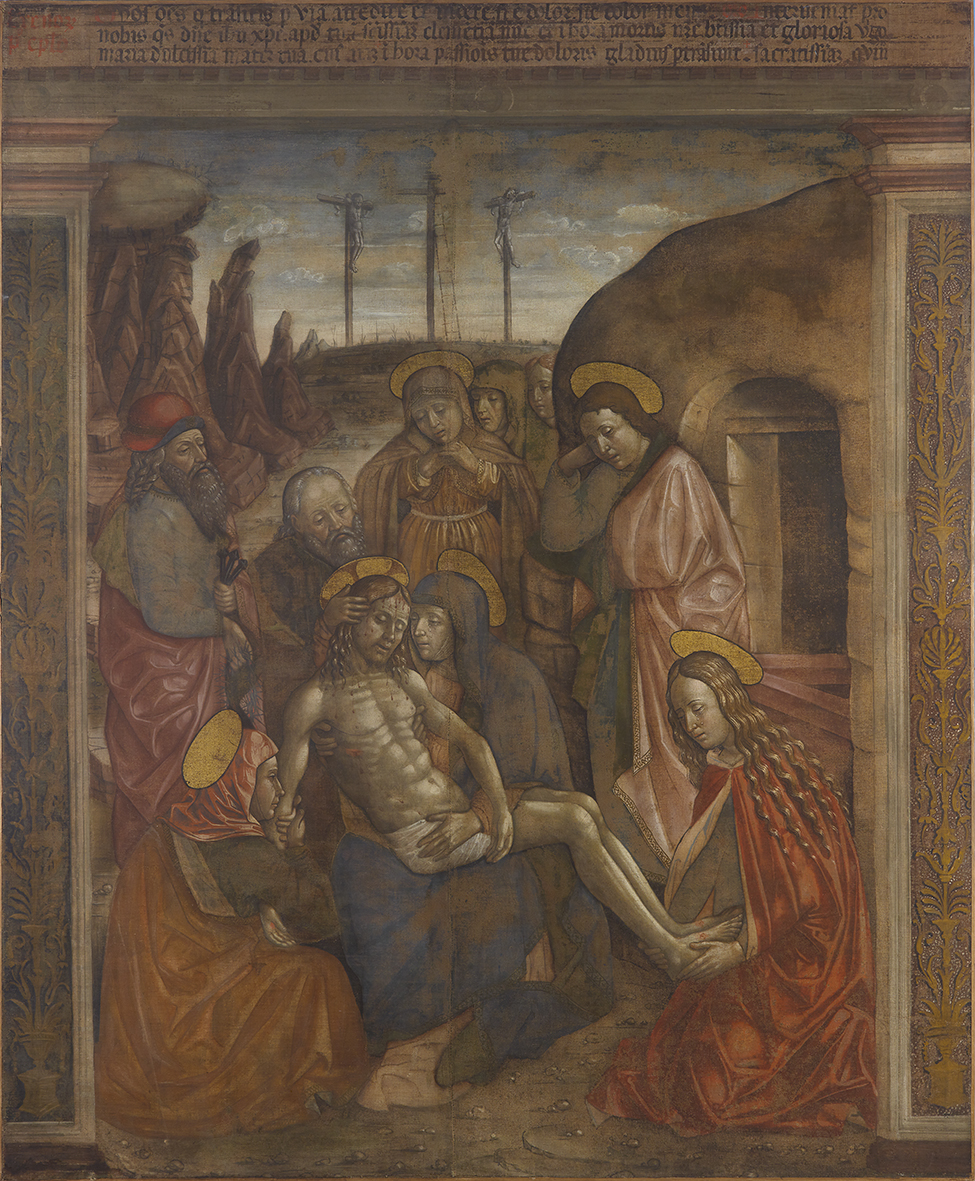
Master of the Cernuschi Pentecost takes his name from a depiction of the Pentecost that appeared in the Paris sale of the Cernuschi collection (Gallery Georges Petit, 25–26 May 1900, no. 74, attributed to Bramantino). It later formed part of the Fontaine collection in Lille (W. Suida, ‘Studien zur lombardischen Malerei des XV. Jahrhunderts’, in Monatsheften zur Kunstwissenschaft, 1908, pp. 490–91), and the painting then reappeared on the Florentine antiquities market in the 1980s, only to be given its first clear critical interpretation (R. Battaglia, ‘Maestro della Pentecoste Cernuschi’, in Piemontesi e lombardi tra Quattrocento e Cinquecento, catalogue edited by G. Romano, Turin, 1989, pp. 22–29).
As Roberta Battaglia rightly points out, this subject rarely appears in altarpieces, more frequently depicted in pictorial cycles dedicated to the life of Christ or Mary. The layout of the painting, framed by pillars and topped by an inscription on the architrave, suggests it was probably a decorative element of a larger cycle featuring other scenes.
The two works known so far by the so-called Master of the Cernuschi Pentecost can also be linked to another painting on densely woven linen canvas, depicting The Madonna and Child Enthroned with Saints, Devotees and Angels (tempera on canvas, 125.5 x 158 cm, private collection). The Virgin seated on the throne turns her gaze towards a large group of praying devotees, arranged symmetrically at her feet. Her acceptance of their prayers is suggested by her outstretched arm and open hand, and the Christ Child seated on her knee repeats the gesture, in a solemn act of benediction.
On either side of the throne we can probably identify the figures of St. Joachim (rather than St. Joseph) and St. Anne, the Virgin's parents. Kneeling atop the pillars of her monumental throne are two praying angels who, in their three-quarter position, mark the depth of the picture, already emphasised by the large volumes of drapery. The thick folds in the drapery, with deep, even angular or sharp furrows, suggests a date around the penultimate decade of the fifteenth century, supported by the numerous references to the figurative culture that developed along the axis of Milan, Pavia and Genoa. Links to Vincenzo Foppa are joined by certain nods to Donato de' Bardi and a suggestion of the harshness found in the work of Bernardino Butinone.