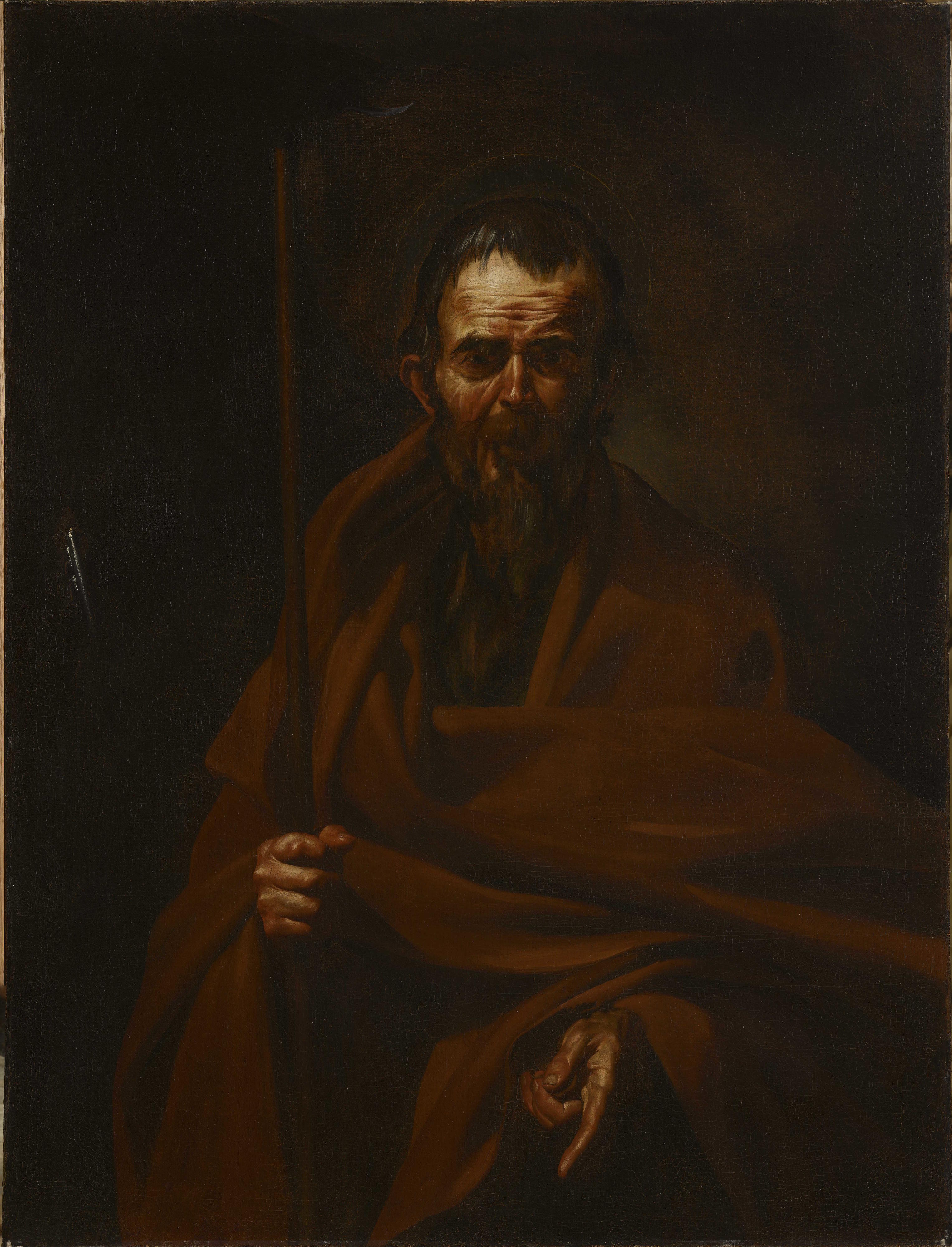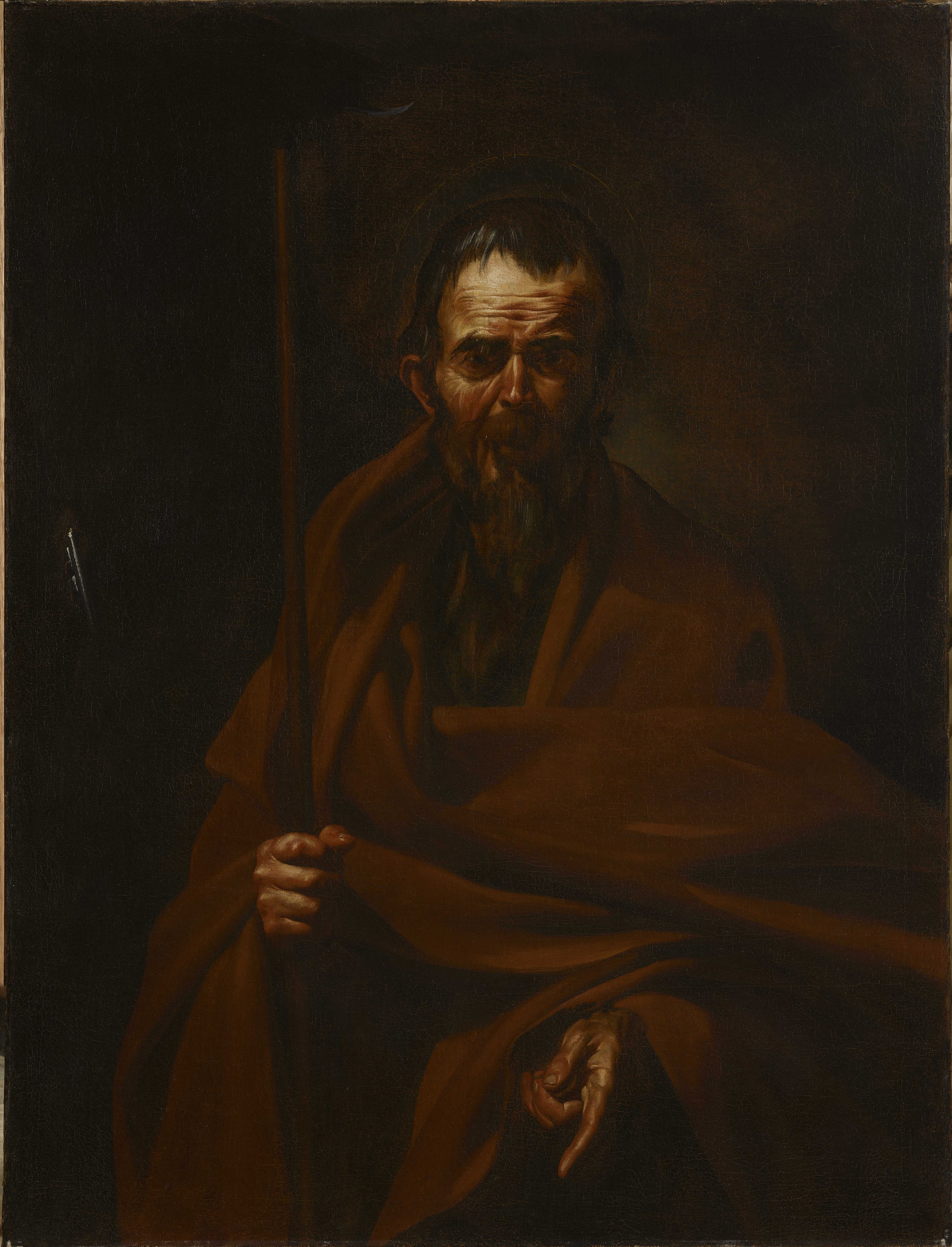
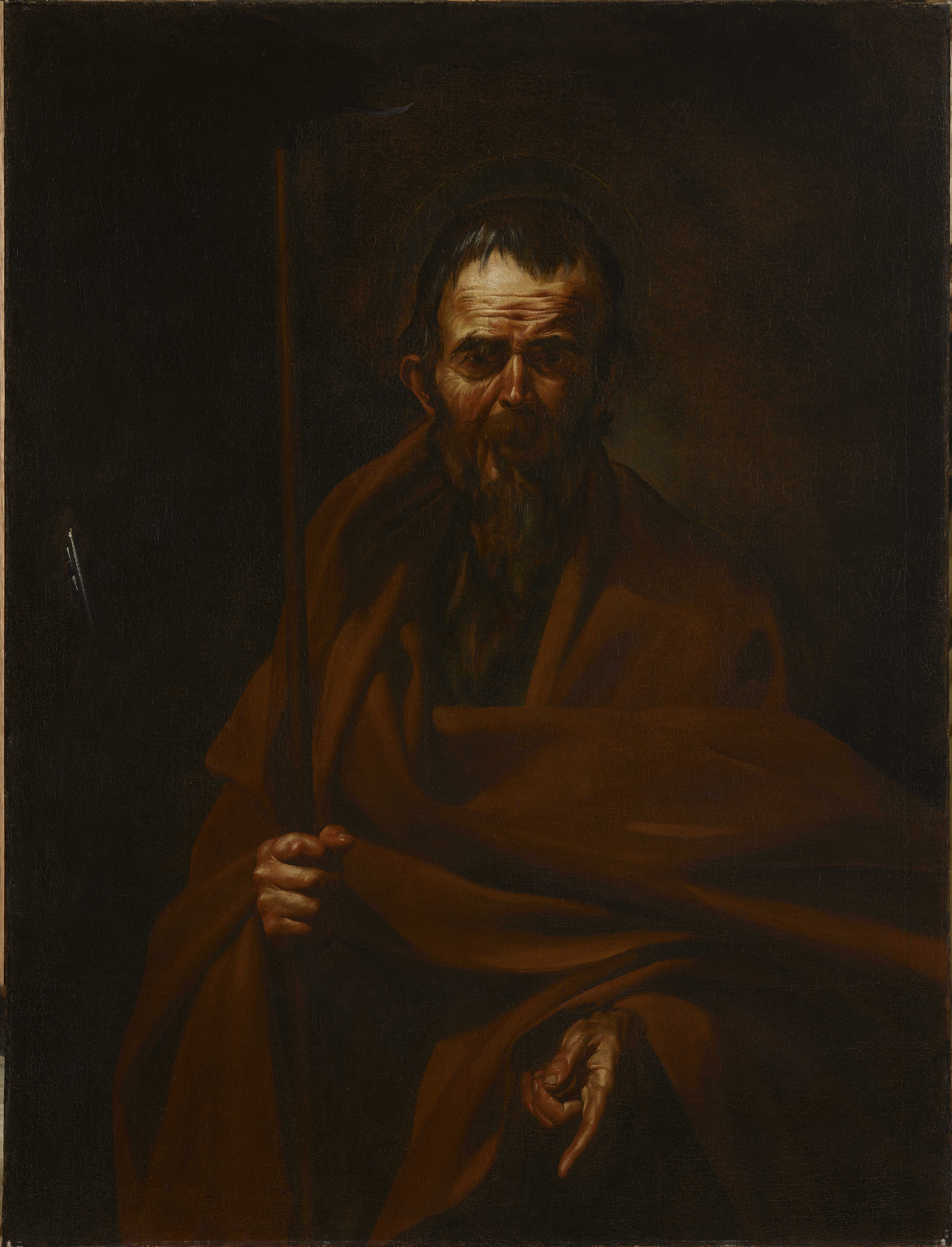
The Spanish painter Jusepe de Ribera worked for all his known career in Italy, settling in Naples, then a Spanish possession, in 1616. Ribera mainly produced religious compositions, as well as a number of classical and genre subjects and a few portraits. Embraced the tenebrism and naturalism of Caravaggio, the artist evolved a wholly unique style perhaps at its finest when applied to the physical and psychic sufferings of penitent or martyred saints and tortured gods. He rendered realistic and sometimes horrific details in coarse, vigorous brushwork, accentuating the wrinkles, beards, and flesh wounds of his often anguished or disfigured protagonists.