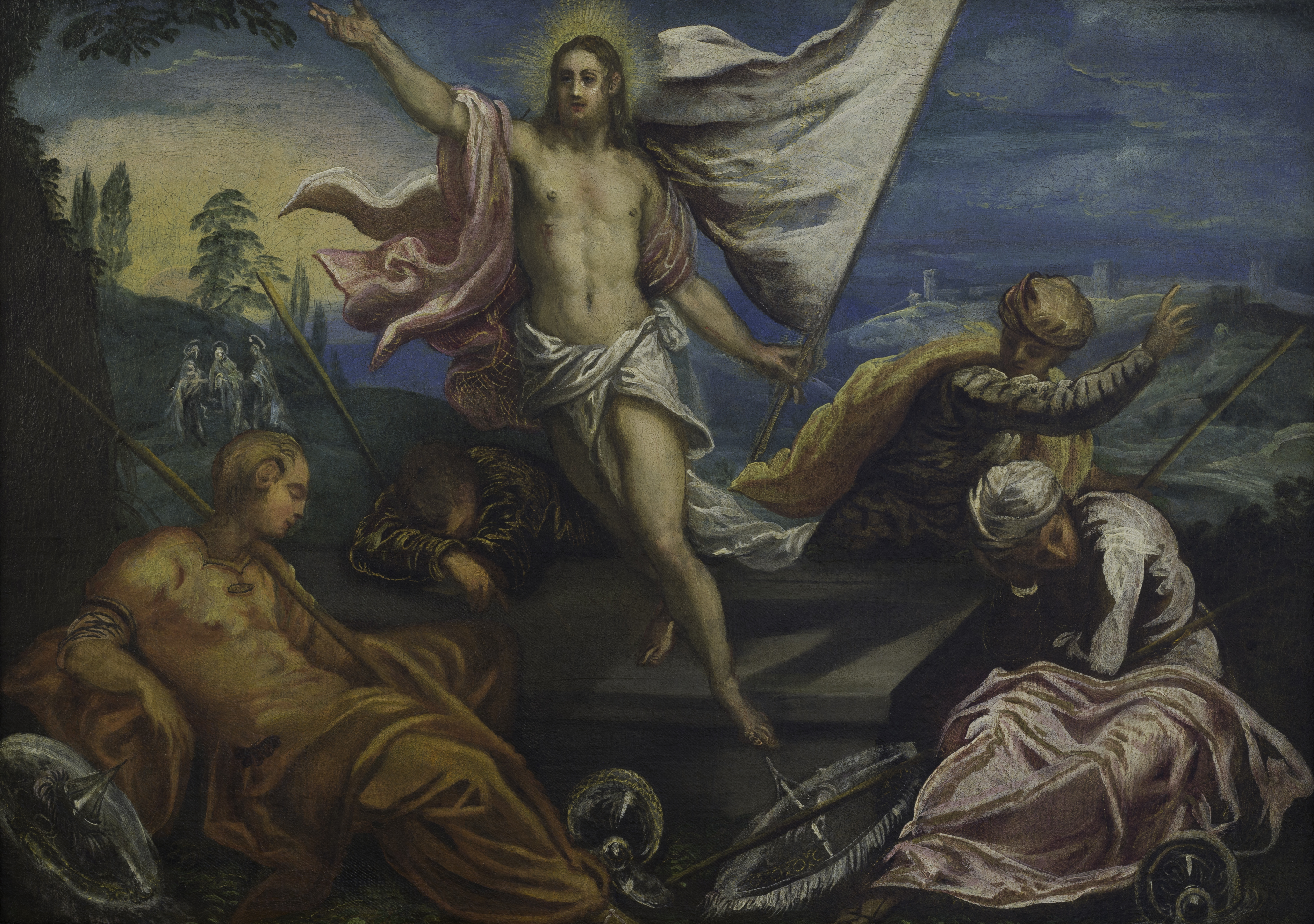
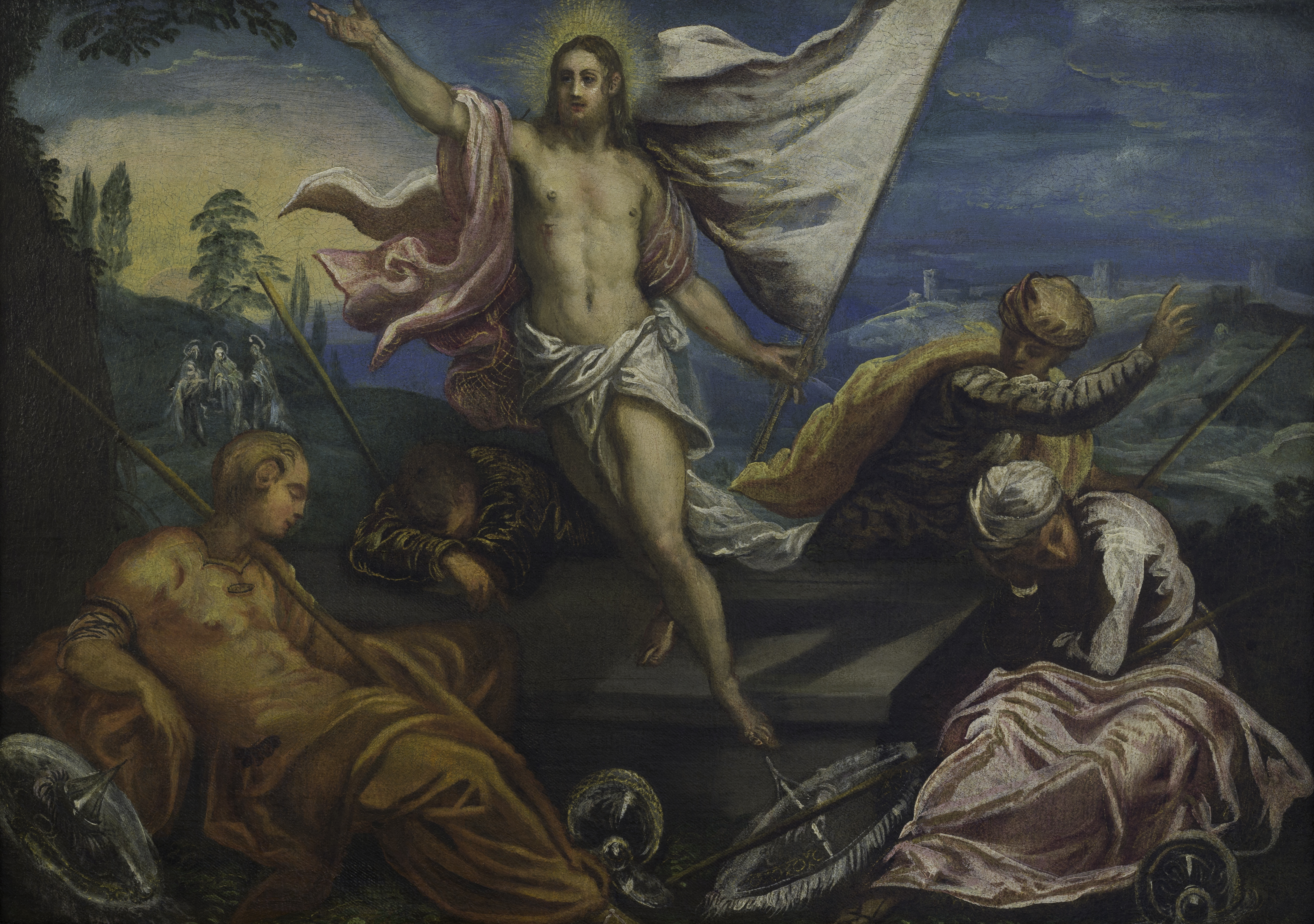
Jacopo Tintoretto’s nickname comes from his father’s occupation of dyer (tintore). According to legend, Tintoretto was said to have been banished from Titian’s studio after a mere ten days. He was often criticised for working quickly, using paint in a rougher and more frugal way. This technique drew much attention and earned him the nickname Il Furioso. He nursed a famous rivalry with Paolo Veronese; Jean-Paul Sartre called him ‘the first film director’ due to his imaginative story-telling ability in his compositions. Vasari, as quoted in The New Yorker by Peter Schjedjhal, states that Tintoretto had ‘the most extraordinary brain that the art of painting has ever produced’ but his techniques were ‘without design, as if to prove that art is but a jest’. Remaining in Venice for his whole life, his Mannerist style and vast, varied output assured his popularity. So strong was his desire for his work to be displayed that he would sometimes present paintings as gifts or for very little cost. The majority of Tintoretto’s work is still housed in the churches and institutions for which it was originally painted.