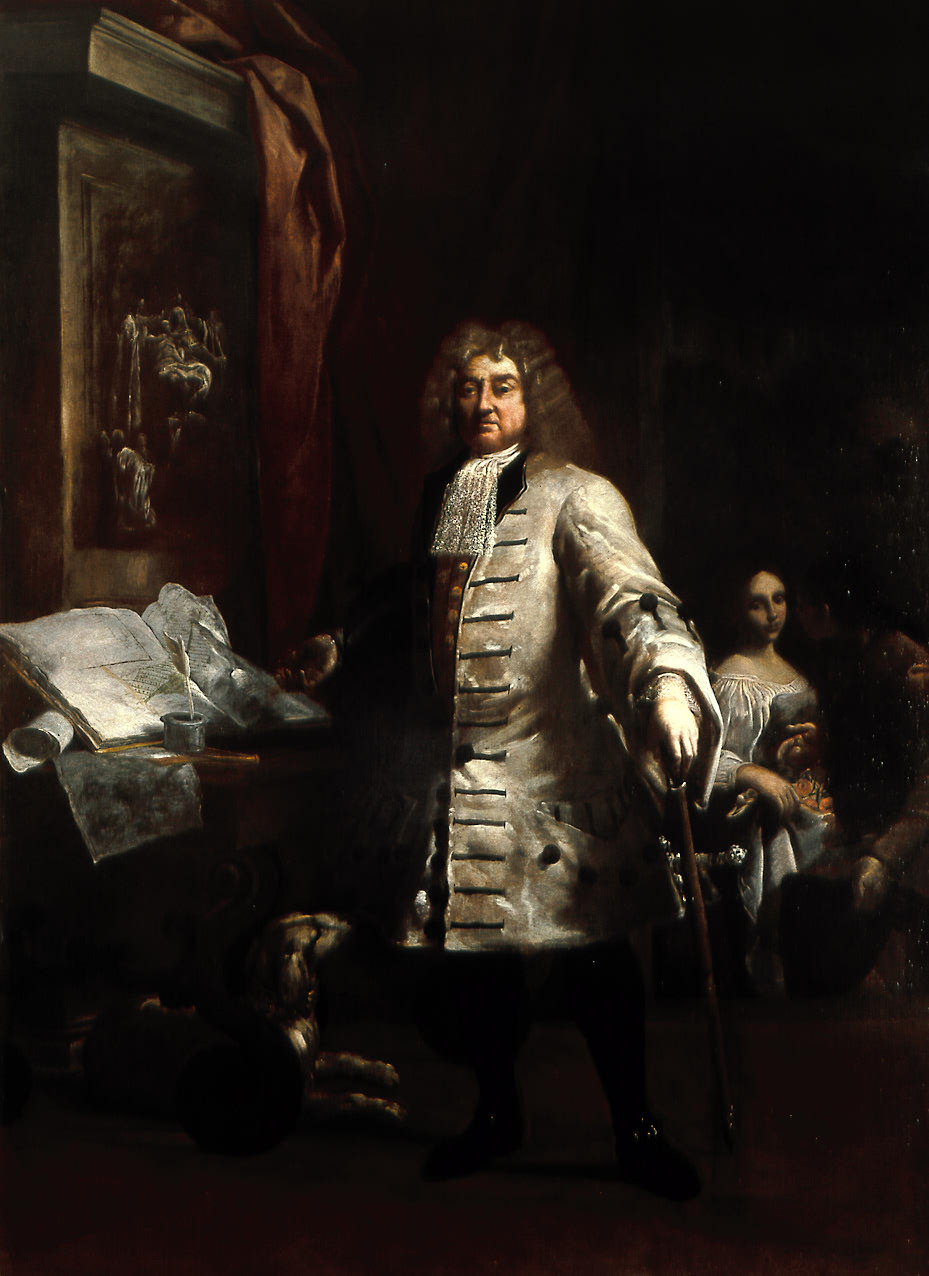
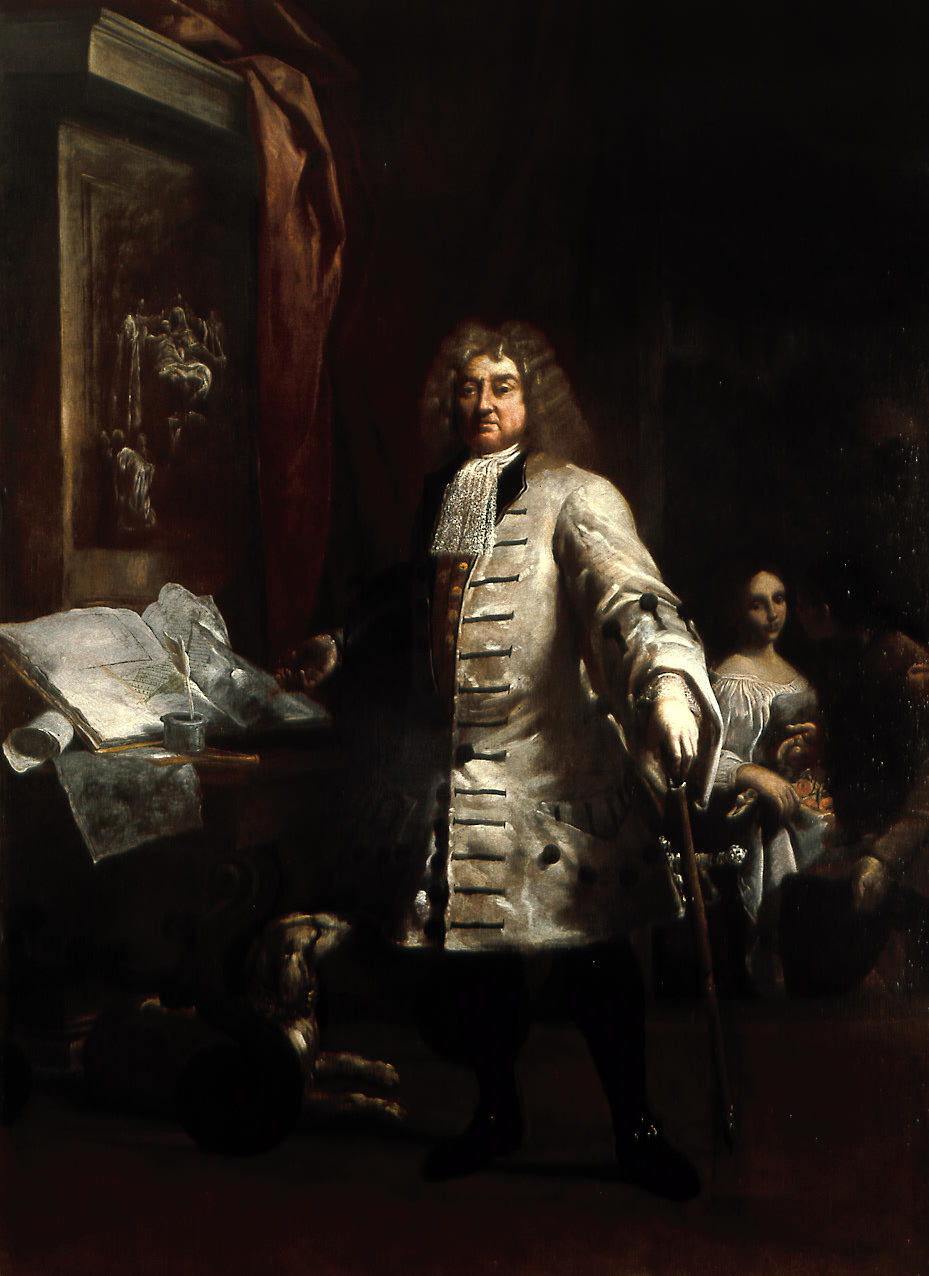
A considerable voice on the Bolognese artistic scene, Giuseppe Maria Crespi was born in Bologna in 1665 and died in his home town in 1746.
Called 'the Spaniard' from a young age because of his choice of clothes, in line with the fashion of his home town, his artistic training first saw him associate with the locally well-known painter Angelo Michele Toni and later with Domenico Maria Canuti, thanks to whom the young Crespi got to know the equally important master Carlo Cignani.
Fundamental to his training was his meeting with Giovanni Ricci, a local maecenas who provided the young man with the necessary resources to take an itinerant training in the main Italian cities in order to get to know the work of the great masters.
Crespi's first works with a religious motif date from 1688-90, in which it is interesting to note how the archaising character seems to dialogue perfectly with both Coraggesque and Baroque influences, but above all the legacies drawn from the study of Guercino's works seem to be the most manifest.
The work 'St. Anthony Tempted by Demons' was painted in the same period and is considered to be one of the first realisations marking the first step of artistic maturity that fully belongs to the adjective baroque.
From 1698 onwards, there was a change in Crespi's painted subjects: moving away from the religious motif, the Bolognese artist produced works with a mythological motif, as is well represented by the works he produced for Eugene of Savoy: 'Achilles and Chiron' and 'Aeneas and the Sibyl'.
In 1701, commissioned by Prince Ferdinando de' Medici, Crespi produced 'The Ecstasy of St. Margaret', which is considered to be one of the Bolognese artist's finest altarpieces.
The beginning of the 18th century was a particularly fruitful period for the painter, which saw not only numerous commissions but also the desire to start a personal school to which more than 30 pupils would join.
Crespi's fame reached Ferdinando de' Medici, for whom he produced 'The Massacre of the Innocents' (1706-1710) in which a new figurative vocabulary is perceived in which influences from not only the national but also the international scene, especially the Dutch heritage, can be perceived.
Between 1712-1714, Crespi received an important commission from Cardinal Pietro Ottoboni, who commissioned him to paint a cycle of canvases depicting the seven sacraments. These are paintings depicting scenes of devout popular religiosity, with a strong ritual symbolism that gives the scene a strong emotional and three-dimensional characterisation.
However, the strength of the description of the environment in which the scenes depicted take place is never lost.
This characteristic is resumed in the famous painting 'The Flea', part of a pictorial cycle depicting the life of a songstress, painted for a private English patron from a poor environment: the subject is depicted in the intent to eliminate the insect from her body and everything is represented in a decidedly anti-heroic perspective.
From 1717 until 1740 Crespi would be involved, despite his age, in numerous commissions ranging from still life paintings to religious paintings.
Crespi's fame was officially recognised at Christmas 1740 when he received a golden cross at the cathedral in Bologna conferred on him by Pope Benedict XIV.