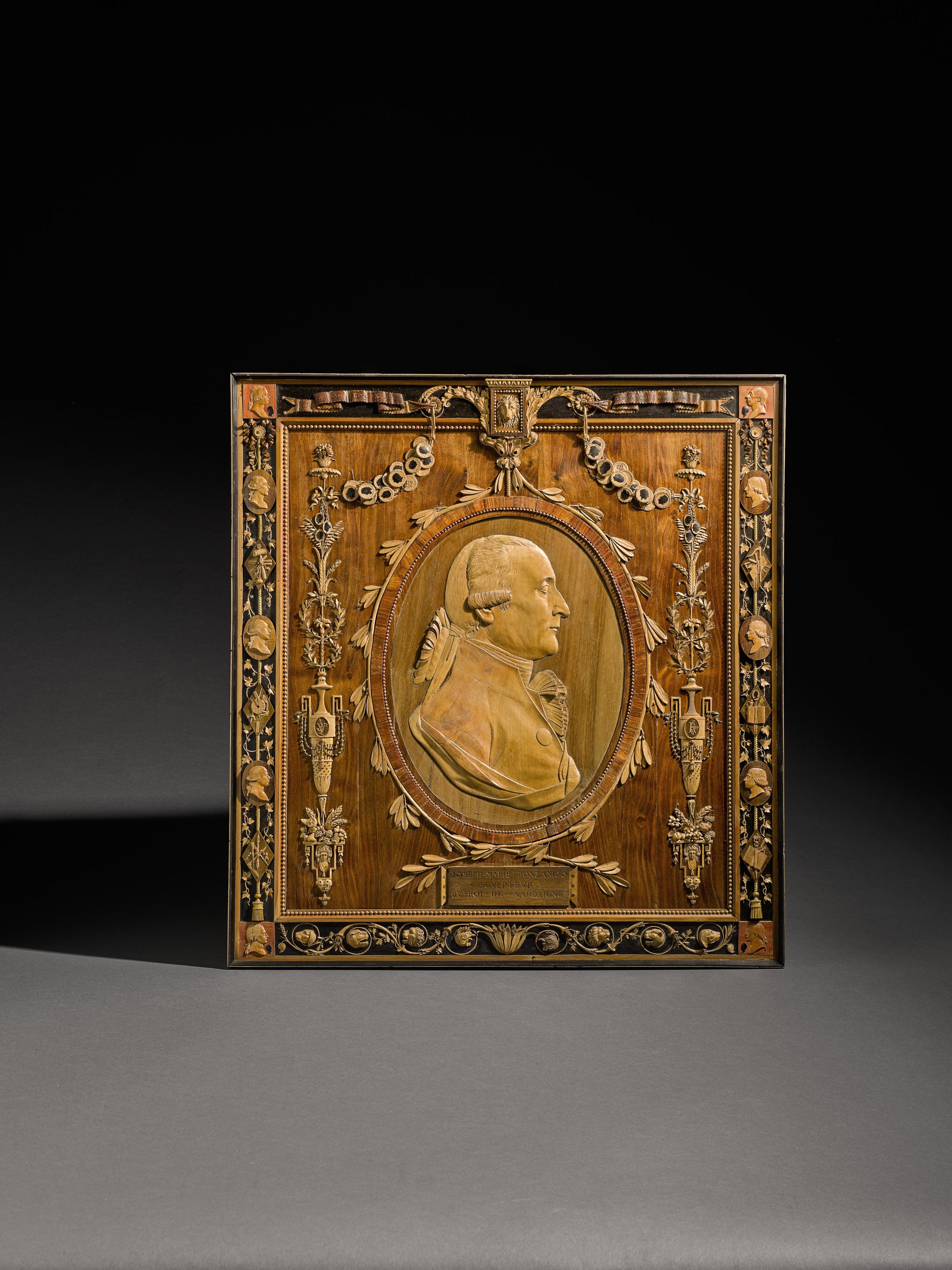
Giuseppe Maria Bonzanigo heralded from a family of wood-carvers and organcase-makers in Asti, and, in 1773, he began working for the Savoy family. Over the course of the ensuing decades, he is documented supplying countless stools, chairs, armchairs, benches, sofas, screens, prie-dieux, beds, mirrors, chests-of-drawers and ornamental panels for the Palazzo Reale in Turin, as well as for the royal residences at Moncalieri, Rivoli, Stupinigi, Venaria and Govone.
In concert with teams of architects and assistants, Bonzanigo was commissioned to decorate and furnish entire rooms in the palaces of the Savoy, with a particularly fine example being the State Rooms of the queen and king at Stupinigi. Stylistically, his work marks a departure from Franco-Piedmontese traditions of inlay and marquetry cabinet making in favour of a more predominant use of carving. Bonzanigo embraced neoclassical forms in their most elegant expression, and his works are invariably distinguished by an ornate profusion of finely carved garlands, emblems and trophies carrying complex symbolic, allegorical and commemorative significance.
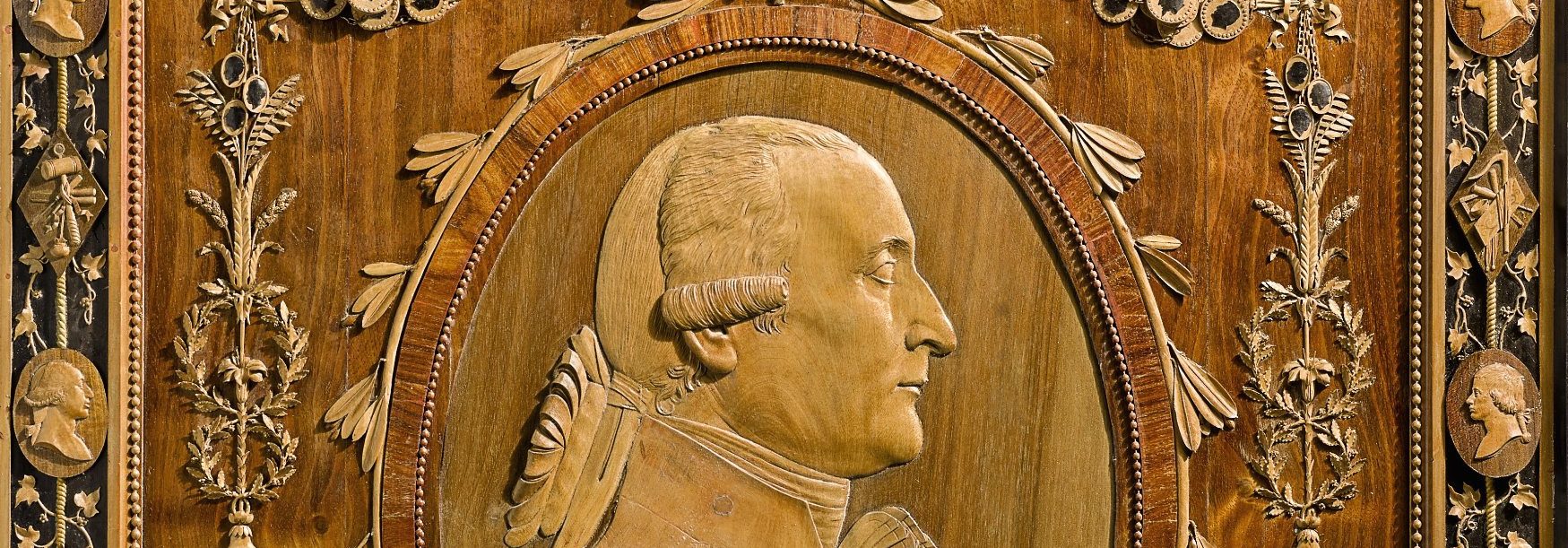
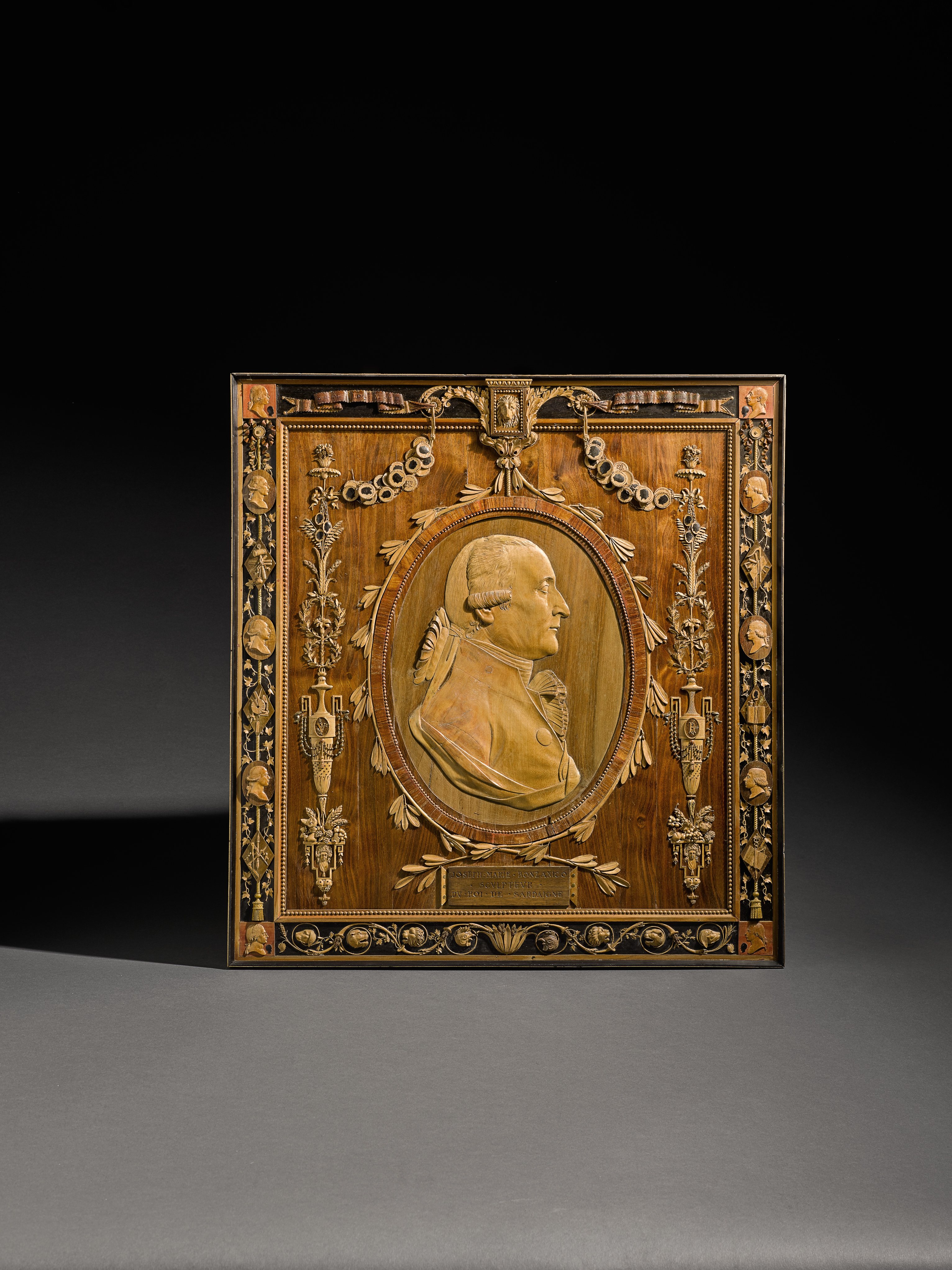
In 1787, Bonzanigo was appointed wood-carver for Victor-Amadeus III. When Piedmont was conquered by Napoleon, Bonzanigo’s reputation grew further, overshadowing that of many of his colleagues, and in 1808 he exhibited at the Salon de Paris. Upon the return of the Savoy family in 1815, he was reinstated as royal sculptor. As a sculptor Bonzanigo is perhaps best remembered for his Military Trophy (Palazzo Madama, Turin), for the retable in the Sala del Trono (Palazzo Reale, Turin) and most especially for his small bas-relief portraits in light wood or ivory, which, set in their refined frames, evoke the cameo and wax silhouettes of the eighteenth century. These extraordinary works of micro-sculpture have perhaps been slightly overshadowed in recent years by the importance ascribed to Bonzanigo’s skills as a decorator and furniture-maker.
Nevertheless, the fame he achieved during his lifetime derived precisely from the extraordinarily precise skill he demonstrated in the minute carving of wood and ivory, resulting in a plethora of commissions from the royal family, the Piedmontese aristocracy and from the Napoleonic establishment.