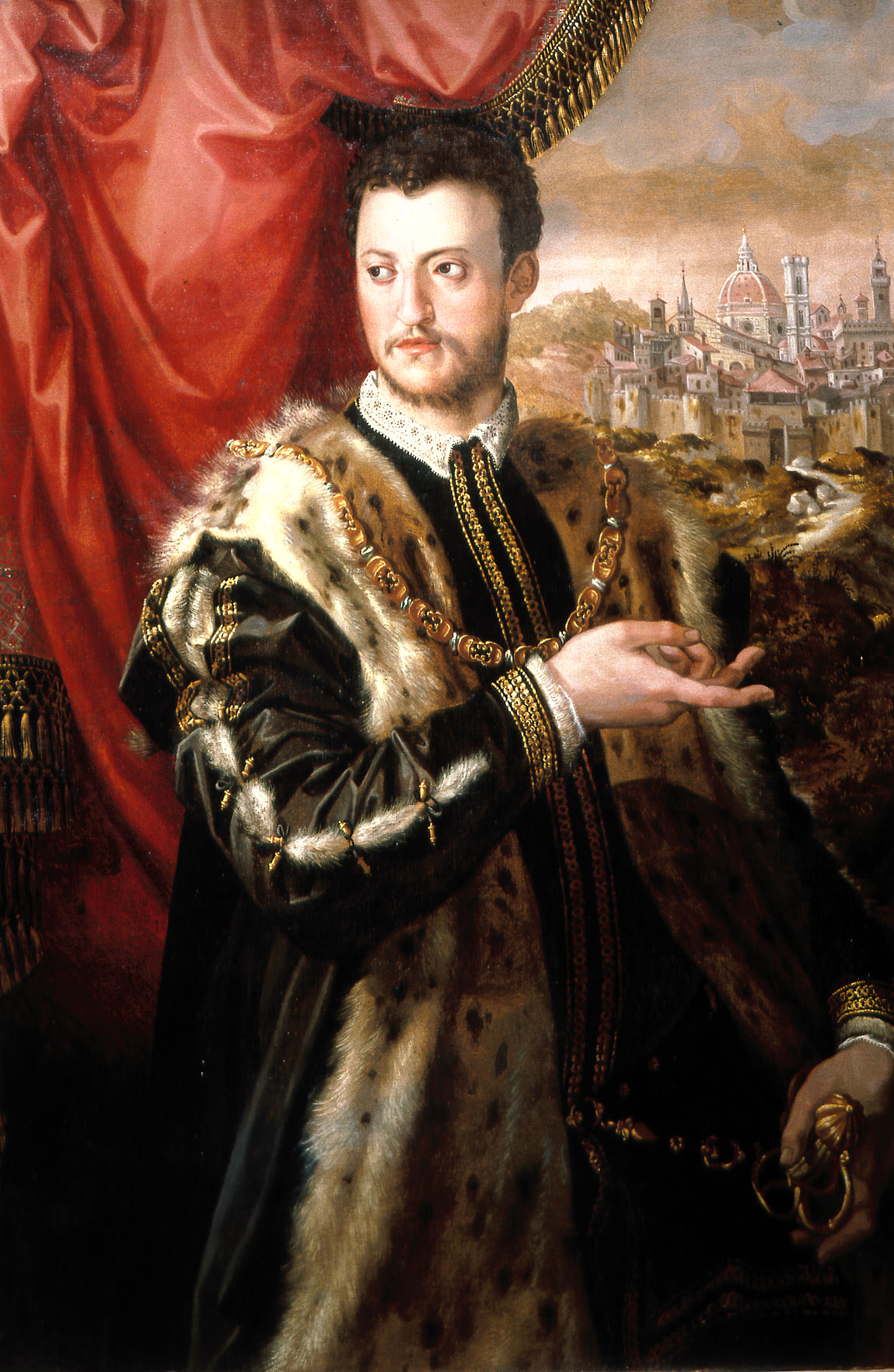
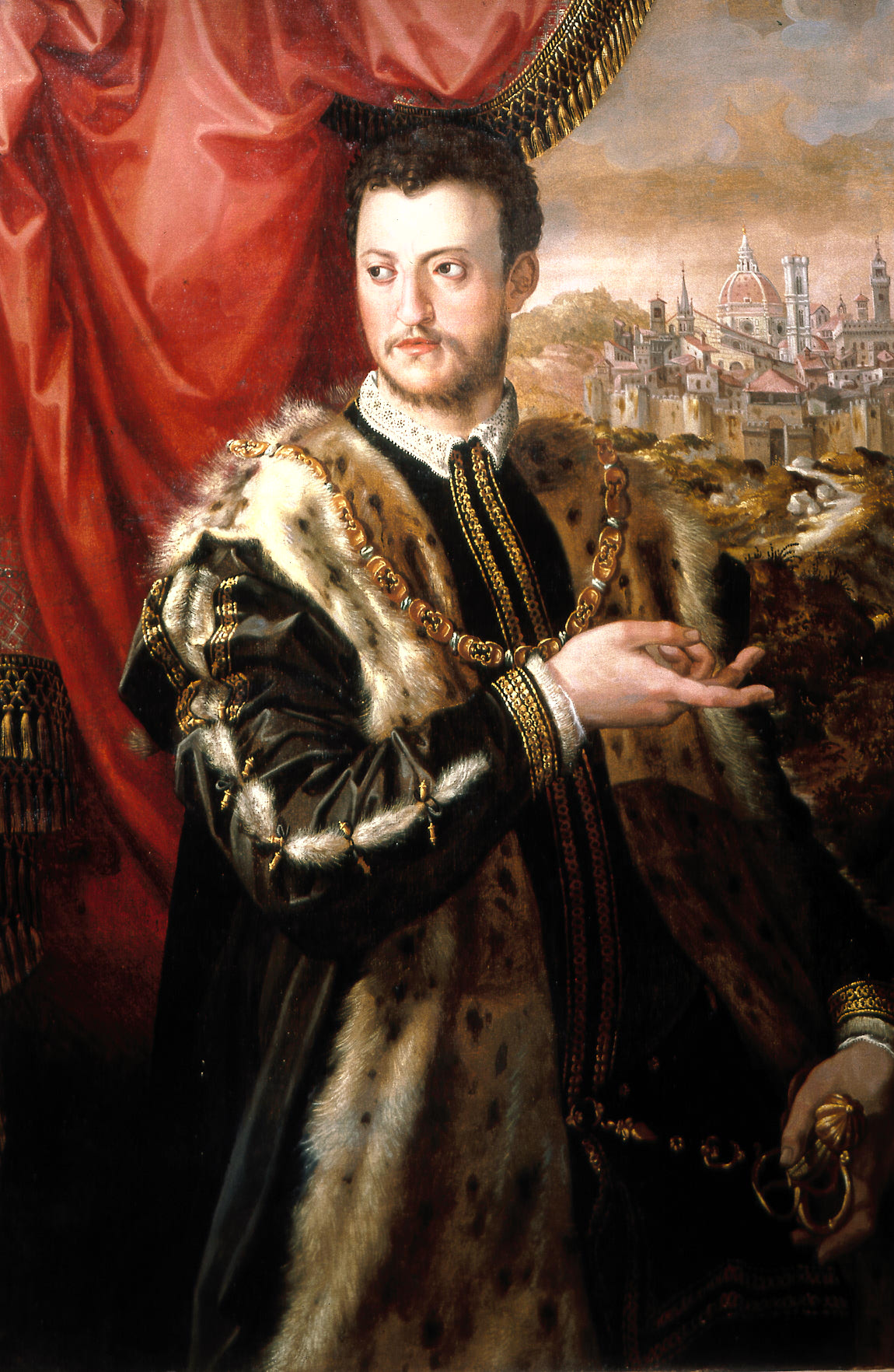
Considered to be one of the greatest exponents of Mannerism and a multifaceted artist not only in painting but also in the realisation of designs for furniture, engravings and portraits, Francesco de Rossi, often referred to as 'Il Salviati', was born in Florence in 1510 and died in Rome in 1563. Thanks to his profound friendship with Giorgio Vasari, the painter's biography is extremely accurate thanks to the chapter written by his friend, who dedicated the largest section of his work Le vite de' più eccellenti pittori, scultori e architettori (The Lives of the Most Excellent Painters, Sculptors and Architects) to him, a chapter that is fundamental for reconstructing the artist's life.
Demonstrating his precocity in drawing, de Rossi's training, a period from 1524 to 1529, saw him first frequent the workshop of Giuliano Bugiardini and later that of the famous artist Andrea dal Sarto.
Thanks to Benvenuto da Volpaia's recommendations and his ever-increasing fame, the latter's first stay in Rome began in 1531. Hired and supported by Cardinal Giovanni Salviati, a period of numerous commissions and works began for De Rossi, culminating with the realisation of the Annunciation of St. Francis. This is an altarpiece in which it is possible to outline his first style characterised by the architectural subdivision of the scenes, according to Raphaelesque input, but with an attention to the realisation of bodies and volumes in a classical key, taken from Giulio Romano. Towards the end of 1539, de Rossi decided to temporarily leave Rome and took the opportunity to stay in Venice.
Hosted by the powerful Grimani family, de Rossi was able to display his talent by producing a series of both canvases and building decorations. This period, up to 1541, was particularly important for the Florentine artist as he had the opportunity to update his stylistic vocabulary drawing from Sebastiano dal Piombo and Parmigianino. The influences of these artists are particularly visible in the Florentine painter's style when he returned to Rome in 1541. Hired by Pier Luigi Farnese, son of the ruling pope, De Rossi produced a portrait of the patron and decorations for his residence, and both works show the influences mentioned above.
From 1543 to 1547, Salviati stayed in his hometown and began the decoration of the Sale delle Udienze in Palazzo Vecchio: his style became more decorative and calligraphic, with sinuous lines full of strength creating an unreal and fairytale-like effect. There were numerous smaller works, in which he leaned towards a painting style that was elegant but also robust, influenced by the contemporary works of Bronzino. Then, from 1548 to 1563, de Rossi was permanently in Rome, except for a brief stay in France. From 1548-52, Il Salviati was involved in numerous commissions from both the powerful Farnese family and religious institutions, such as the Oratory of 'San Giovanni decollato.' Regarding the stylistic development of the Florentine painter, this period saw a greater use of volume and plasticism, with corporeity acquiring a greater decorative value. His last work dates to 1562-63, The Stories of the Virgin for San Marcello al Corso, commissioned by Cardinal Matteo Grifoni.