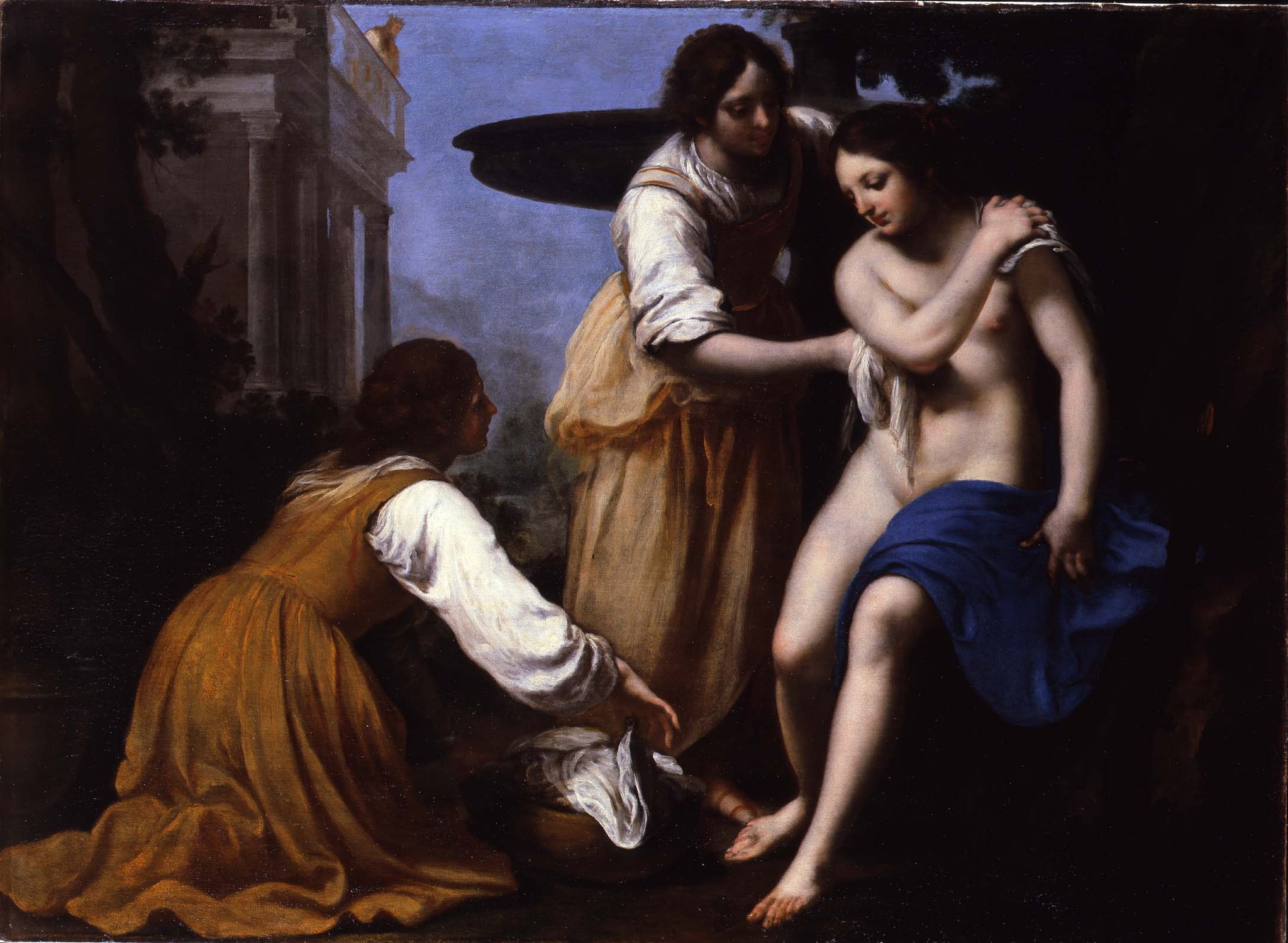
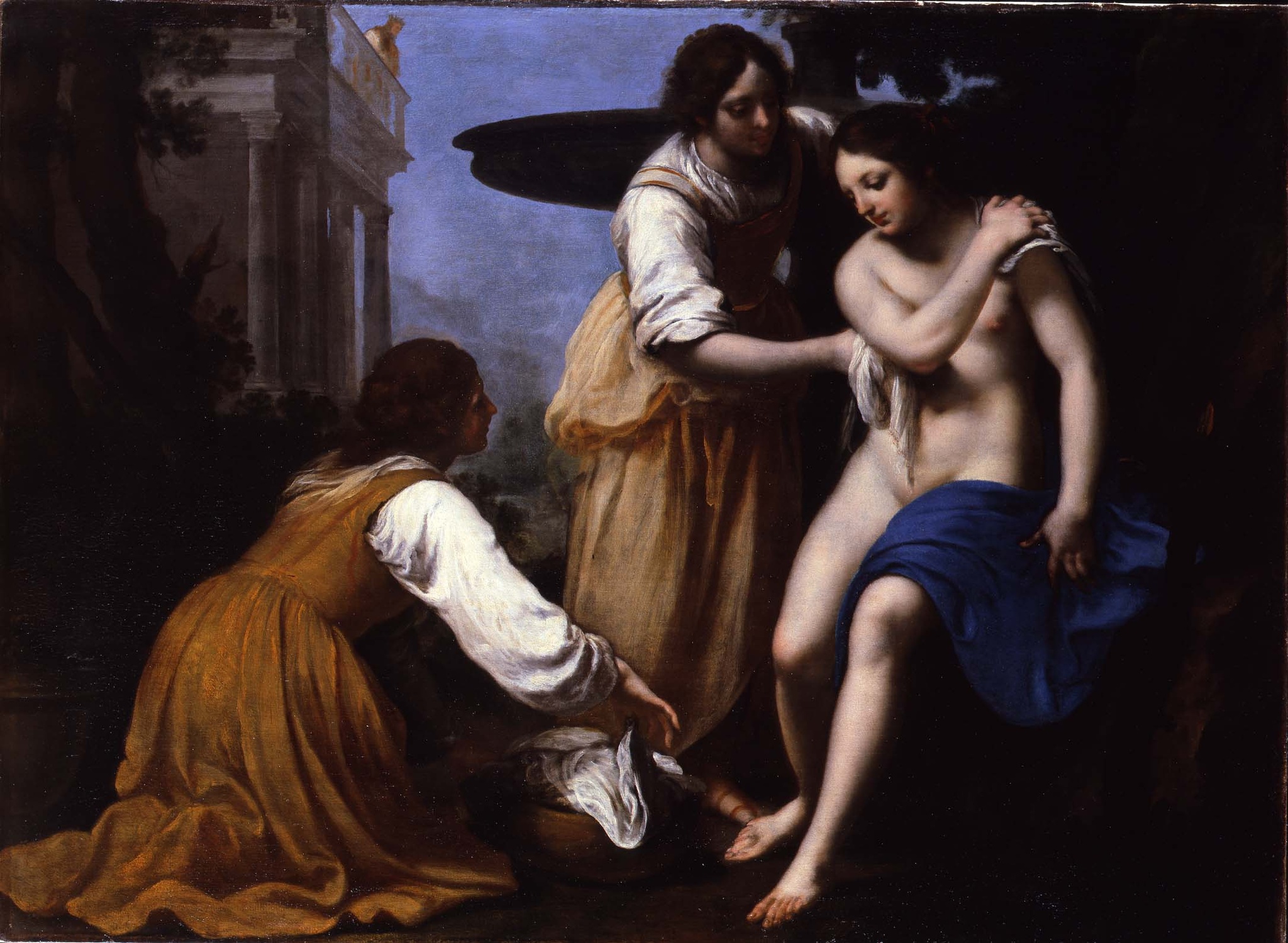
Nicknamed Felice Riposo, deriving from Ficherelli's retiring nature, it is understandable that Baldinucci mentions him in his book Notizie (1681 – 1728, ed. 1845 – 1847, IV, 1846, pp. 563 – 574), describing the artist as solitary and taciturn.
Born in San Gimigniano in 1605, Ficherelli moved to Florence when he was still young and was under the ward of Alberto Bardi di Vernio, the favourite horseman of Cardinal Carlo de’ Medici, as well as a patron of the artist and collector, who died in 1632. Bardi encouraged Ficharelli to study under Jacopo da Empoli and under his patronage copied “all the works of Andrea del Sarto, that are in the small cloister of the Church of the Annunziata, an experience that is reflected in the late paintings of Felice Riposo. Ficherelli stayed with the family of Alberto Bardi di Vernio for a few years (as seen by the number of paintings owned by the family).
Later the painter found alternative living arrangements and gained great success with painting secular subjects, which according to Baldinucci, were executed with “great tenderness” and with characters painted in a naturalistic style. Baldinucci speaks of Ficherelli’s interest in the “colourfulness” of Furini, and his contribution to the refined sensuality that was characteristic of Florentine painting after the 1620s.