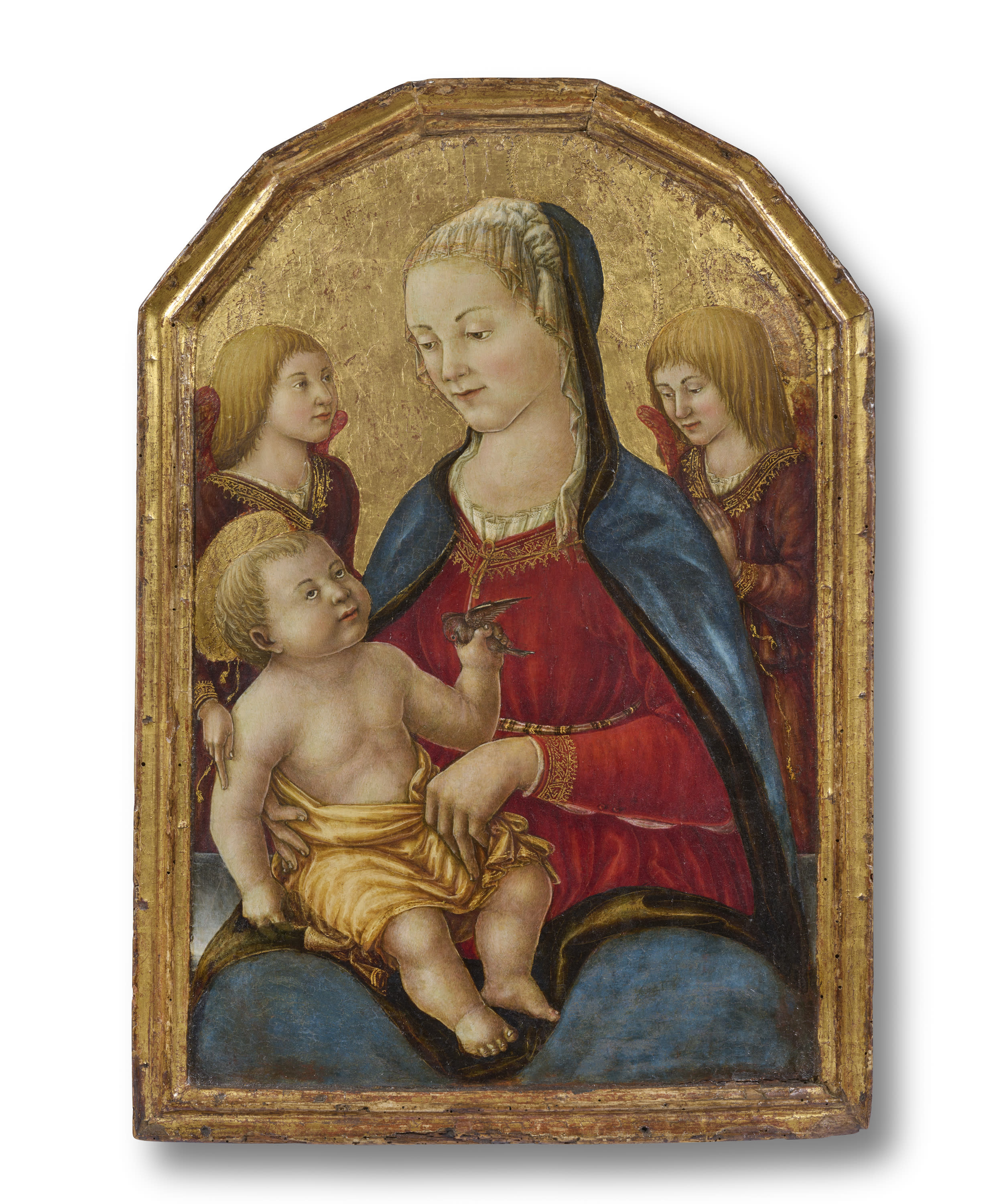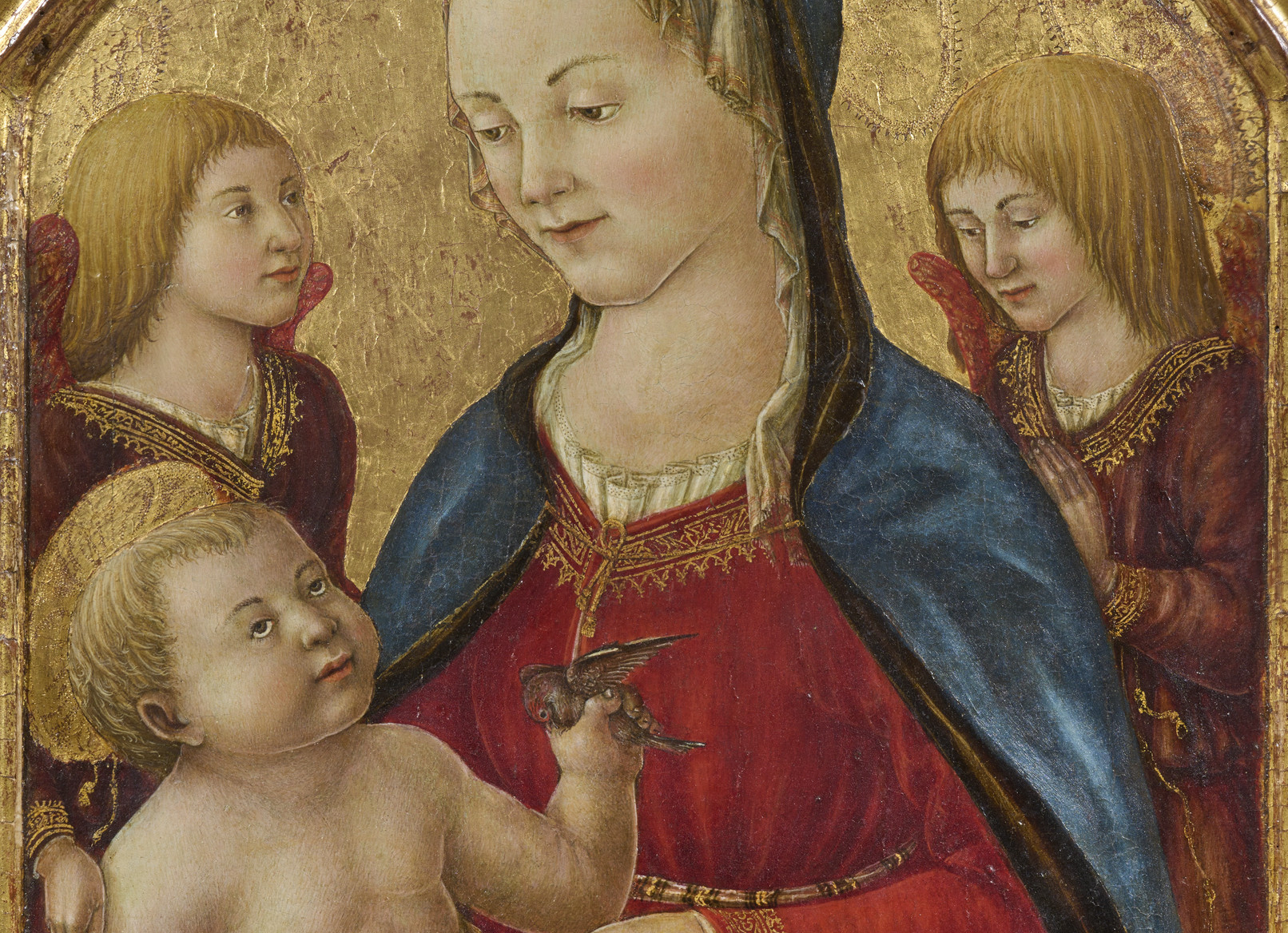
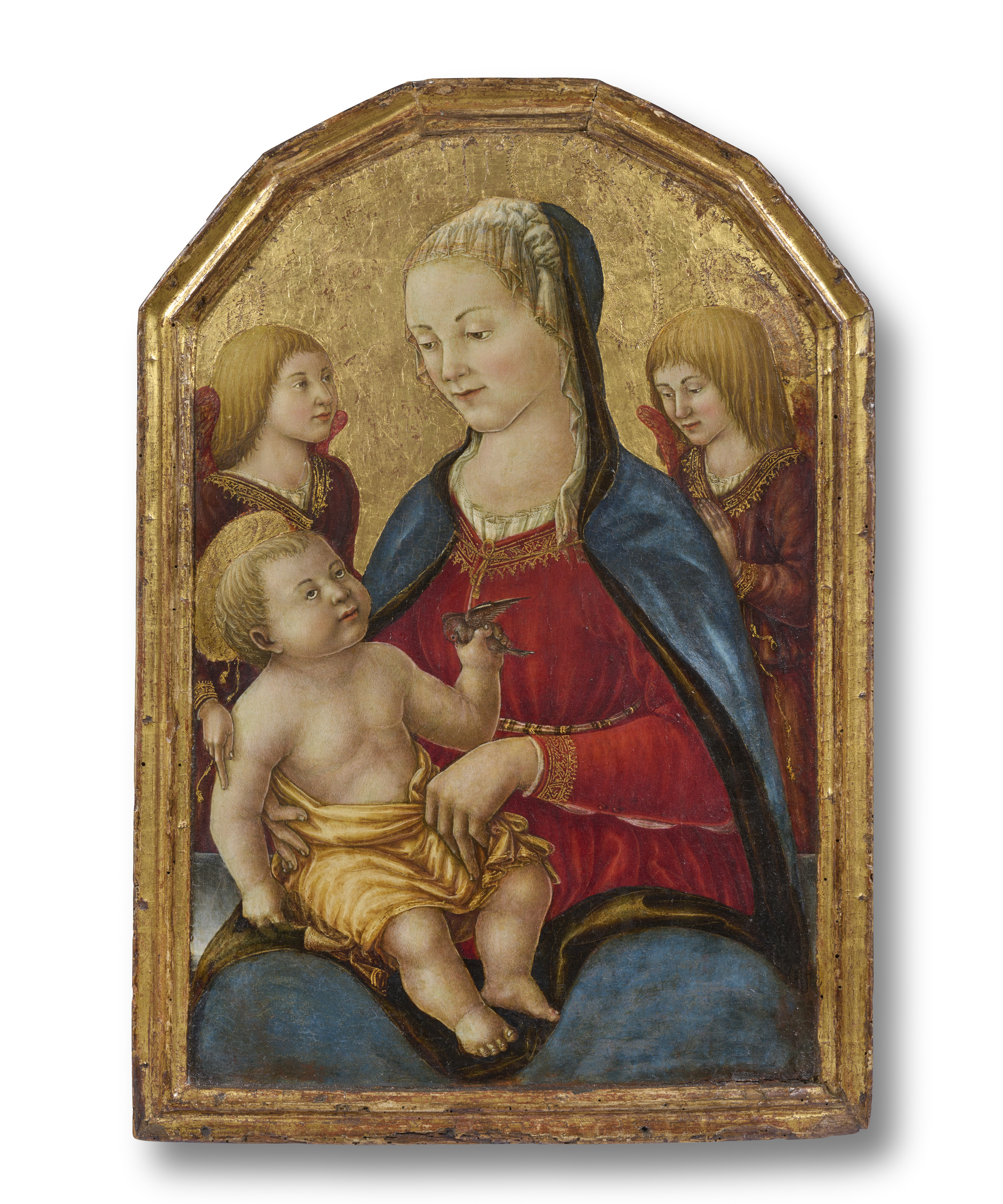
Roberto Longhi was first scholar to identify the personality of this distinct artist, dubbing him the ‘Familiare di Boccati’ and uniting his oeuvre, which then comprised the present panel, at that time in the Umberto Pini collection, Bologna, a further Madonna and Child with Two Angels in the Louvre, Paris, a Coronation of the Virgin in the Städel Museum, Frankfurt, and a Saint Sebastian in a private collection.
Though somewhat elusive as a personality, the grouping of works by this anonymous artist is unmistakably homogenous and the moniker of the ‘Familiare del Boccati’ was coined by Longhi due to the artist's apparent likeness in style to the Perugian painter, Giovanni Boccati, active in Marche and Umbria between 1445 and 1480. Modern scholarship, meanwhile, has disputed the Familiare's association with this region and Andrea de Marchi considers him to have been a Lucchese painter, linking him to the Master of Benabbio (now identified as Baldassare di Biagio del Firenze) and Matteo Civitali, both of whom were active in Lucca during the same period. De Marchi added a further Madonna and Child to the artist's oeuvre.