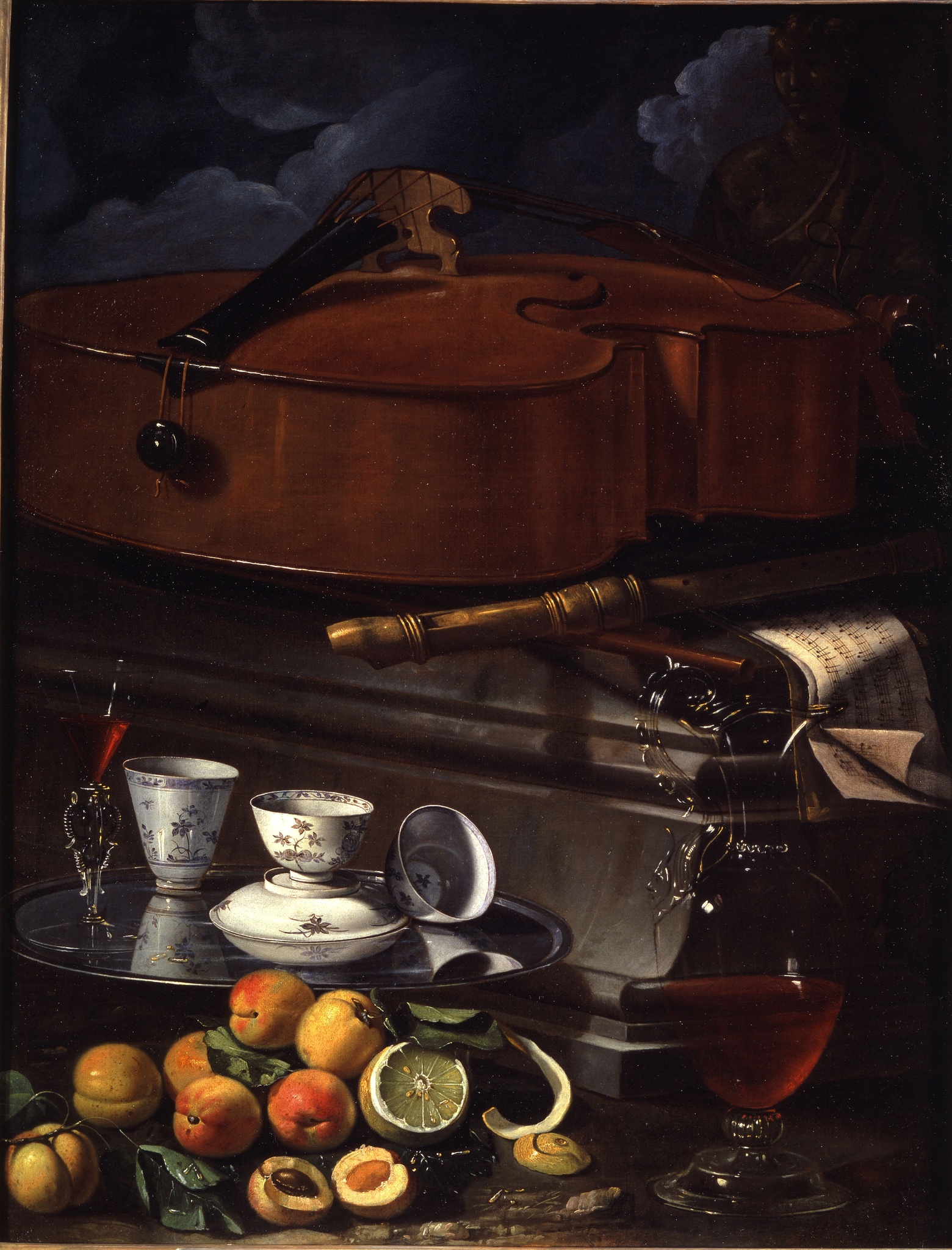
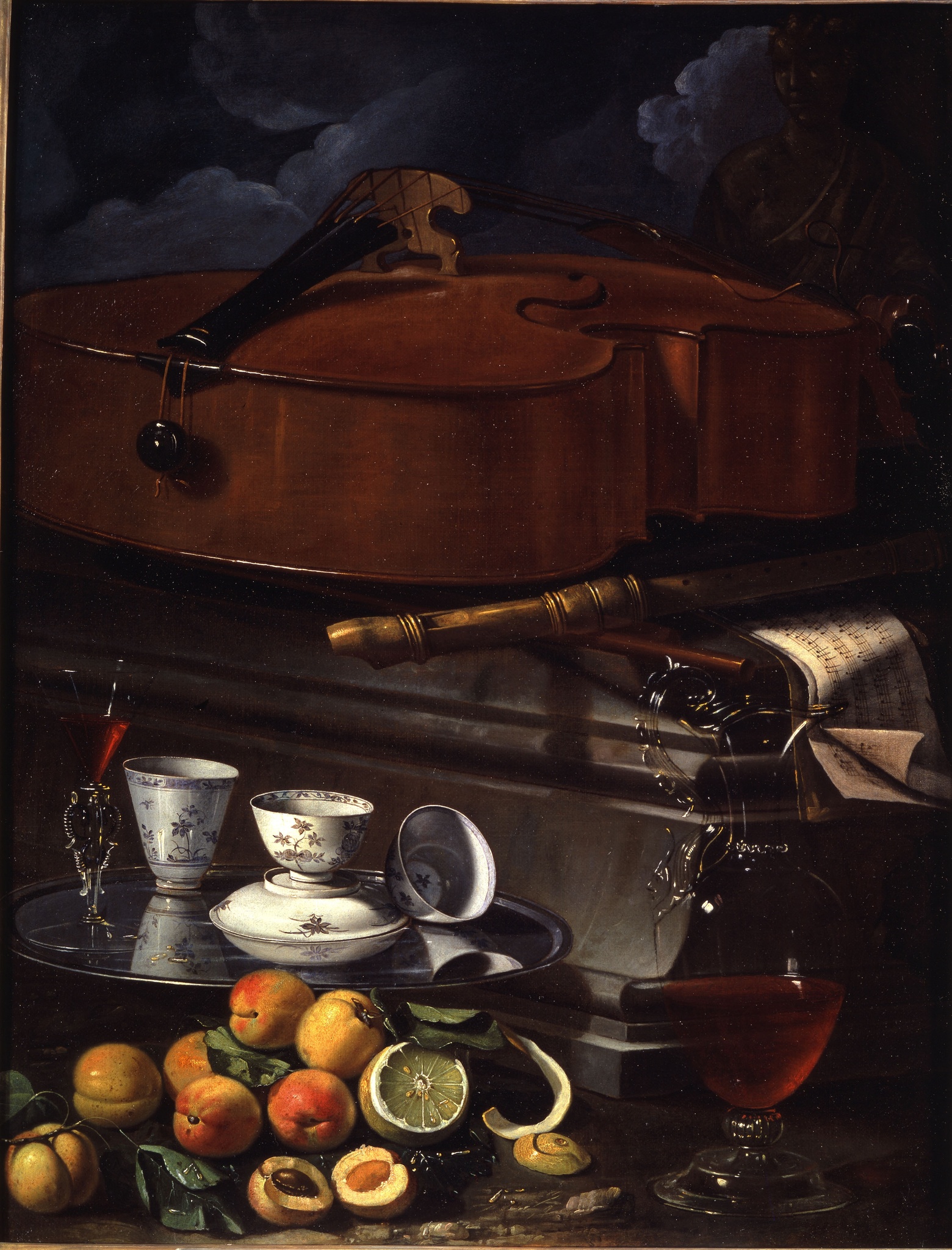
After working initially in his native city as a protégé of Rinaldo d'Este, Duke of Modena, Munari went to Rome in 1703, where he soon found patronage among the leading aristocratic families. By 1706, he had moved to Florence, where he worked at the court of Ferdinand de' Medici. The opulent tastes of his wealthy clientele is reflected in the luxurious and often exotic goods found in his still lives.
In 1706, the abbot Orazio Marrini described Munari's talents, writing, 'He delighted moreover in representing with lively colouring pieces of fir wood in such a way as to make one think that attached to them with pins were prints and drawings, little portraits, scissors and other suchlike implements with such lifelikeness as to astound one.'