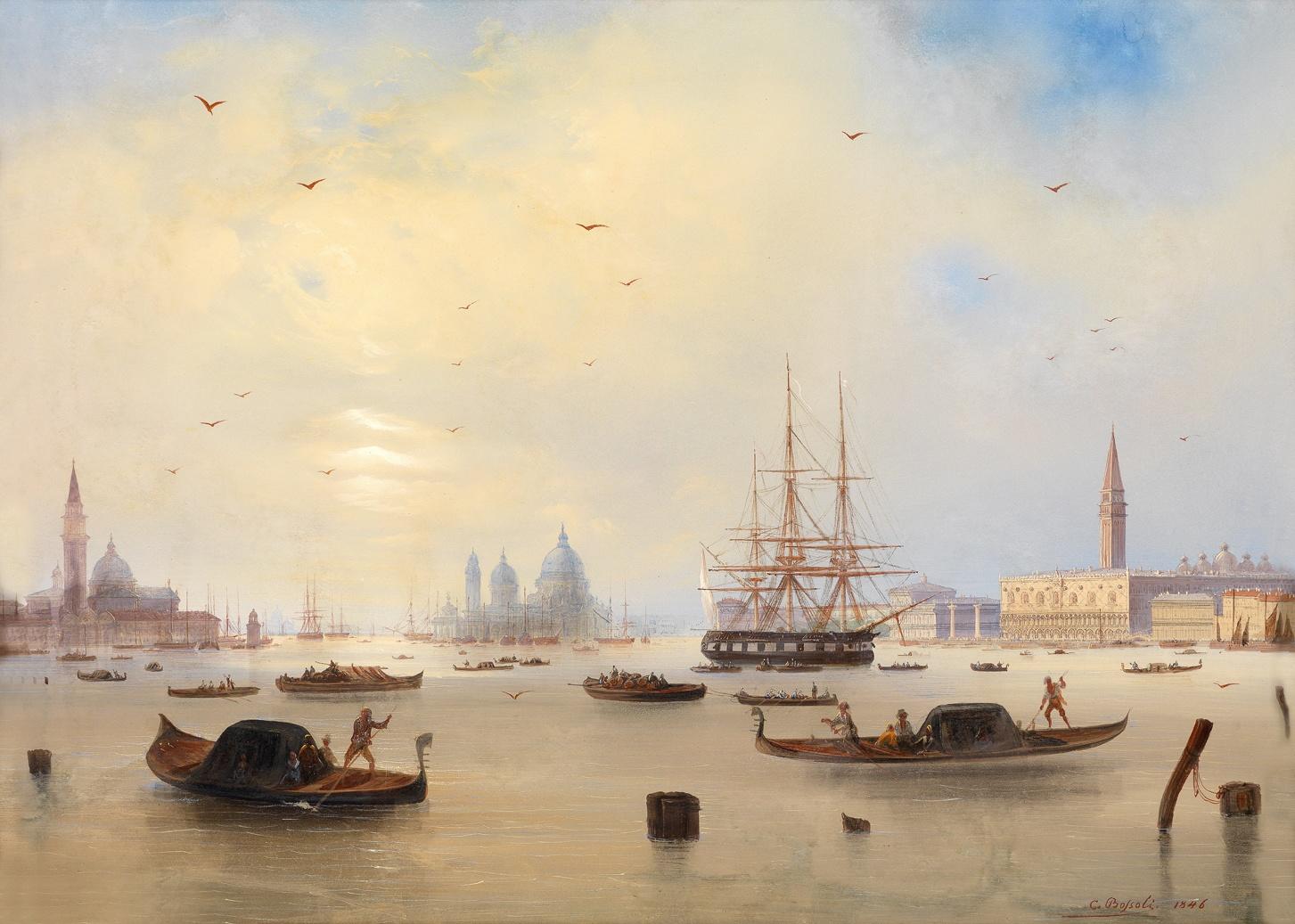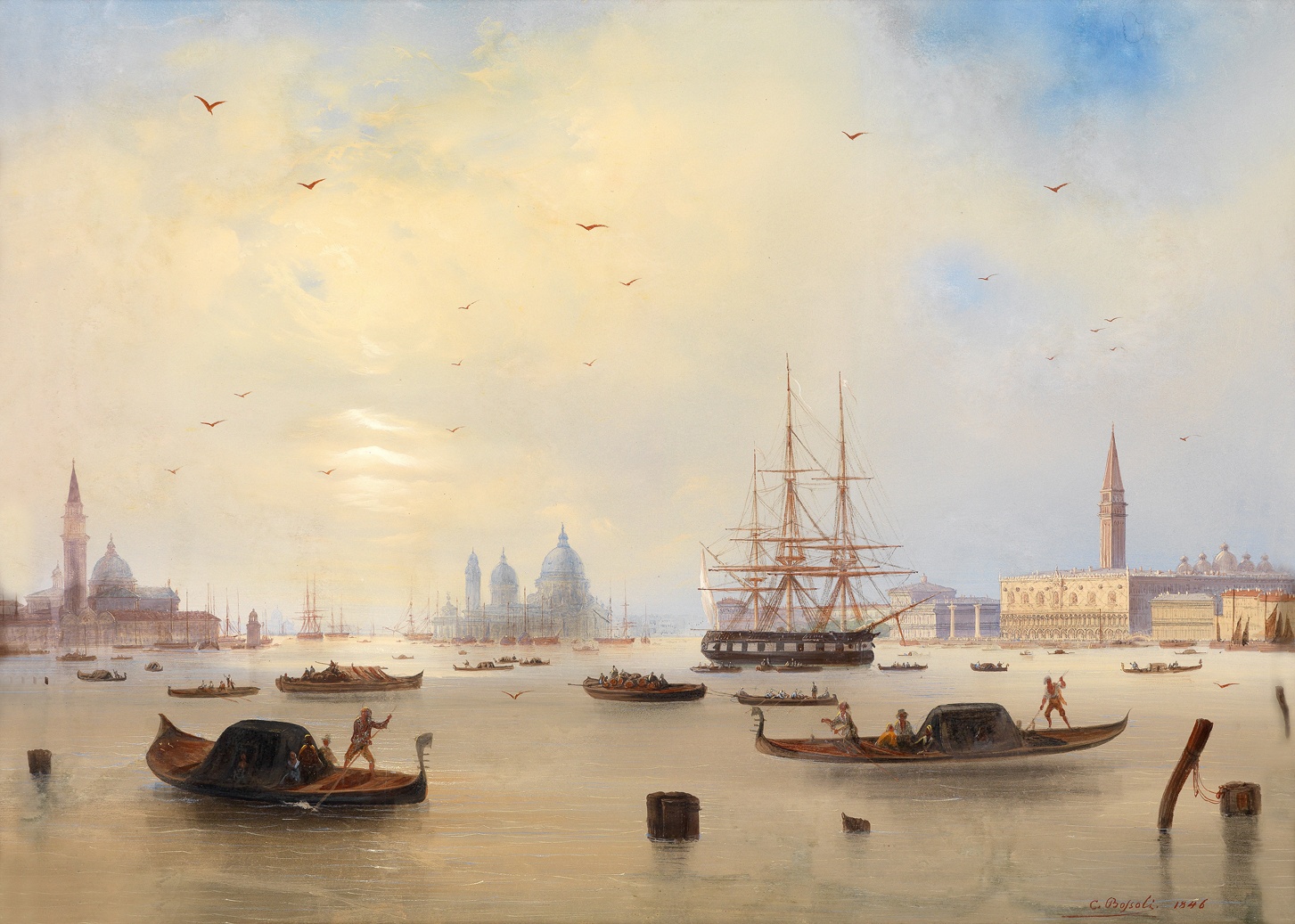
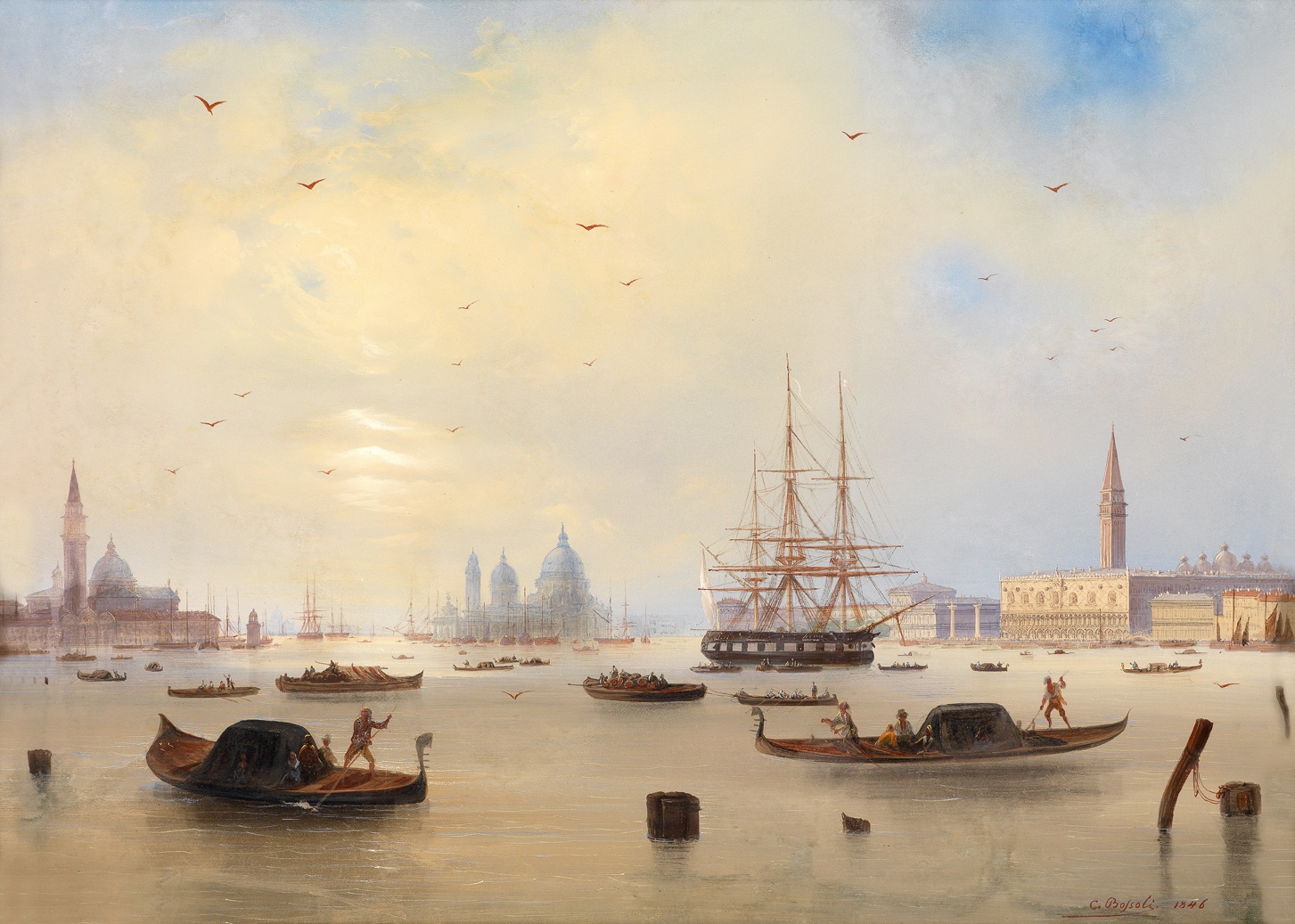
Carlo Bossoli spent his youth and the beginning of his artistic career in Odessa, Ukraine. In 1839, he conducted his first trip to Italy where he remained for a year, travelling to Rome, Naples and other principal cities of the peninsula. In 1840 he returned to the Crimea, though left for good in 1843, heading to Ticino and Milan, alternating between the two until 1853 when he moved to Turin for good. During the course of the 1850s, the artist carried out the majority of his travels - it was also the most productive period of his career. In 1850, Bossoli travelled to England and Scotland and the following year to Spain and Morocco.
In 1853 and in 1855, he returned to London where, in 1854, he published Views of the Crimea, in which he showed some of the works executed during his youth. Between 1859 and 1861 Bossoli was employed by Eugenio di Savoia Carignano to follow the Piedmontese troops and to document the military action from the Second War of Independence. These experiences effected the artist’s health, and during the latter stages of the war he moved and painted less; his last important voyage was in 1867 when he toured Scandinavia and Central Europe. In 1862, Bossoli received the title Pittore reale di storia (History Painter to the King) by Vittorio Emanuele II. In the course of his life he exhibited at Brera (1845, 1852), Promotrice di Belle Arti in Turin (1844, 1848, 1851, 1852, 1855 e 1884) and at the Royal Academy London (1855, 1859).
Bossoli portrayed almost every corner of Europe, gaining great success in Italy as well as abroad. His works are an important contribution both to the knowledge of historical events and to the history of costume. They also offer an unparalleled survey of European landscapes and architecture, always reproduced with great attention to detail, and enriched with scenes of local colour that bestow a particular note of liveliness on Bossoli’s works.