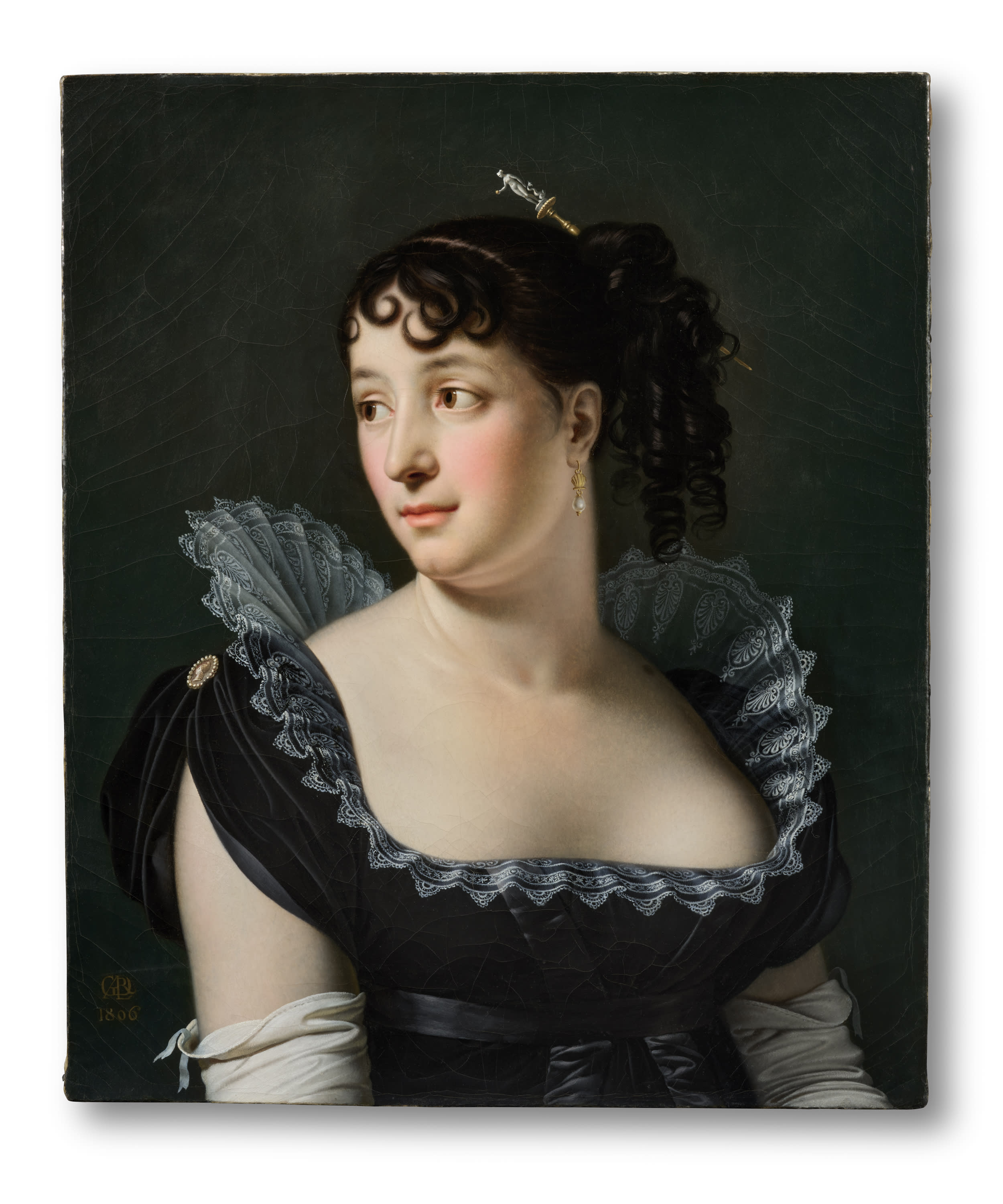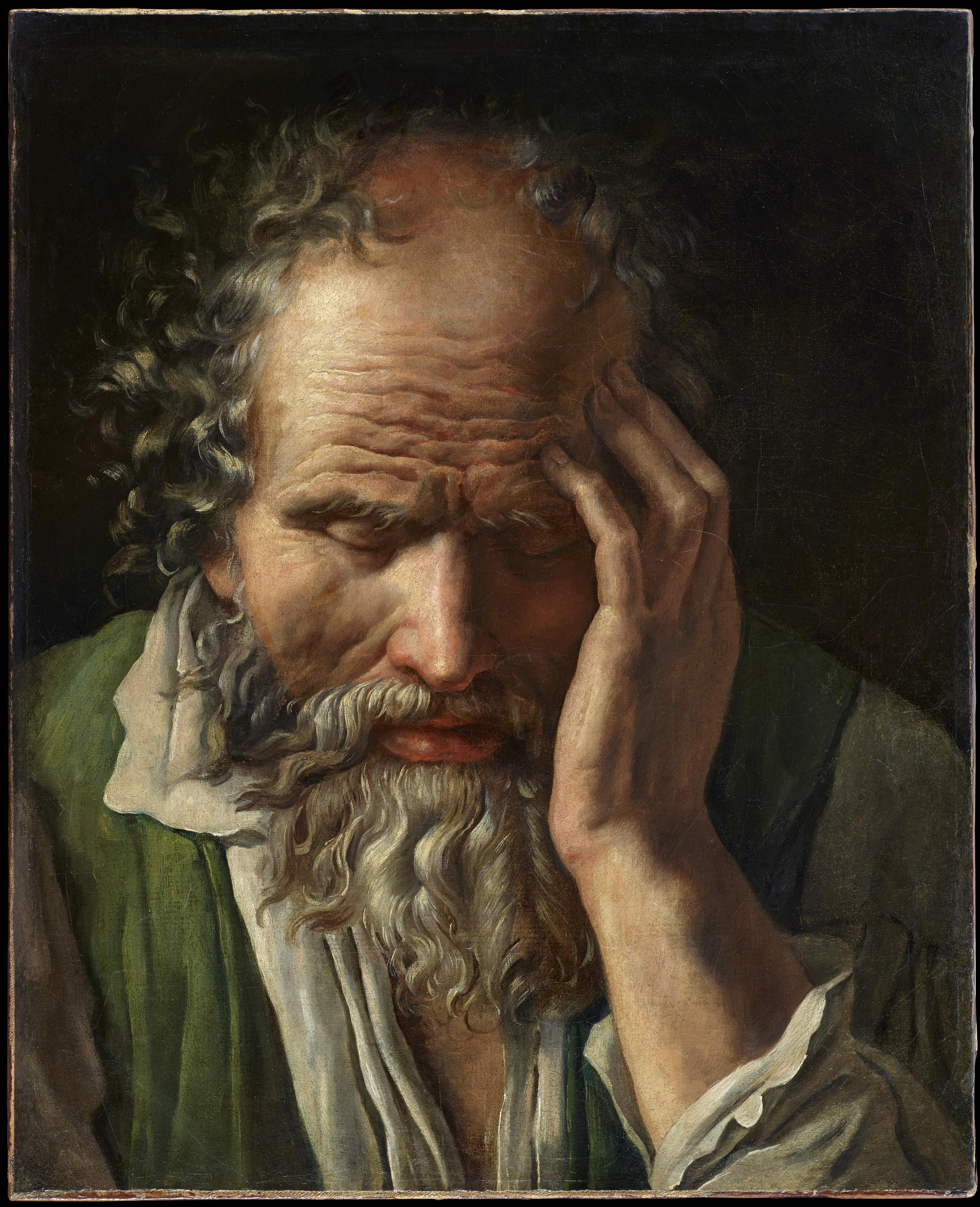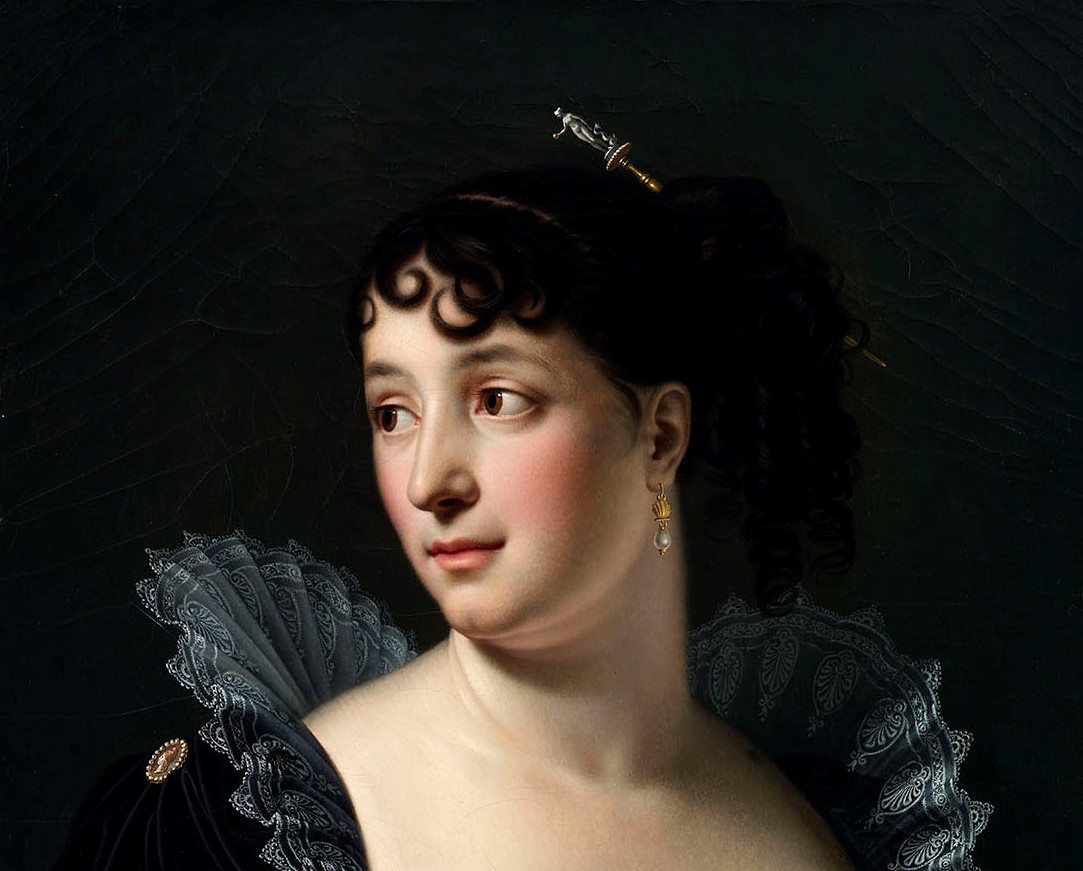
The career of Anne-Louise Girodet de Roucy-Trioson spanned one of the most turbulent yet significant periods in French history, which witnessed the French Revolution, the reign of Napoleon, and the restoration of the Bourbon monarchy. Across this period, the artist pioneered a new artistic sensibility which combined intellectual refinement and sensuality in works quintessentially Romantic in spirit. In 1784, the young Girodet entered the studio of the legendary French neoclassical painter, Jacques-Louis David, quickly becoming his star pupil. He won the coveted Prix de Rome in 1789, and departed for Rome the following year, remaining in Italy there until 1795. There he began to depart from the austere neoclassicism of David to develop his own highly imaginative, intensely personal, and often passionately poetic manner which pushed the boundaries of what was considered appropriate by the French art establishment. Unusual colour effects and melodramatic lighting characterize his renderings of the literary subjects he favoured, exemplified by works like the Sleep of Endymion (1791) and the Entombment of Atala (1808), both now in the Louvre. Girodet also won renown for works glorifying Napoleon and was a gifted portraitist. In 1806 Girodet was adopted by and took the name of Benoît-François Trioson, his guardian and probable biological father. Upon inheriting Trioson’s large fortune in 1815, he turned his energies to writing poetry about painting, which is generally considered unreadable.