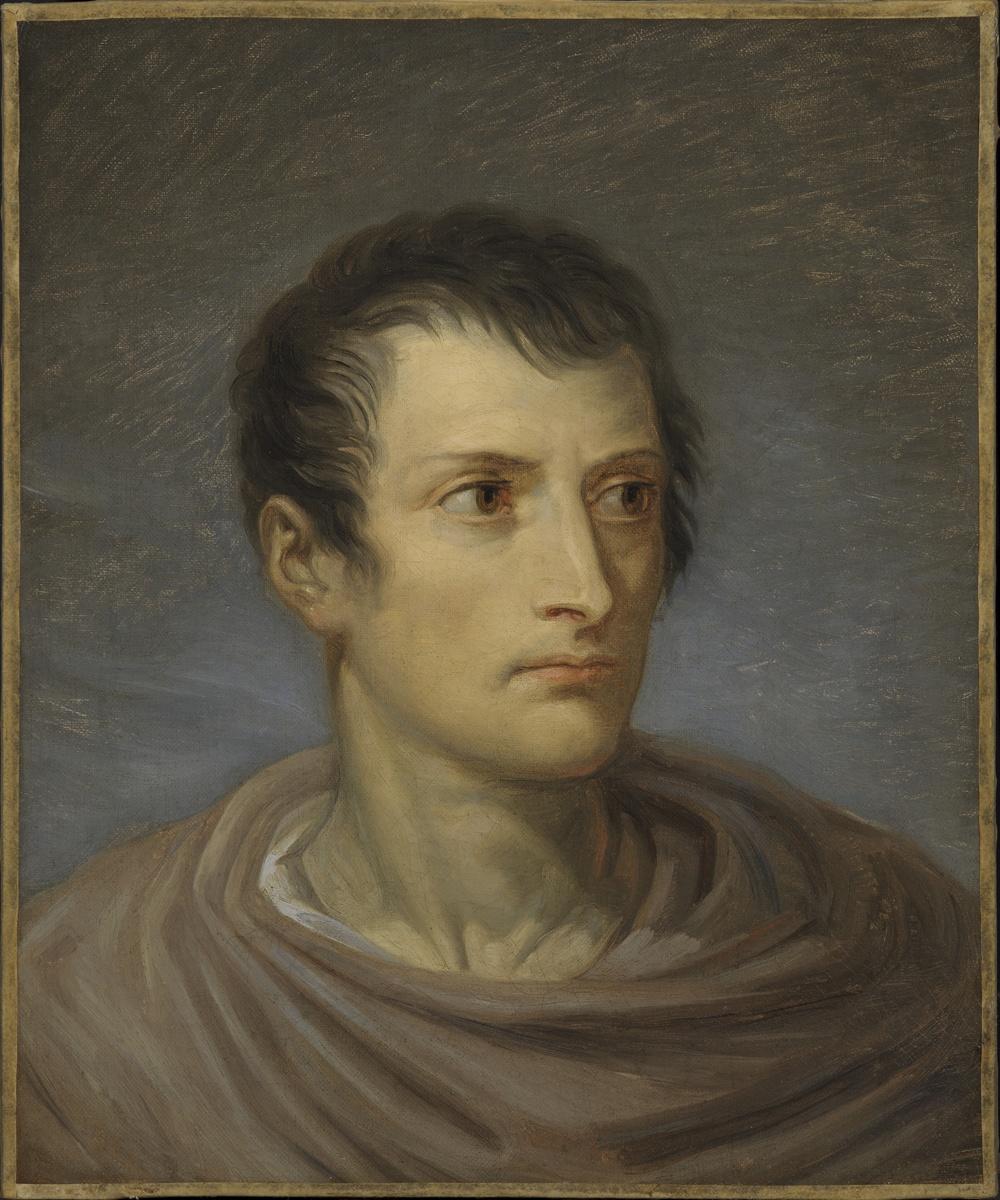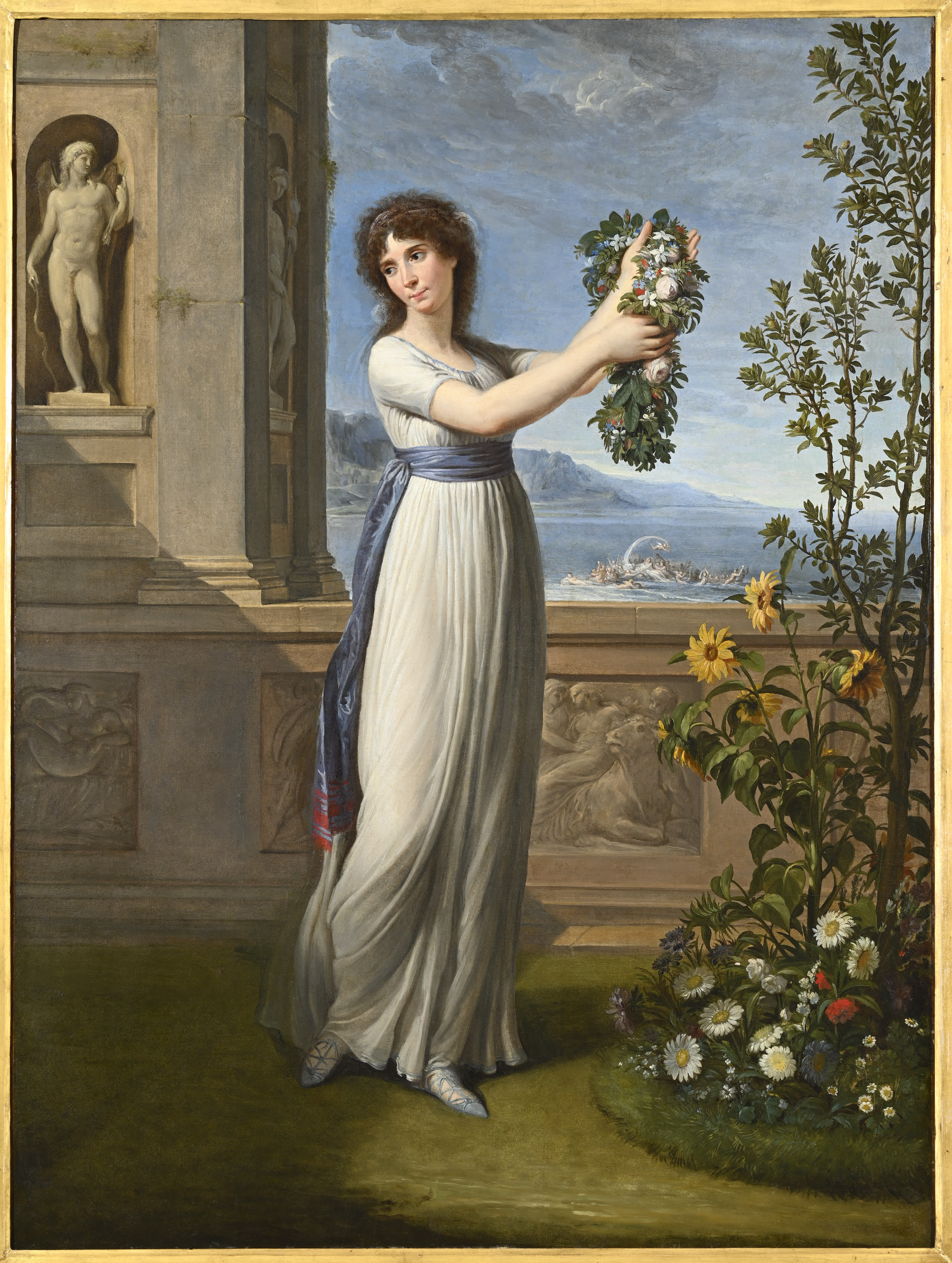
Andrea Appiani was the leading painter of the Neoclassical tradition in Italy and is perhaps best known as a key figure in fashioning the visual legacy of Napoleon Bonaparte in Italy. When Napoleon first arrived in Milan in 1796 during the First Italian Campaign, he sat for a charcoal and chalk portrait drawing by the Milanese artist. The young general was so pleased with the result that it led to Appiani being showered with honours, commissions, and opportunities for years to come.
Appiani was named “senior commissioner” responsible for selecting Lombard and Venetian art for Paris, and a visit to the city in 1801 at Napoleon’s behest introduced him to the austere Neoclassicism of Jacques-Louis David, which would have a decisive impact upon his style. In 1800, Appiani was invited to undertake a large cycle of frescoes glorifying Napoleon in the Sala delle Cariatidi in the Palazzo Reale in Milan, and from the late 1790s through the 1810s, he created many portraits of Bonaparte and his family members.
Appiani received the title of “First Painter” in 1805, the same year in which the artist painted his most famous portrait of Napoleon as King of Italy (Kunsthistorisches Museum, Vienna, known also in several versions). For his service, Napoleon awarded him the Légion d’Honneur and the Order of the Iron Crown.
Napoleon And Josephine Reunited After 200 Years