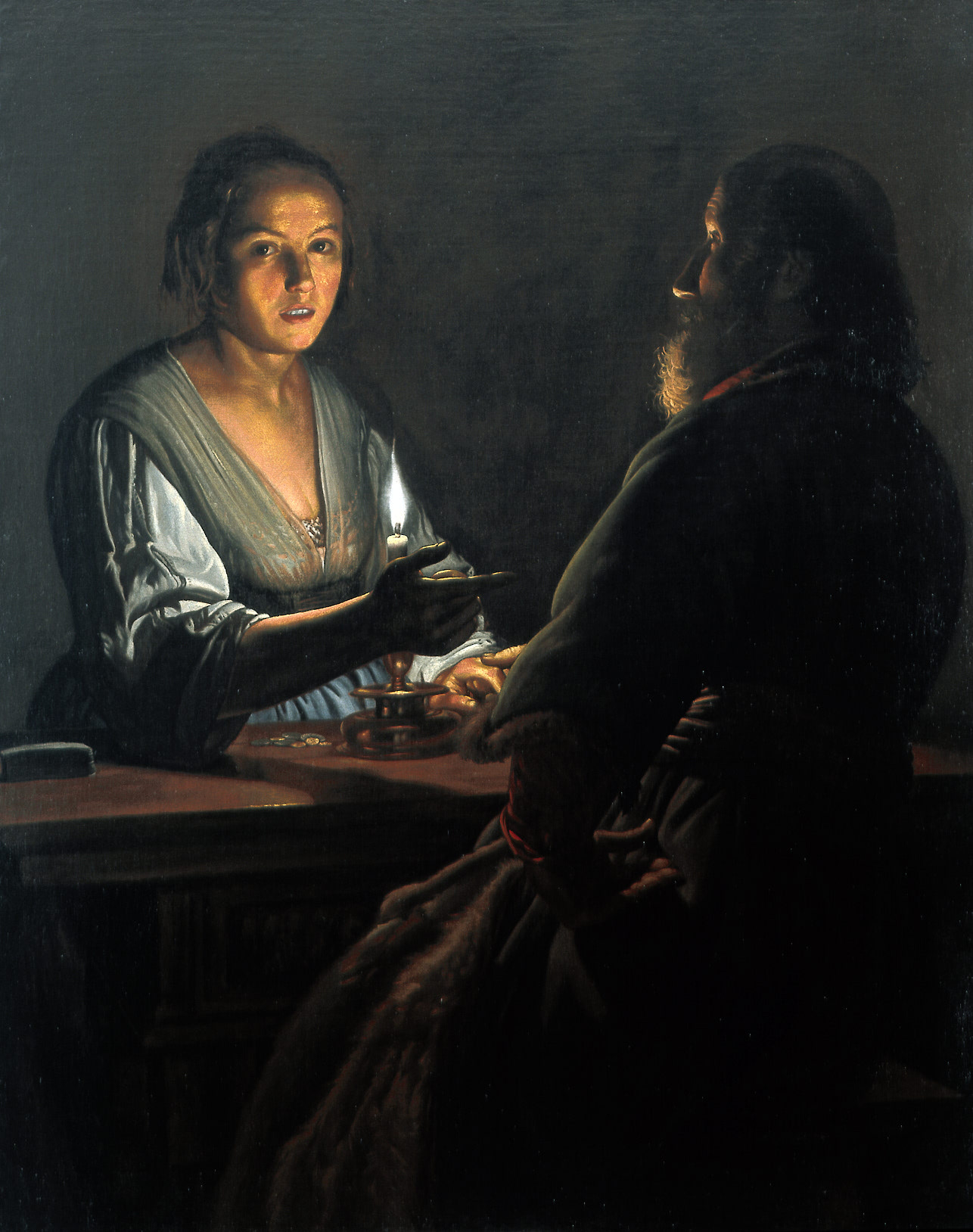
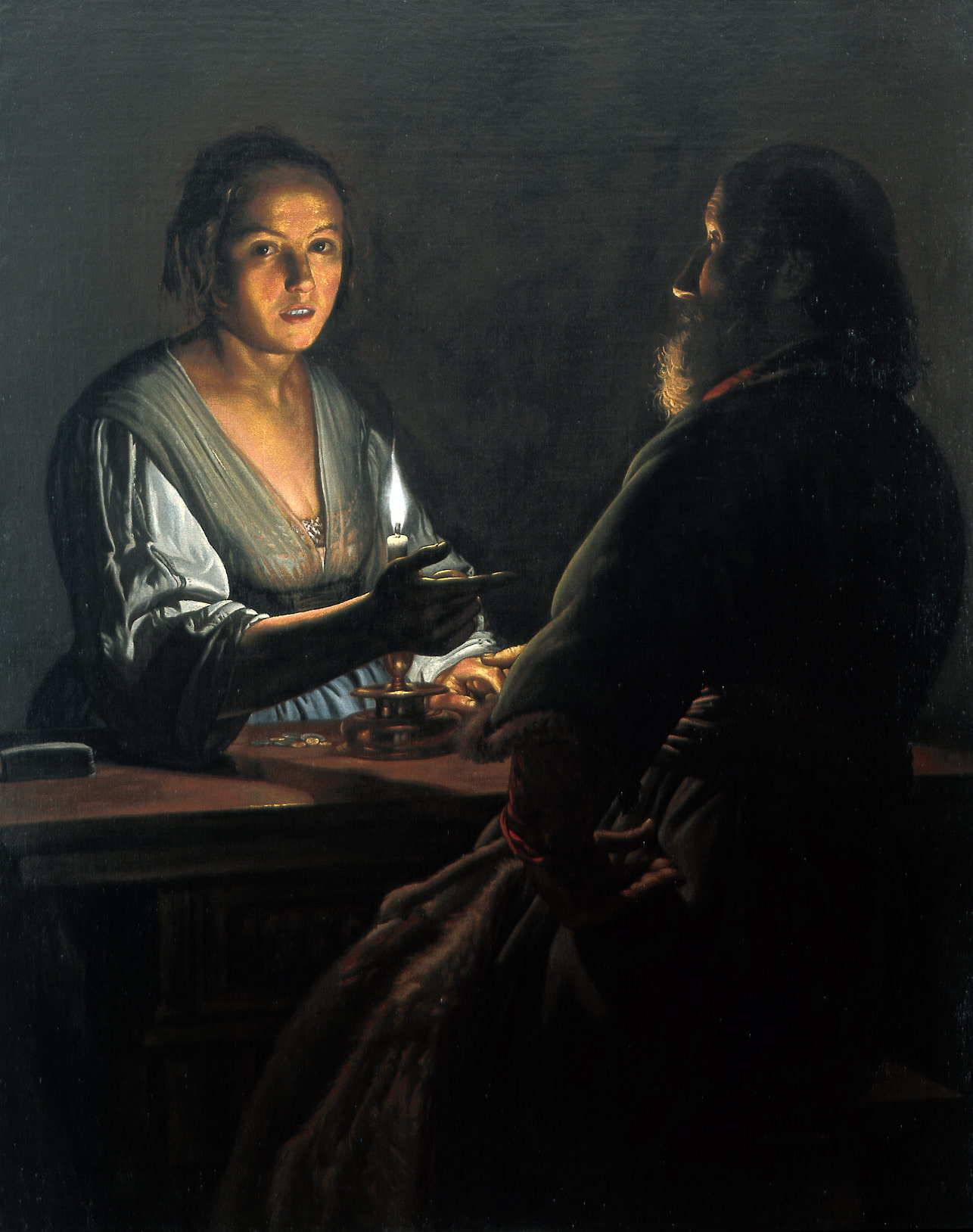
Adam de Coster was firmly established in Antwerp around 1630 as a painter of artificially illuminated night scenes. Nothing is known about de Coster’s training and very little about his life in general. While he probably travelled to Italy as a young Italian man, the only documented trip is one to Hamburg undertaken in 1635 when he was almost fifty years old. In 1607, he registered as a master painter in the Guild of St. Luke (the painters’ guild) in Antwerp, where he appears to have spent the better part of his life.
No signed paintings by de Coster are known, his small oeuvre being reconstructed, largely by Benedict Nicolson, on the basis of a print by Lucas Vorsterman after a lost composition by the artist showing backgammon players and a female lute-player around a table. The scene in that painting was lit by two candles, one of which was concealed by the figure of a boy on the nearside table. Such lighting effects clearly show knowledge of Gerrit van Honthorst’s innovations from the 1620s, but how they would have reached the Antwerp artist remains a mystery. A
lthough his fellow Antwerp Caravaggisti also painted such scenes, de Coster’s penchant for depicting figures making music also suggests that he drew inspiration from Honthorst and his Utrecht colleagues.
