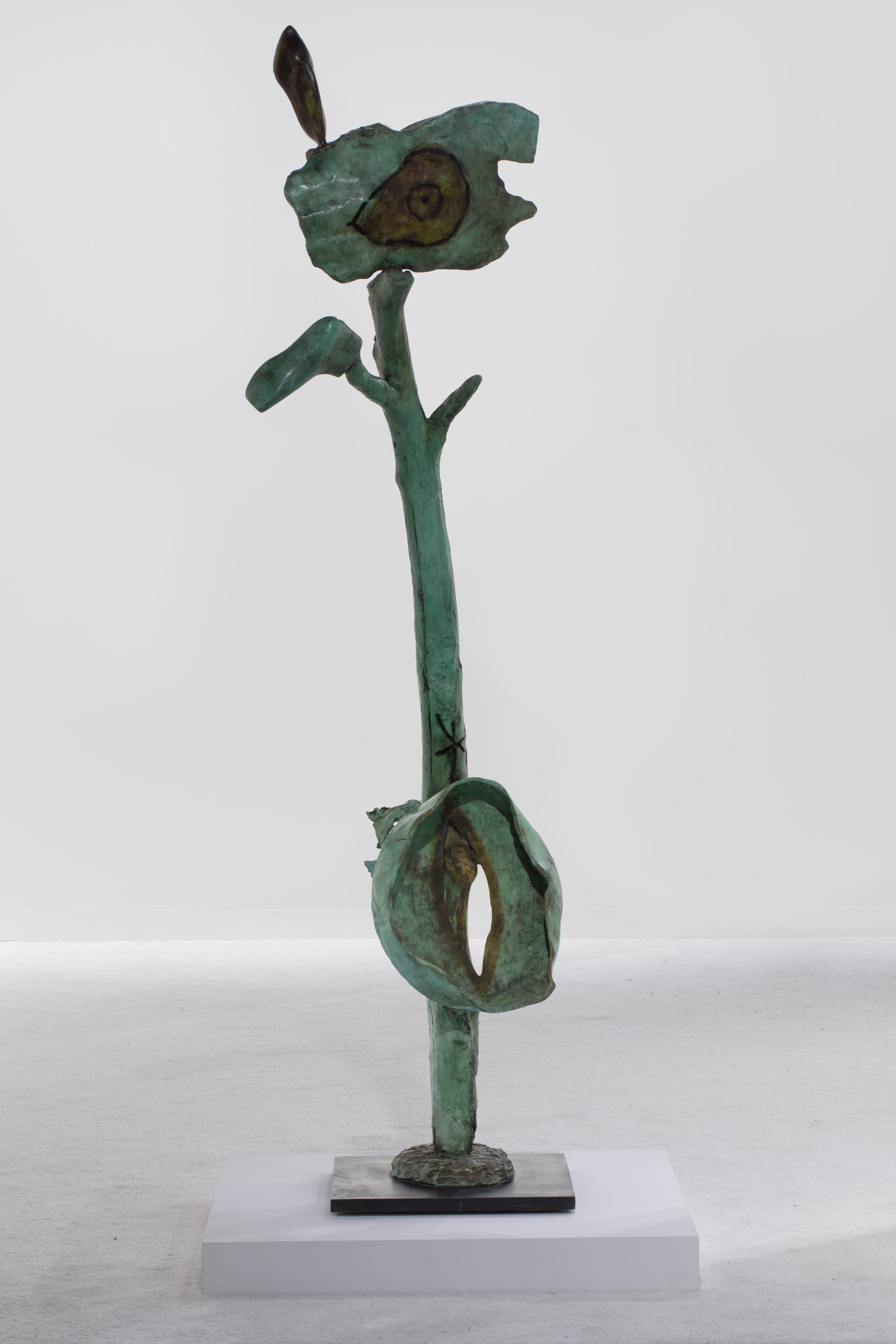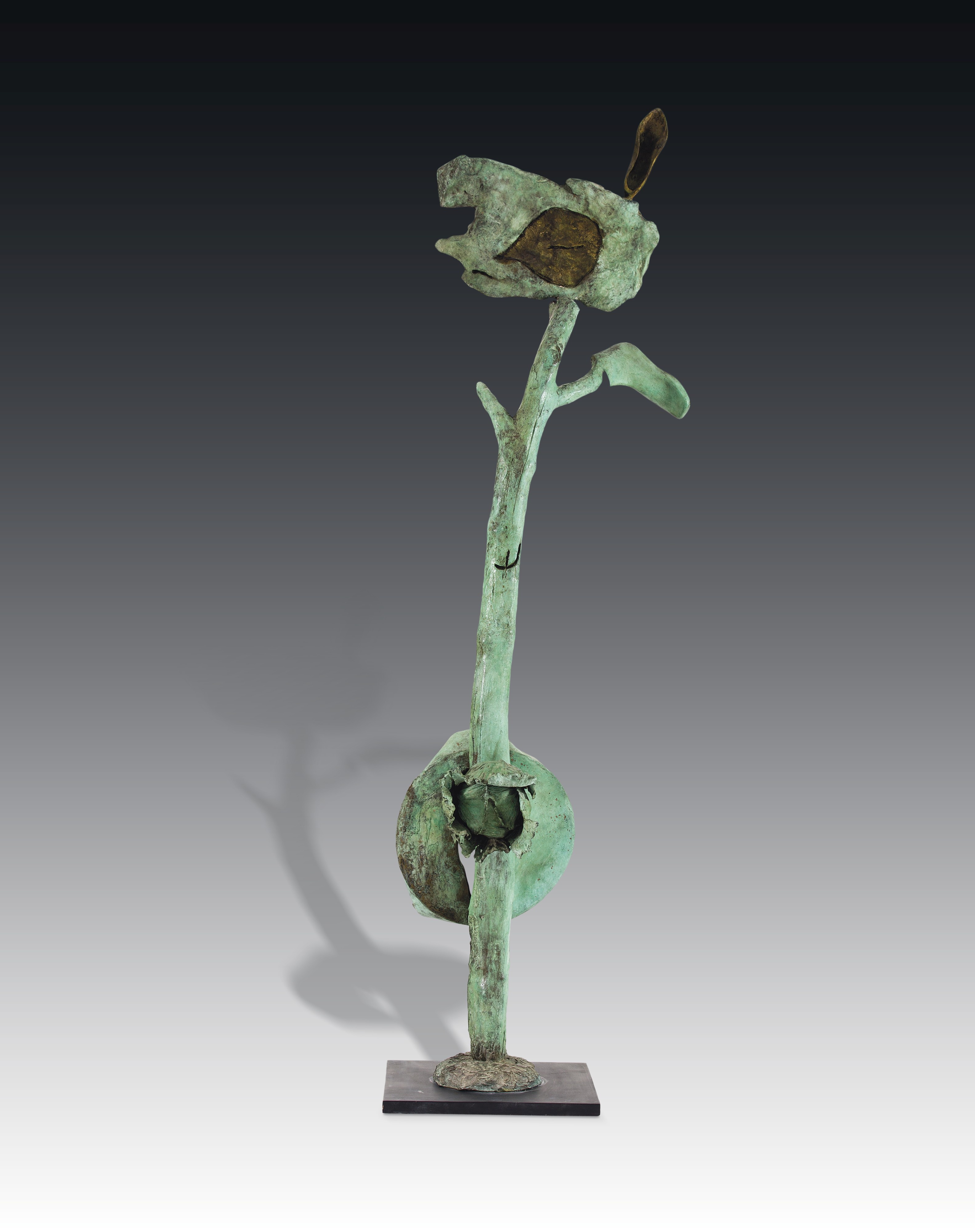
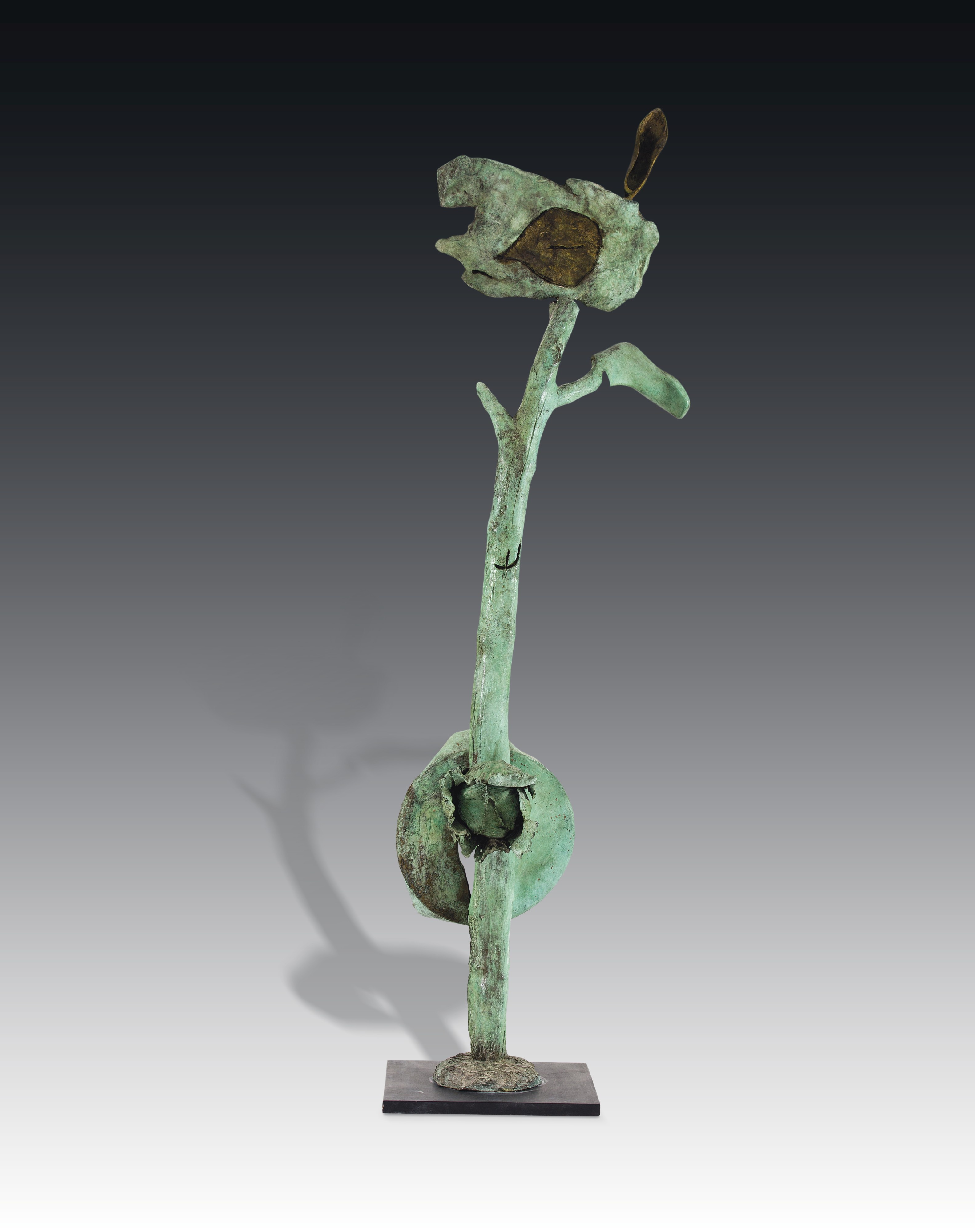
A continuous experimenter and prolific artist, Joan Miró i Ferrà was born in Barcelona in 1893 and died in Palma de Mallorca in 1983.
Raised in the Catalan countryside, two elements of Miró's early life would prove instrumental in shaping his later work; the austere Catalan landscape and his father's artisanal profession as a watch-maker. From 1912, Miró attended art school in Barcelona where he met an inspirational teacher, Francisco Gali, who not only introduced him to modern art movements emerging in Paris but also encouraged him to appreciate the physicality of subjects through touch and study of their form.
Between 1915 and 1919 Miró worked in Spain and developed his personal style, drawing upon the bold colours of Fauvism and combining these with abstracted geometric shapes inspired by Cubism.
From 1919, the Catalan artist began to spend periods of time in Paris and came under the influence of the Surrealists and Dadaists. Between 1925 and 1929, he painted 'dream pictures' and 'imaginary landscapes' in which patches of colour appear randomly placed on the canvas. Other Surrealist artists admired his depiction of the unconscious realm; indeed the poet and leading Surrealist André Breton labelled Miró 'the most Surrealist of us all'.
In the 1930s Miró moved away from painting and began experimenting with use of collage and sculpture, a period referred to by him as the 'murder of painting' as he expressed his desire to experience art in a non-traditional manner. He also engaged with tapestry which sparked a desire to make murals and monumental works. The outbreak of the Spanish Civil War in the late 1930s affected the subject and form of Miró's work, which became more figurative, even though he was living in Paris at the time. His colours became darker, his figures more anguished, and his subjects turned to those of revolt and social unrest. He began exhibiting internationally, and achieved widespread acclaim as a leading artist of his era.
During World War II, Miró returned to Spain and once again created abstract and Surrealist works. From the late 1940s, he travelled extensively, including to America where he met Jackson Pollock, the pioneer of the painting-dripping technique, with whom he established a deep friendship. During this time he also established himself as an avant-garde ceramicist, receiving several commissions from galleries and international organisations, including UNESCO. Other notable international commissions included a mural for Harvard University, Massachusetts (1950) and a monumental sculpture for the city of Chicago (1981).
Miró's artistic energy remained constant, and he continued producing works until his death in 1983. He is recognised as one of the key visionaries of twentieth-century Surrealism and examples of his work feature in collections across the world.