
Mimmo Rotella
b. 1918, Catanzaro, Italy
d. 2006, Milan, Italy
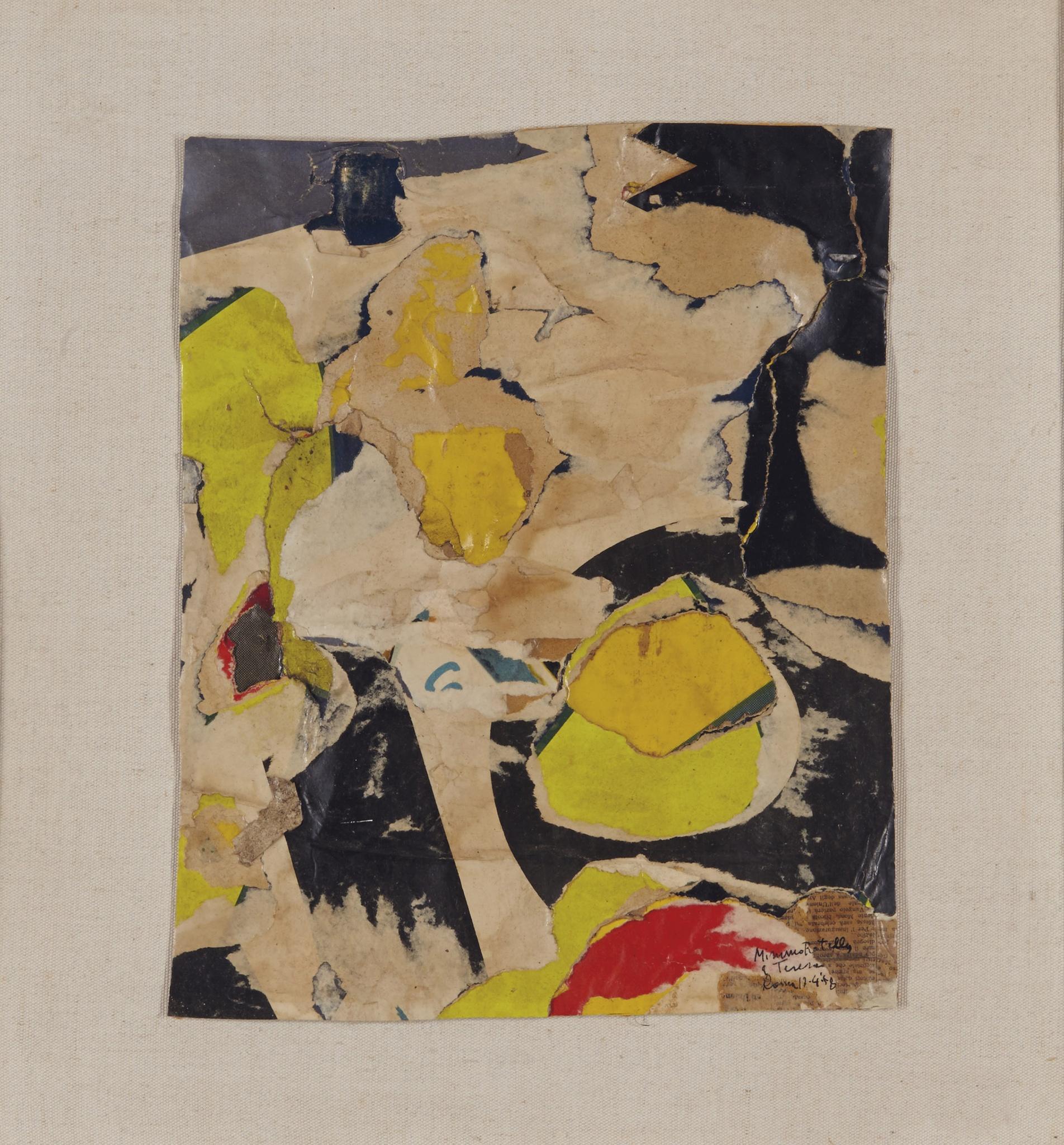
Untitled
1958
Décollage of posters
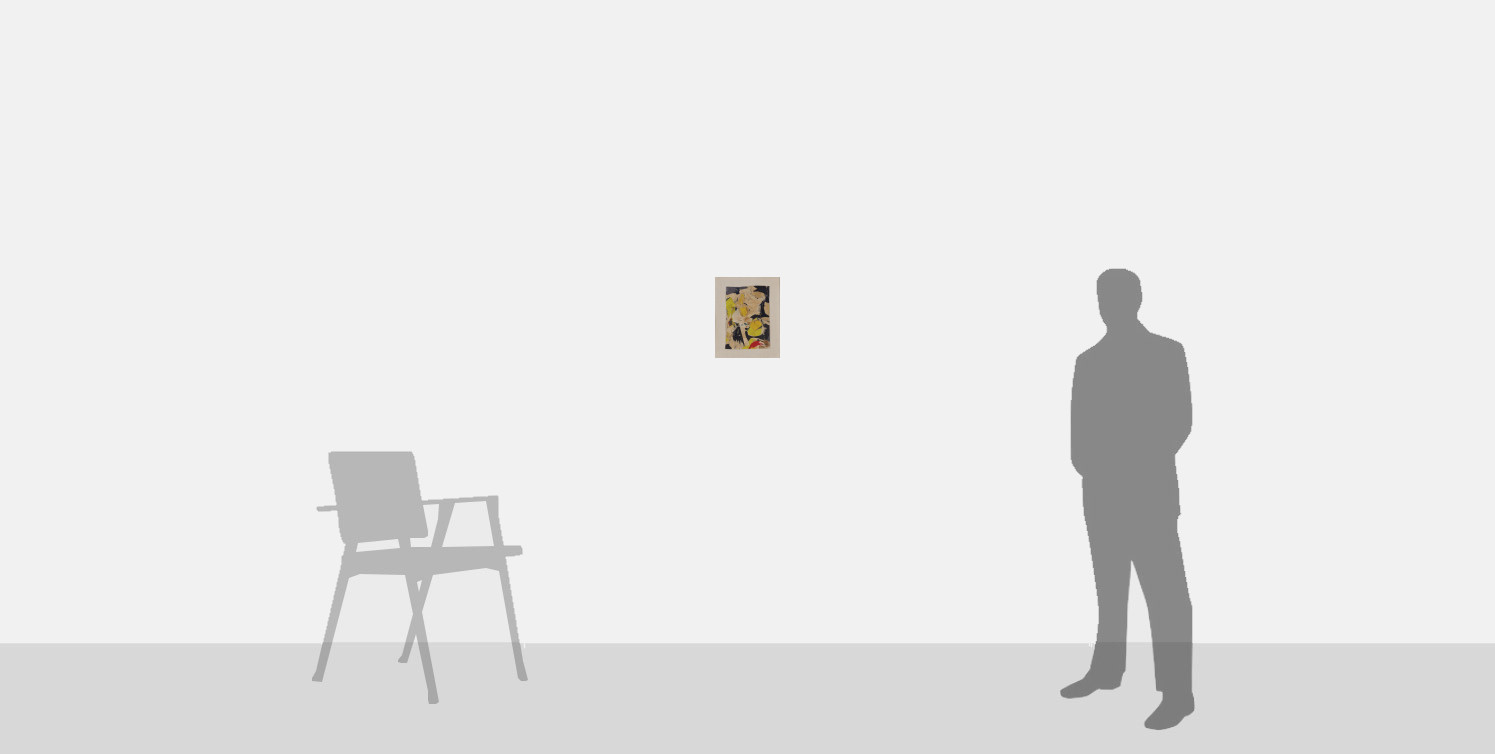
36 x 29 cm (14 1/8 x 11 3/8 in.)
Provenance
Galleria del Leone, Venice
Acquired from thence by the present owner
Literature
A. Soldaini, Mimmo Rotella, Milano, 2015, ill. pp. 91 & 204, n. 36; G. Celant, Mimmo Rotella. Catalogo ragionato, vol. I, 1944 - 1961, Milano 2016, pp. 372, 627, n. 1958 - 092.
Description
“To tear posters from the wall is my only revenge, the only protest against a society that has lost taste for change and amazing transformations. I glue on posters and then I tear them down: new, unforeseen forms come about. It was because of this protest that I abandoned easel painting.”
– Mimmo Rotella, “Autopresentazione”, in Rotella, exhibition brochure (Rome, Galleria d’Arte Selecta, 30 March – 8 April 1957).
Mimmo Rotella is a significant Italian figure of post-war European Art, who is renowned for his collages made from torn advertising posters. Born in 1918, Italy he studied art at the Accademia di Belle Arti in Naples before moving to Rome in 1945. After first experimenting with figurative painting he developed an abstract and geometrical style. His first solo exhibition was held in 1951 at the Galleria Chiurazzi and later that same year he was awarded a Fulbright Scholarship, which enabled him to travel to the U.S, where he studied at Kansas City University. Rotella’s return to Rome in 1953 marked his rejection of easel painting and the development of his distinctive artistic practice; the art of décollage.
Décollage refers to the artistic technique that involves the artist’s intimate physical interaction with the material used. More specifically, after tearing off advertising posters from the streets of Rome, Rotella reassembled them in his studio and lacerated them a second time by hand, using the end of a brush or a cutter. Then he attached them to different supports such as cardboard, wood, Masonite liner, jute canvas or metal plate by applying Vinavil (a PVA-based adhesive) diluted with water.
Realized in 1958, the work in question here is a décollage that showcases the delicacy of Rotella’s craftsmanship in relation to the wide range of its application. Despite the artwork’s evident abstract visual aesthetics, the careful shredding and scratching of the integrated posters facilitates the introduction of new visual dialogues that aimed to endorse aesthetic values such as the vitality of colours, materiality and compositional conception. In addition, the formation of the multiple physical layers highlights the artwork’s element of physicality while symbolizing the coexistence of two different dimensions of reality; that of the outer world and Rotella’s inner self. Allowing his profound technique to ignite his emotional involvement towards his subject matter, the artwork’s material itself, stands as a unique way to promote his concerns towards his belief that the age of painting had come to an end and that art should be identified within the artist’s gesture. Eschewing figurative representation, Rotella did not entirely forsake reality as his new technique of décollage was directly linked to society, its cities and its streets.
Please note that the availability and price of the above work are subject to change without prior notice. Where applicable ARR will be added.
– Mimmo Rotella, “Autopresentazione”, in Rotella, exhibition brochure (Rome, Galleria d’Arte Selecta, 30 March – 8 April 1957).
Mimmo Rotella is a significant Italian figure of post-war European Art, who is renowned for his collages made from torn advertising posters. Born in 1918, Italy he studied art at the Accademia di Belle Arti in Naples before moving to Rome in 1945. After first experimenting with figurative painting he developed an abstract and geometrical style. His first solo exhibition was held in 1951 at the Galleria Chiurazzi and later that same year he was awarded a Fulbright Scholarship, which enabled him to travel to the U.S, where he studied at Kansas City University. Rotella’s return to Rome in 1953 marked his rejection of easel painting and the development of his distinctive artistic practice; the art of décollage.
Décollage refers to the artistic technique that involves the artist’s intimate physical interaction with the material used. More specifically, after tearing off advertising posters from the streets of Rome, Rotella reassembled them in his studio and lacerated them a second time by hand, using the end of a brush or a cutter. Then he attached them to different supports such as cardboard, wood, Masonite liner, jute canvas or metal plate by applying Vinavil (a PVA-based adhesive) diluted with water.
Realized in 1958, the work in question here is a décollage that showcases the delicacy of Rotella’s craftsmanship in relation to the wide range of its application. Despite the artwork’s evident abstract visual aesthetics, the careful shredding and scratching of the integrated posters facilitates the introduction of new visual dialogues that aimed to endorse aesthetic values such as the vitality of colours, materiality and compositional conception. In addition, the formation of the multiple physical layers highlights the artwork’s element of physicality while symbolizing the coexistence of two different dimensions of reality; that of the outer world and Rotella’s inner self. Allowing his profound technique to ignite his emotional involvement towards his subject matter, the artwork’s material itself, stands as a unique way to promote his concerns towards his belief that the age of painting had come to an end and that art should be identified within the artist’s gesture. Eschewing figurative representation, Rotella did not entirely forsake reality as his new technique of décollage was directly linked to society, its cities and its streets.
Please note that the availability and price of the above work are subject to change without prior notice. Where applicable ARR will be added.