
Alessandro Turchi
b. 1578, Verona
d. 1649, Rome
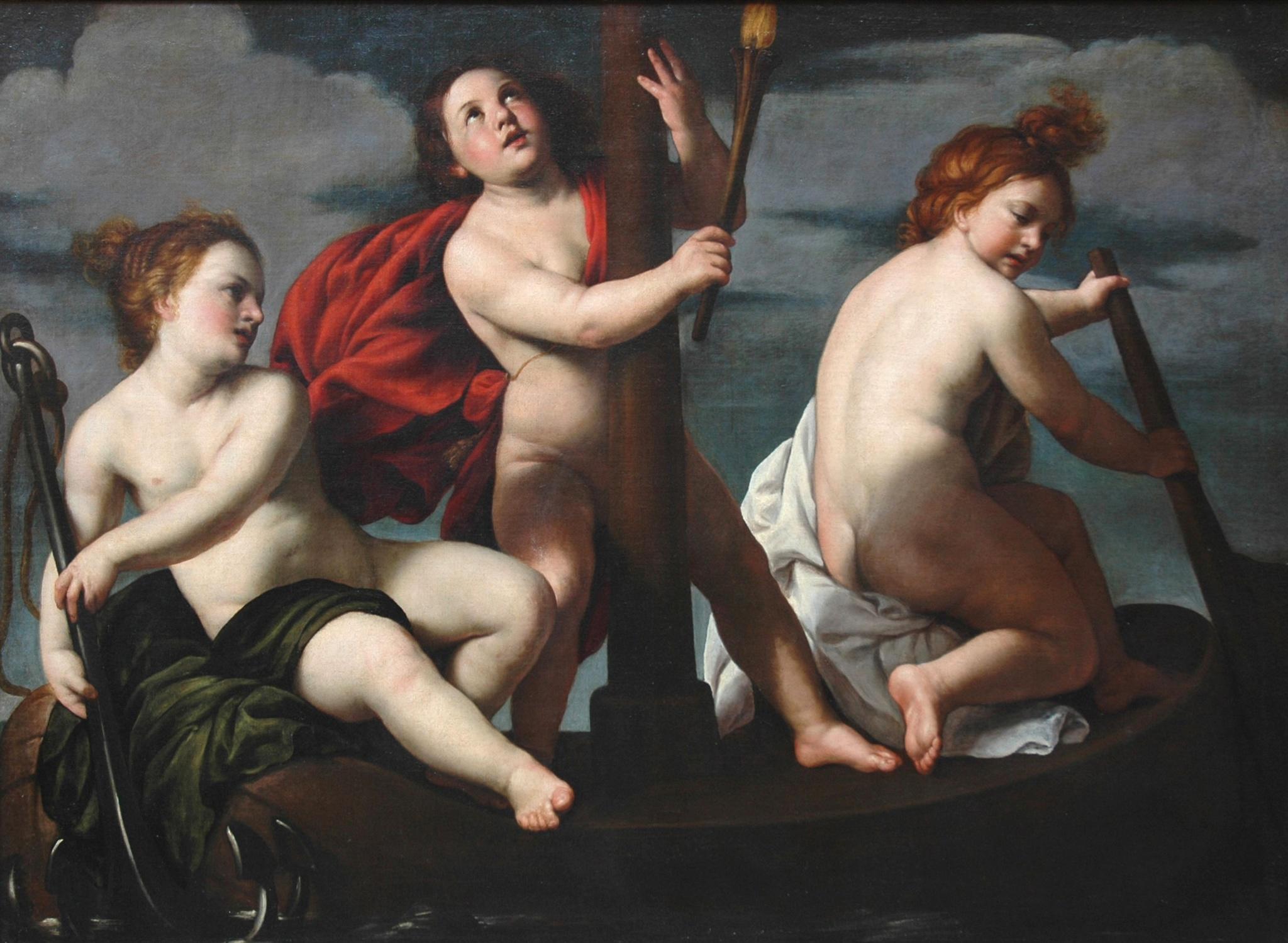
The Three Theological Virtues
Oil on canvas
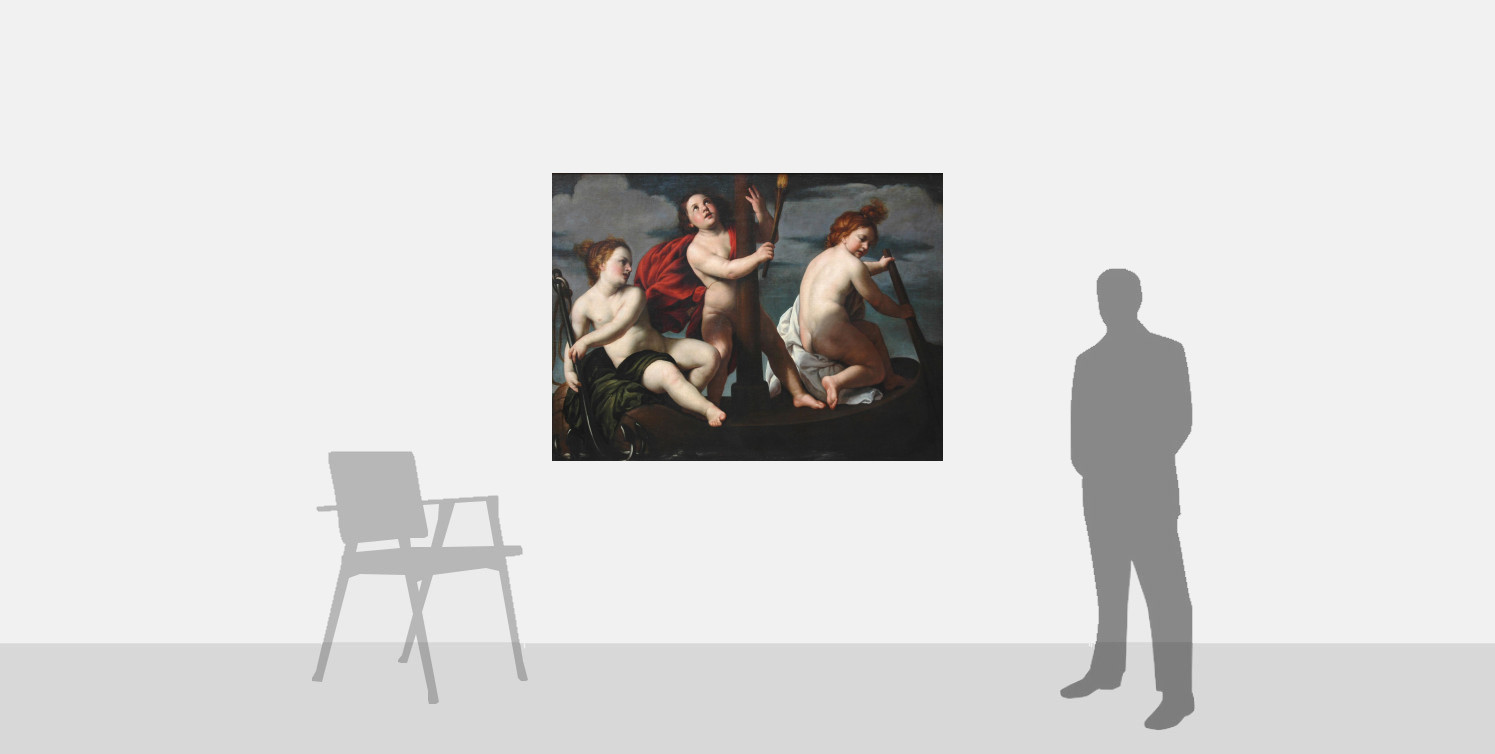
128 x 174 cm (50 3/8 x 68 1/2 in.)
Provenance
Commissioned for the
Cardinale Maurizio di Savoia (1593 - 1657).
Literature
G.Papi, La “schola” del Caravaggio. Dipinti dalla Collezione Koelliker, catalogo della mostra, Milano 2006, pp. 184 - 187, n. 52; S. Pierguidi, Alessandro Turchi e il Cardinale Maurizio di Savoia: La provenienza delle tre virtù teologali, in “Verona Illustrata”, Museo di Castelvecchio, Verona 2009, pp. 37 – 39.
Description
In the three theological virtues, represented as putti venturing offshore on a fragile boat, one recognizes the inspiration and style of Alessandro Turchi. As a demonstration of the creativity of the Veronese artist in dealing with this theme, his creativity is demonstrated when one compares the present painting with the completely different iconography he had chosen for the same subject. This is seen in the three autonomous canvases that were in Count Gian Giacomo Giusti’s house in Verona in 1620, currently belonging to a private collection and in museums in Melbourne and Detroit separately.
In those three canvases, the three virtues are depicted as three sumptuously dressed ladies, standing in solemn and monumental poses. In the present painting, the setting is entirely different: in addition to representing the three figures in one painting, it shows them cooperating toward the same objective; to advance the boat, each one committed in her role.
The painter modified the traditional allegorical attributes of the three virtues, making the identification less easy, but keeping the colours that distinguish them. The image is thus perfectly fused, and the symbolic meaning does not interfere with the immediacy of the scene. Charity is portrayed in red drapery, alluding to her canonical attribute of the flame, but not represented as giving milk to a child; Hope is more recognizable, in green drapery, taking off the anchor. The identification of Faith is more problematic and is possible only through the exclusion of the other two Virtues, already identified, and by the presence of the white cloth on which she sits.
Gianni Papi dates it back to the third decade of the 17th century, including a subsequent dating, since the painter's style has not changed substantially after maturing in the second decade as he settled in Rome. Hence, these three figures – a putti version of the elegant, ivory-coloured nudes that the artist consistently proposed during his career – matched better with the two masterpieces of the Upper Pinakothek of Monaco, Hercules and Omphales (Fig. 1) and the Fury of Hercules and other mature works, such as Marcantonio's Death and Louvre's Cleopatra, commissioned by the Marquis de La Vrillière between 1637 and 1640.
The artwork described above is subject to changes in availability and price without prior notice.
Where applicable ARR will be added.
In those three canvases, the three virtues are depicted as three sumptuously dressed ladies, standing in solemn and monumental poses. In the present painting, the setting is entirely different: in addition to representing the three figures in one painting, it shows them cooperating toward the same objective; to advance the boat, each one committed in her role.
The painter modified the traditional allegorical attributes of the three virtues, making the identification less easy, but keeping the colours that distinguish them. The image is thus perfectly fused, and the symbolic meaning does not interfere with the immediacy of the scene. Charity is portrayed in red drapery, alluding to her canonical attribute of the flame, but not represented as giving milk to a child; Hope is more recognizable, in green drapery, taking off the anchor. The identification of Faith is more problematic and is possible only through the exclusion of the other two Virtues, already identified, and by the presence of the white cloth on which she sits.
Gianni Papi dates it back to the third decade of the 17th century, including a subsequent dating, since the painter's style has not changed substantially after maturing in the second decade as he settled in Rome. Hence, these three figures – a putti version of the elegant, ivory-coloured nudes that the artist consistently proposed during his career – matched better with the two masterpieces of the Upper Pinakothek of Monaco, Hercules and Omphales (Fig. 1) and the Fury of Hercules and other mature works, such as Marcantonio's Death and Louvre's Cleopatra, commissioned by the Marquis de La Vrillière between 1637 and 1640.
The artwork described above is subject to changes in availability and price without prior notice.
Where applicable ARR will be added.