
Jacopo da Ponte, called Jacopo Bassano
b. 1510, Bassano del Grappa, Italy
d. 1592, Bassano del Grappa, Italy
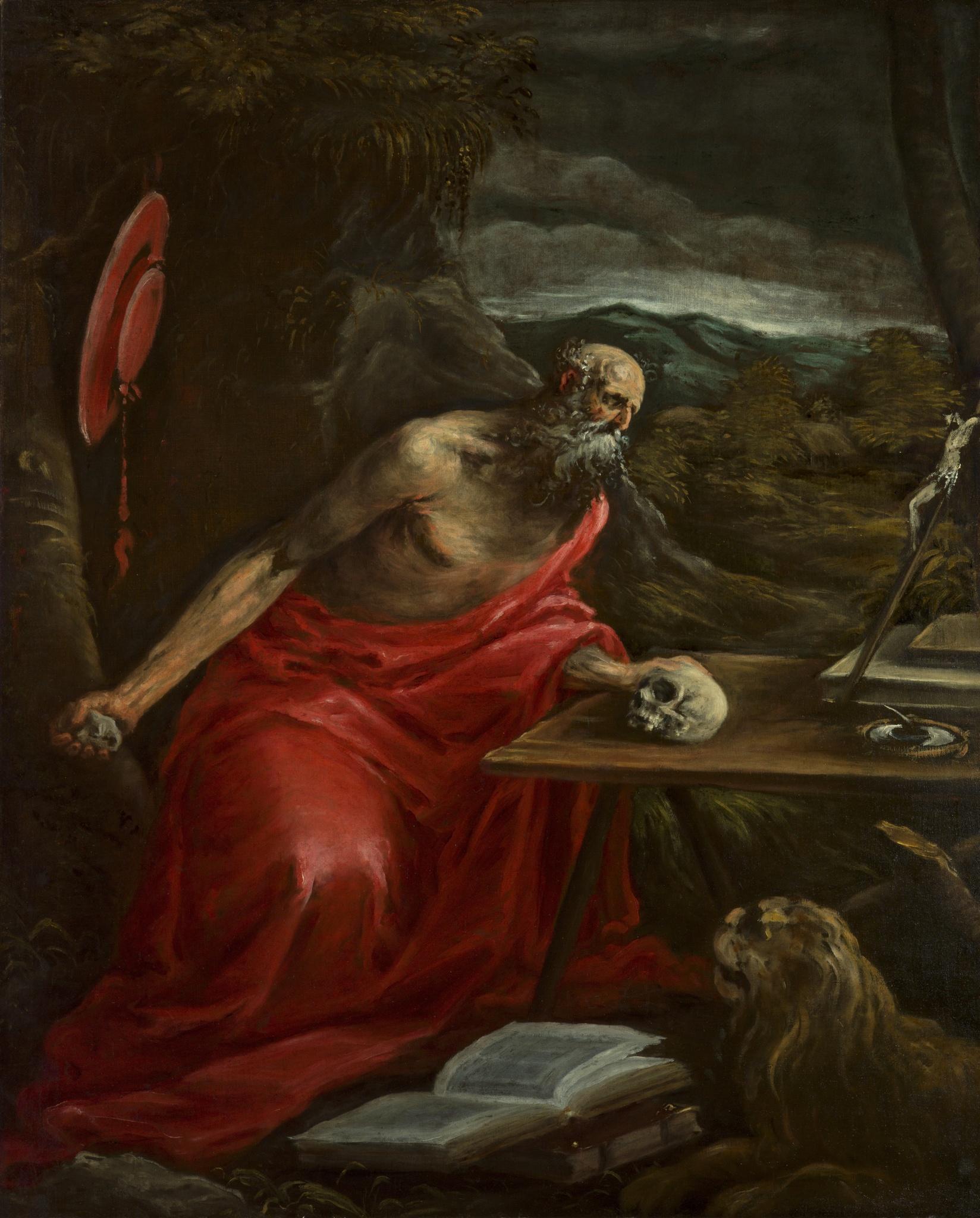
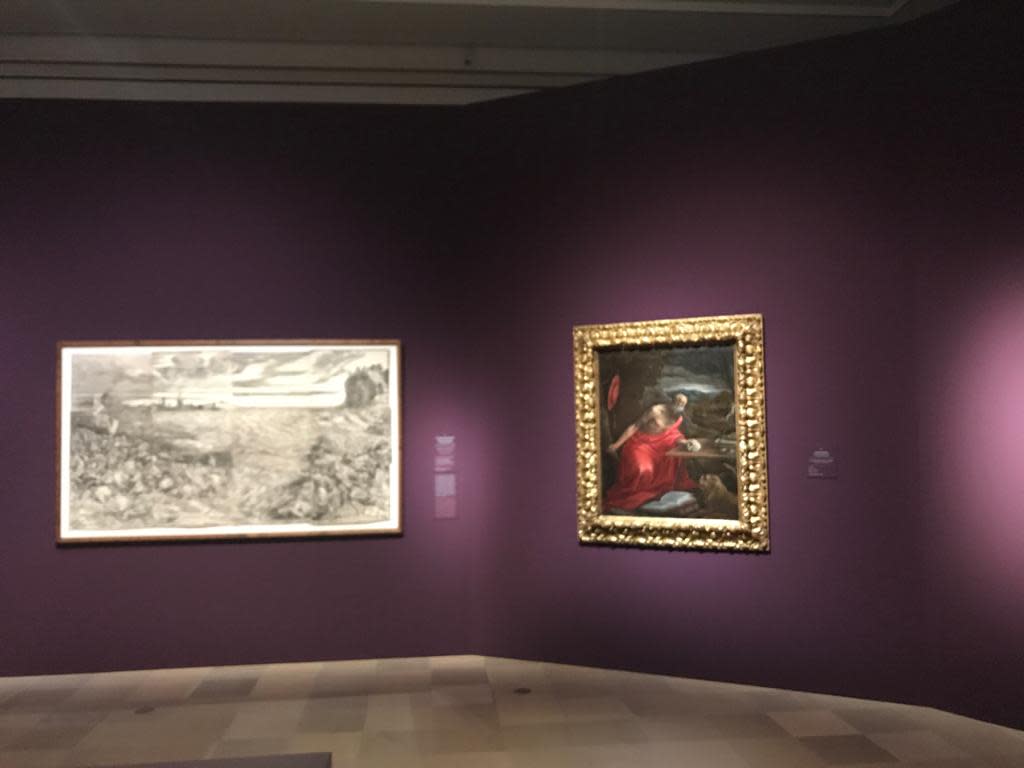
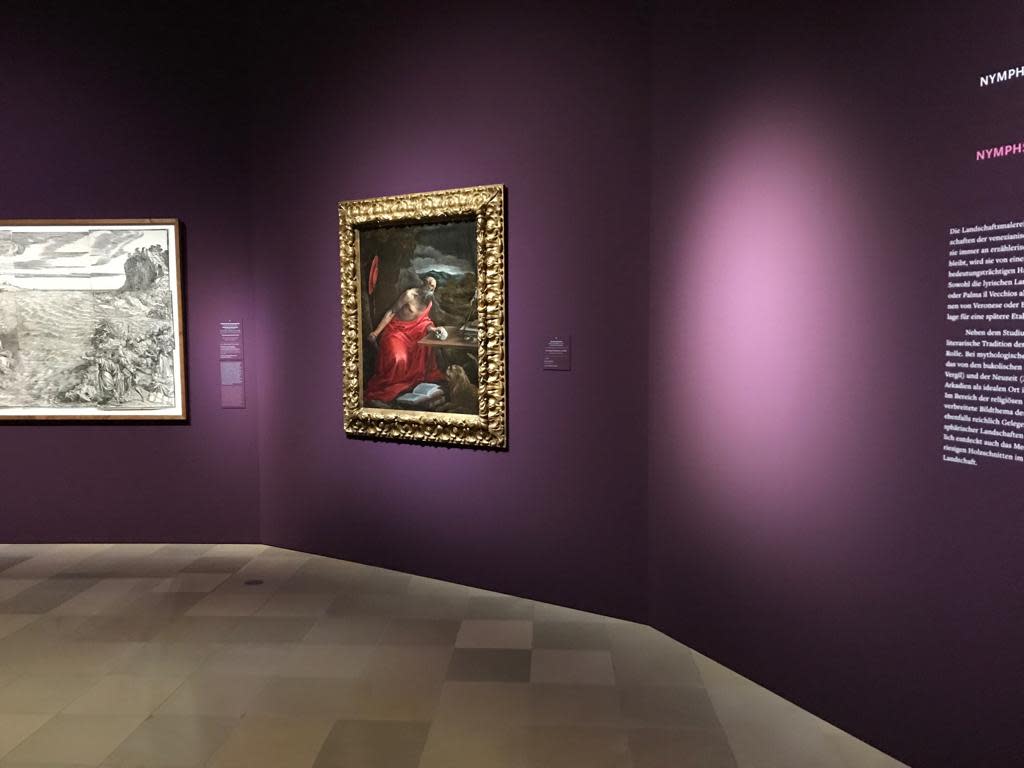
The Penitent Saint Jerome
Oil on canvas
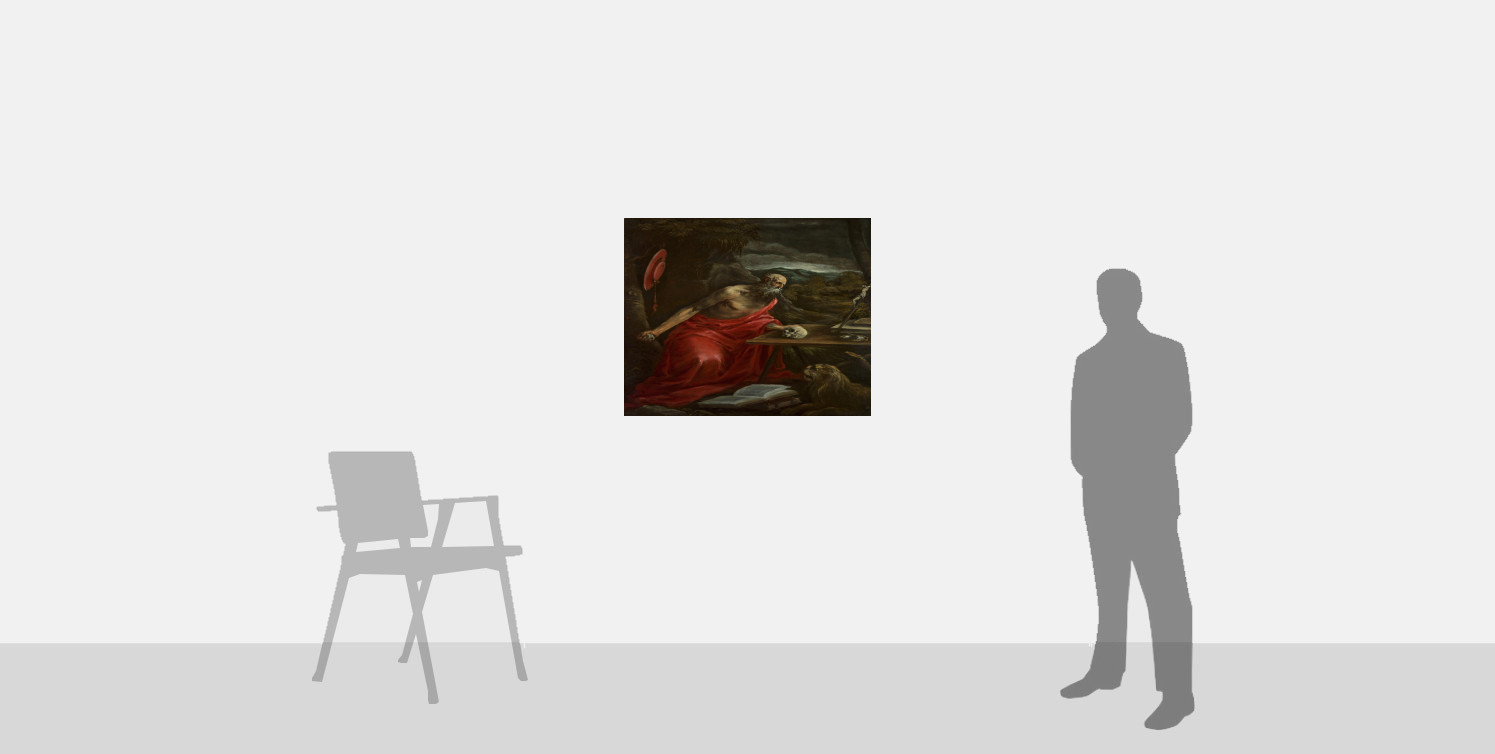
88 x 110 cm (34 5/8 x 43 1/4 in.)
Literature
F. Del Torre Scheuch in Titian and the Renaissance in Venice, catalogue of the exhibition ed. by B. Eclercy – H. Aurenhammer, Munich – London – New York 2019, pp. 100 - 101
Description
The appraisal of Jacopo Bassano has always had a very peculiar itinerary: his long life spanned almost the same decades when Titian, Veronese and Tintoretto were working, but until recent years he never achieved the same renown of his colleagues.
During his lifetime and in the following century he was praised for his pastoral works – the Seasons or the paintings connected with Noah’s deluge; with their lifelike depiction of animals and human beings, they were avidly sought by collectors. The modern history of art, beginning in the 1820s, has instead chosen an opposite point of view, giving prominence to the early works of the 1540s and the 1550s, and especially Bassano’s personal interpretation of Mannerism. Only the exhaustive studies conducted first by Alessandro Ballarin, and afterwards by numerous scholars, among them Beverly Brown, Paola Marini, William Rearick and Vittoria Romani, have given rightful standing and appraisal to Bassano.
In 1968, Ballarin was the first scholar able to reevaluate the pastoral paintings by Bassano, and described him with the famous statement as the 'painter of the animals, of the arches and of the biblical exoduses, of the kitchens and of the country boughs, of the sunsets and of the moonlight landscapes [pittore degli animali. delle arche e degli esodi biblici, delle cucine e delle frasche di campagna, dei tramonti e dei notturni lunari].'
It was the same Ballarin that in 1966/67 advanced a reconstruction of the last ten years of Bassano’s life, prior to which Jacopo was considered by scholars to have been completely inactive due to an incorrect interpretation of a letter written by his son Francesco Bassano in 1581 ('Chirurgia Bassanesca', Arte Veneta, XX 1966, pp. 112 -136; 'La vecchiaia di Jacopo Bassano: le fonti e la critica (Nota introduttiva alla “Chirurgia Bassanesca”)' in Atti del R. Istituto Veneto di Scienze, Lettere e Arti, 1967, pp. 151 -193). The starting point for Ballarin’s reconstruction was the discovery of the date 1585 for Bassano's Susanna and the Elders, now in the collection of the Musée des Beaux-Arts of Nîmes (fig. 1), a painting usually dated ten years before. Alongside the Nîmes painting, Ballarin was able to create a group of paintings that marked a new development, in comparison with the works of the 1570s. It is a period that Ballarin calls 'Bassano’s fifth and last manner' (a classification of Bassano’s works in four different manners was already proposed by Volpato as early as the end of the seventeenth century). During this last period, Bassano appears to have adopted a new use of colour; the surface of his paintings has a free and rapid texture with stabs of colour and dramatic contrasts of lights and shadows. Critics now concur that Bassano’s works of this period demonstrate a personal interpretation of Tintoretto's and Titian’s late paintings, sharing the same dramatic attitude and taste for thick brushstrokes of colour.
The present painting, until now apparently totally unrecorded, clearly belongs to the same period. Saint Jerome’s beard, his left hand, the skull and the landscape are pure stabs of colour on the canvas. The proposal to date the painting to the very last years of Jacopo’s life has been confirmed by Vittoria Romani on photographic inspection, and a comprehensive sheet by the scholar will be soon available.
Further to the Nîmes painting, where one of the two Elders bears a close resemblance to the Saint Jerome, other paintings of this period share the same stylistic choices; the extraordinary Diana and Acteon at the Chicago Art Institute (fig. 2), almost a rustic and intimate reply to Titian’s poesie painted for Philip II; and the Baptism of Christ (fig. 3), recently acquired by the Metropolitan Museum of Art of New York, where Bassano unusually decides to depict the scene as taking place at nighttime on the banks of the River Jordan, only softly illuminated by the moon that appears between the clouds.
This group of paintings represents perhaps the most original achievement in Bassano’s long career and the closest, with their dramatic composition, to our modern taste. On the other hand, these paintings may also be read as Bassano’s personal reflection and his farewell to the models of Venetian Renaissance painting, models that he obviously knew very well but that he was able to rework in a very personal way in every one of his 'cinque manieres' (five manners).
During his lifetime and in the following century he was praised for his pastoral works – the Seasons or the paintings connected with Noah’s deluge; with their lifelike depiction of animals and human beings, they were avidly sought by collectors. The modern history of art, beginning in the 1820s, has instead chosen an opposite point of view, giving prominence to the early works of the 1540s and the 1550s, and especially Bassano’s personal interpretation of Mannerism. Only the exhaustive studies conducted first by Alessandro Ballarin, and afterwards by numerous scholars, among them Beverly Brown, Paola Marini, William Rearick and Vittoria Romani, have given rightful standing and appraisal to Bassano.
In 1968, Ballarin was the first scholar able to reevaluate the pastoral paintings by Bassano, and described him with the famous statement as the 'painter of the animals, of the arches and of the biblical exoduses, of the kitchens and of the country boughs, of the sunsets and of the moonlight landscapes [pittore degli animali. delle arche e degli esodi biblici, delle cucine e delle frasche di campagna, dei tramonti e dei notturni lunari].'
It was the same Ballarin that in 1966/67 advanced a reconstruction of the last ten years of Bassano’s life, prior to which Jacopo was considered by scholars to have been completely inactive due to an incorrect interpretation of a letter written by his son Francesco Bassano in 1581 ('Chirurgia Bassanesca', Arte Veneta, XX 1966, pp. 112 -136; 'La vecchiaia di Jacopo Bassano: le fonti e la critica (Nota introduttiva alla “Chirurgia Bassanesca”)' in Atti del R. Istituto Veneto di Scienze, Lettere e Arti, 1967, pp. 151 -193). The starting point for Ballarin’s reconstruction was the discovery of the date 1585 for Bassano's Susanna and the Elders, now in the collection of the Musée des Beaux-Arts of Nîmes (fig. 1), a painting usually dated ten years before. Alongside the Nîmes painting, Ballarin was able to create a group of paintings that marked a new development, in comparison with the works of the 1570s. It is a period that Ballarin calls 'Bassano’s fifth and last manner' (a classification of Bassano’s works in four different manners was already proposed by Volpato as early as the end of the seventeenth century). During this last period, Bassano appears to have adopted a new use of colour; the surface of his paintings has a free and rapid texture with stabs of colour and dramatic contrasts of lights and shadows. Critics now concur that Bassano’s works of this period demonstrate a personal interpretation of Tintoretto's and Titian’s late paintings, sharing the same dramatic attitude and taste for thick brushstrokes of colour.
The present painting, until now apparently totally unrecorded, clearly belongs to the same period. Saint Jerome’s beard, his left hand, the skull and the landscape are pure stabs of colour on the canvas. The proposal to date the painting to the very last years of Jacopo’s life has been confirmed by Vittoria Romani on photographic inspection, and a comprehensive sheet by the scholar will be soon available.
Further to the Nîmes painting, where one of the two Elders bears a close resemblance to the Saint Jerome, other paintings of this period share the same stylistic choices; the extraordinary Diana and Acteon at the Chicago Art Institute (fig. 2), almost a rustic and intimate reply to Titian’s poesie painted for Philip II; and the Baptism of Christ (fig. 3), recently acquired by the Metropolitan Museum of Art of New York, where Bassano unusually decides to depict the scene as taking place at nighttime on the banks of the River Jordan, only softly illuminated by the moon that appears between the clouds.
This group of paintings represents perhaps the most original achievement in Bassano’s long career and the closest, with their dramatic composition, to our modern taste. On the other hand, these paintings may also be read as Bassano’s personal reflection and his farewell to the models of Venetian Renaissance painting, models that he obviously knew very well but that he was able to rework in a very personal way in every one of his 'cinque manieres' (five manners).