
Francesco Guardi
b. 1712, Venice, Italy
d. 1793, Venice, Italy
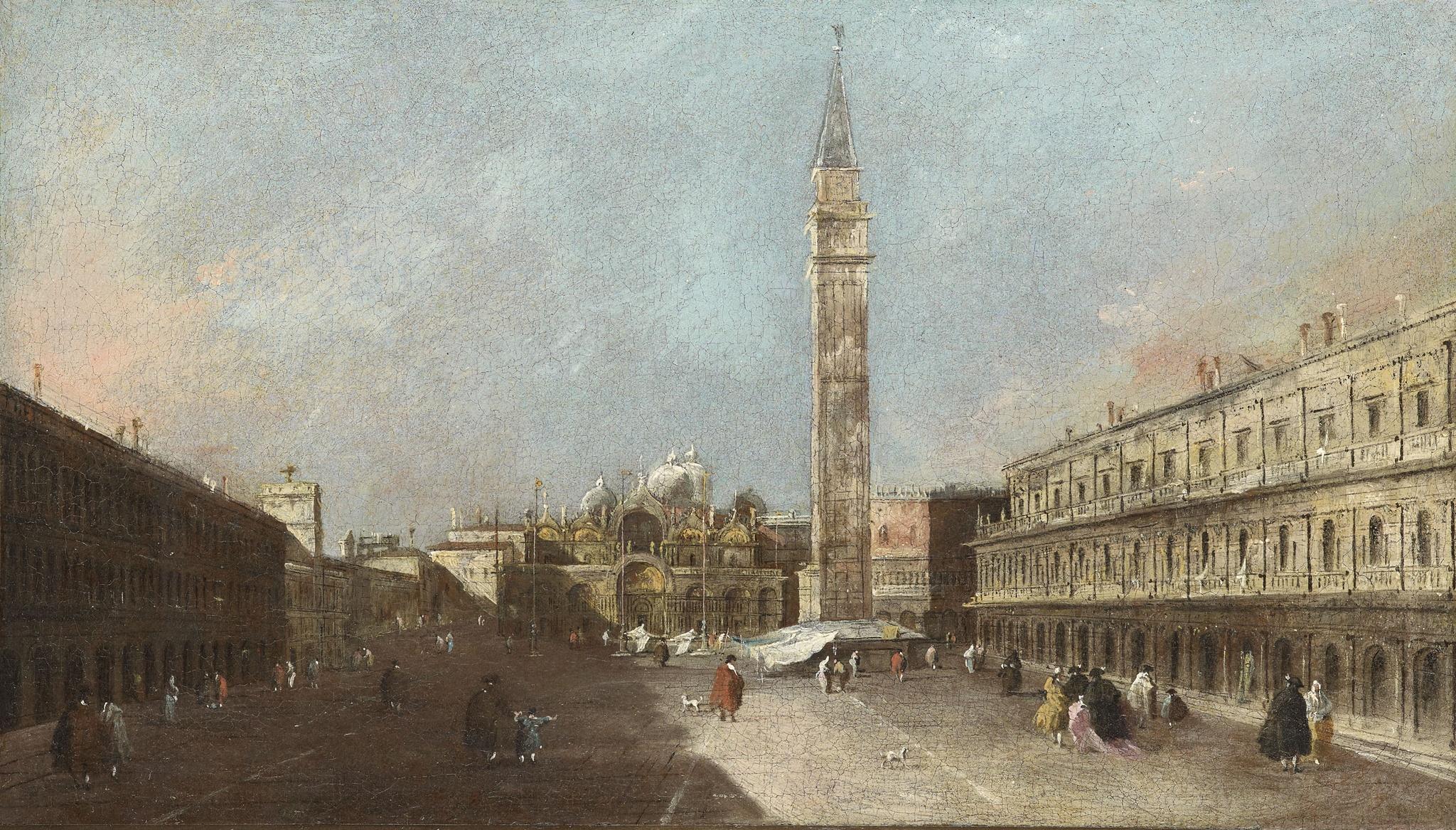
Piazza San Marco Looking Towards the Piazzetta
c. 1780
Oil on canvas
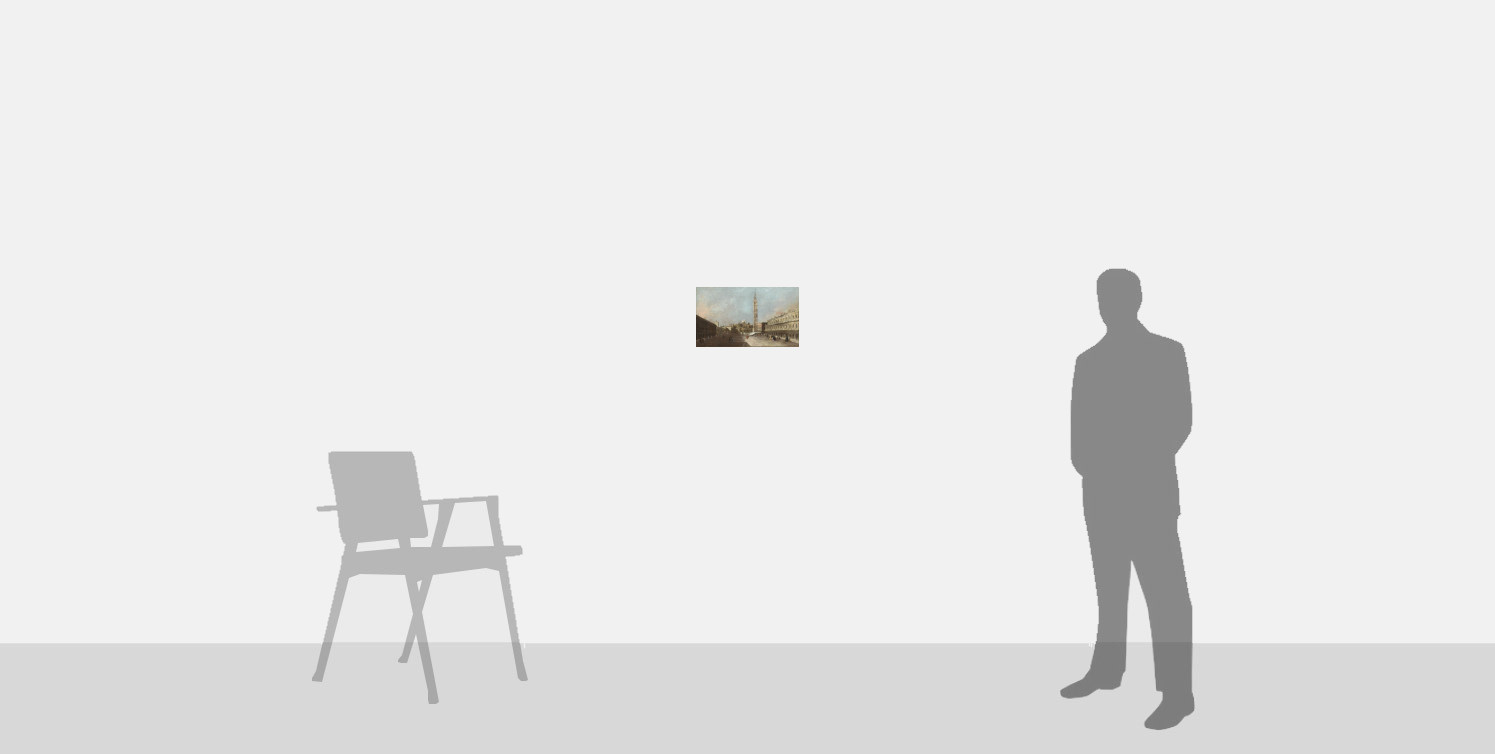
26.7 x 45.7 cm (10 1/2 x 18 in.)
Provenance
The Rt. Hon. George Augustus Frederick Cavendish-Bentinck (1821–1891), London;
Galerie Heim, Paris;
From 1958, Private collection, Paris;
Sold Sotheby’s, London, 14 April 2011, lot 236;
Private collection.
Description
Born in Venice in 1712, Francesco Guardi was the son of a minor painter, Domenico Guardi, and the brother-in-law of Giovanni Battista Tiepolo. Following the example of Canaletto, he soon became one of the major painters of Venetian views in the eighteenth century, recording the architecture of the city as well as its daily life and celebrations. His renderings of the vibrant atmosphere of Venice brought him much success with Venetian patrons as well as visitors to the city. Yet while his great predecessor Canaletto had represented Venice “crystallized in its beauty and grandeur,” Francesco Guardi “focused, from the start, on atmospheric effects.” As a mature artist, “Guardi attained a freedom of expression and imagination, which manifests itself in spaces that are more and more illusory, and with a luminosity, sometimes silvery, sometimes warmer in tone, but painted always with a vibrant and rapid touch.”1
The Piazza San Marco, seen from the vantage point of San Gimignano, a church destroyed in the nineteenth century, was one of Guardi’s favorite subjects. Antonio Morassi in his 1973 monograph on Guardi lists twenty-eight variants of this spectacular scene, in which the artist had many opportunities to study different luminous and atmospheric effects, but which also afforded him the chance to depict the buoyant life of this site at the heart of the city. In this late afternoon scene, elegantly dressed men and women stroll at a leisurely cadence through the square; absent are the tradespeople and beggars found in depictions of the same place set during the morning hours. Here, sunlight from the west leaves the Procuratie Vecchie, at the left of the scene, in shadow. Highlights in the clothing of the figures, as well as in the mosaics of the basilica and the curtains at the windows, were probably added by Guardi at the end of his work, adding tremendously to the rhythm and vibrancy of the composition.
The style of this picture together with the vivacity of the figures suggests a date of around 1780, toward the end of the artist’s career. By this time, Guardi’s handling of atmosphere, and the lightness of his touch, seem to prefigure the Impressionist masters of the next century.
1. Boźena Anna Kowalczyk, Canaletto, Guardi: les deux maîtres de Venise, exh. cat. Musée Jacquemart-André, Paris, 2012–13, pp. 34–36.
The artwork described above is subject to changes in availability and price without prior notice..
The Piazza San Marco, seen from the vantage point of San Gimignano, a church destroyed in the nineteenth century, was one of Guardi’s favorite subjects. Antonio Morassi in his 1973 monograph on Guardi lists twenty-eight variants of this spectacular scene, in which the artist had many opportunities to study different luminous and atmospheric effects, but which also afforded him the chance to depict the buoyant life of this site at the heart of the city. In this late afternoon scene, elegantly dressed men and women stroll at a leisurely cadence through the square; absent are the tradespeople and beggars found in depictions of the same place set during the morning hours. Here, sunlight from the west leaves the Procuratie Vecchie, at the left of the scene, in shadow. Highlights in the clothing of the figures, as well as in the mosaics of the basilica and the curtains at the windows, were probably added by Guardi at the end of his work, adding tremendously to the rhythm and vibrancy of the composition.
The style of this picture together with the vivacity of the figures suggests a date of around 1780, toward the end of the artist’s career. By this time, Guardi’s handling of atmosphere, and the lightness of his touch, seem to prefigure the Impressionist masters of the next century.
1. Boźena Anna Kowalczyk, Canaletto, Guardi: les deux maîtres de Venise, exh. cat. Musée Jacquemart-André, Paris, 2012–13, pp. 34–36.
The artwork described above is subject to changes in availability and price without prior notice..