
Tano Festa
b. 1938, Rome, Italy
d. 1998, Rome, Italy
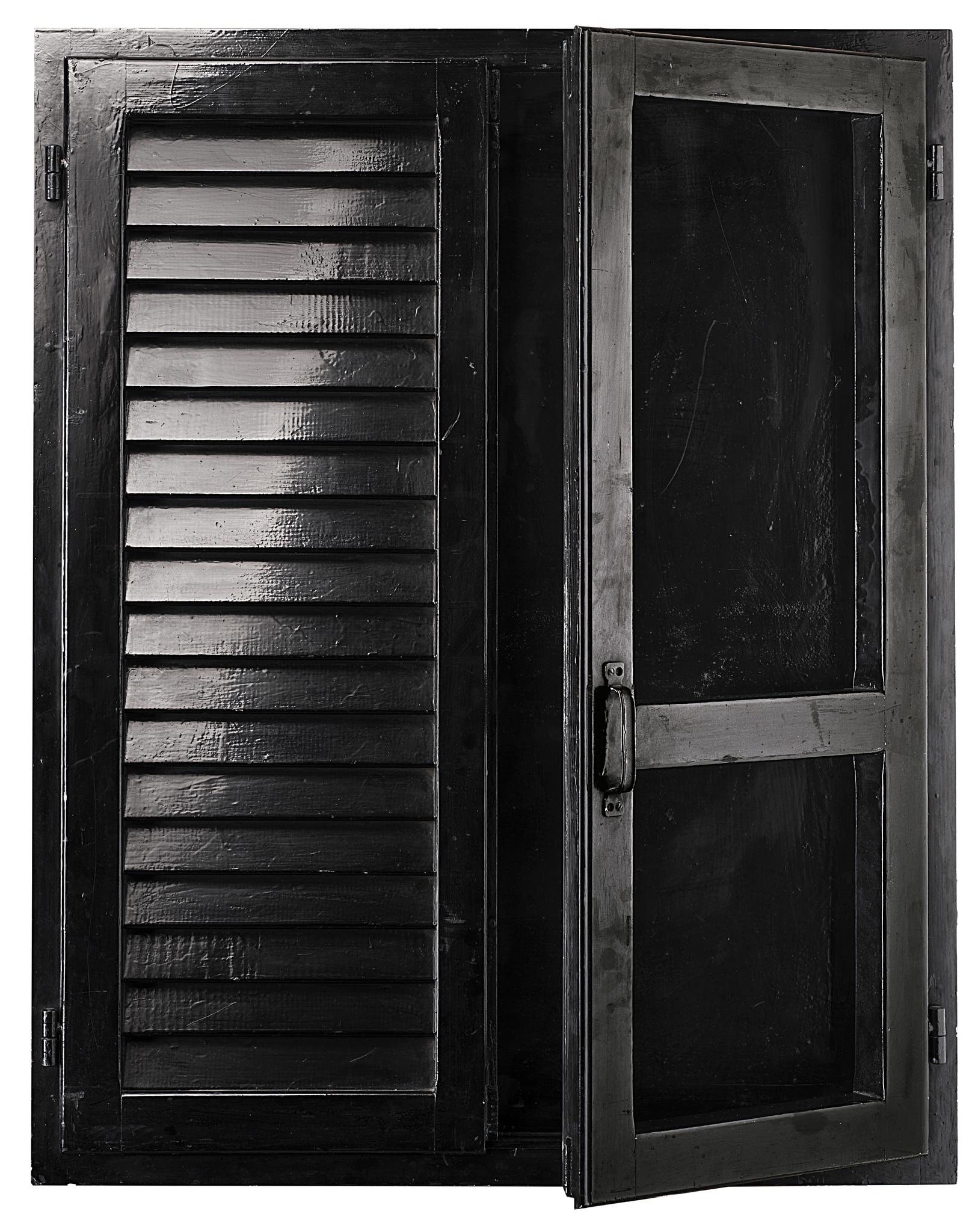
Persiana (Shutter)
1963–64
Varnish on wood
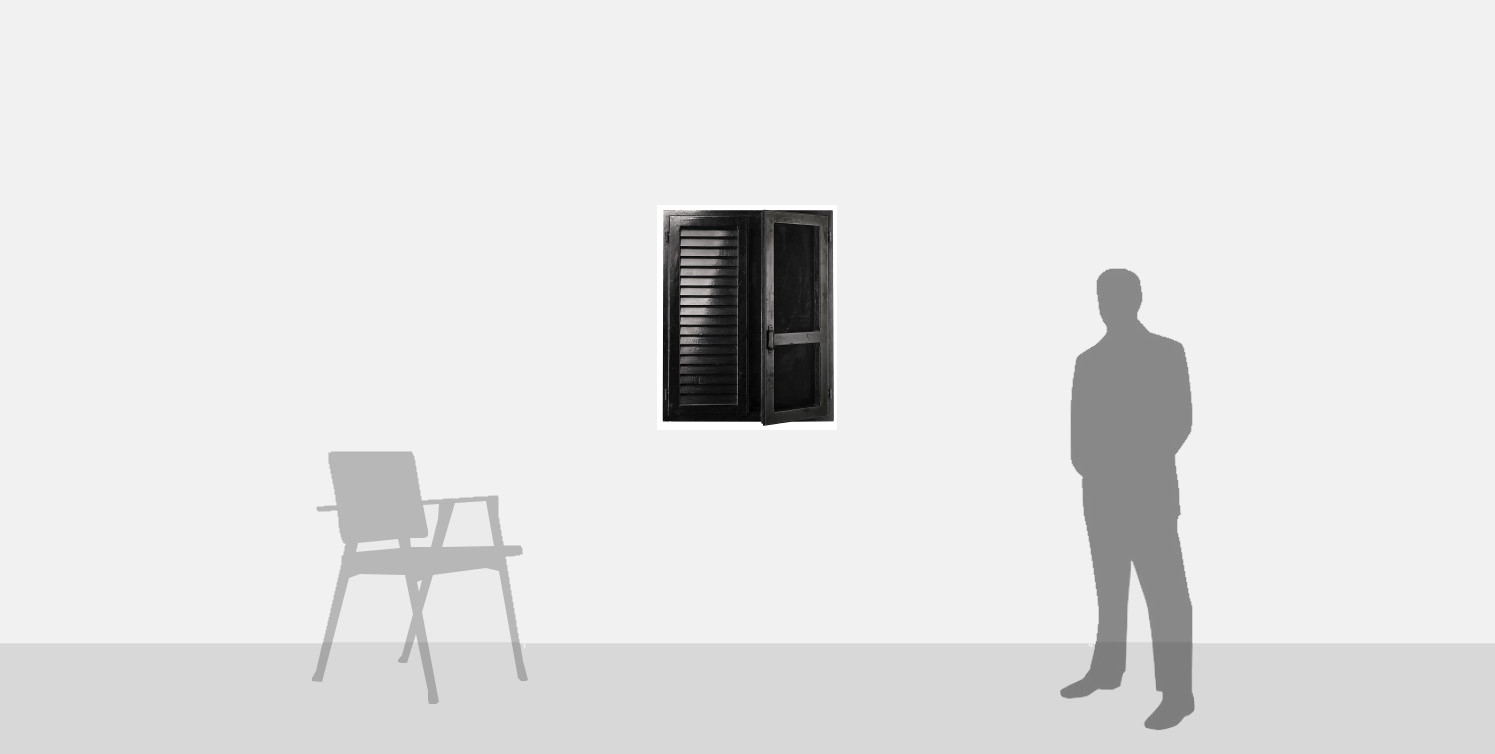
100 x 80 x 8.5 cm (39 3/8 x 31 1/2 x 3 3/8 in.)
Provenance
Private Collection, Milan.
Description
Born in Rome in 1938, Tano Festa exhibited for the first time in 1959 alongside Franco Angeli, Mario Schifano and Giuseppe Uncini at the Galleria La Salita in his native city, which would present his first solo exhibition in 1961. The works of this period—monochromes crossed with relief-like vertical lines which broadly adhered to the tenets of informal and gestural art—had an unusual force that would be defined by De Chirico as “modernist chaos.”
Around 1963, the artist moved on from these paintings, and in works like Persiana reinterpreted objects removed from their everyday setting, looking at them in terms of their essence. Portals and thresholds like the shutters, doors, windows, cupboards and mirrors, as well as pianos, obelisks and gravestones, no longer served as functional objects but rather, insomuch as they are painted, became paintings in and of themselves. As Festa stated: “My piano has wooden keys that cannot move, the mirrors in my wardrobes do not reflect images, the wardrobes themselves do not contain anything and no light comes through my windows.”
Persiana, the Italian word for louvered shutter, moreover alludes to Marcel Duchamp’s famous readymade Fresh Widow (1920). Duchamp’s title is a pun on the term French window and persiana translates to “persienne” in French, therefore it may be interpreted as another reference to Duchamp. Persiana, rendered in black monochrome varnish, began its life as a wooden wardrobe—as with Duchamp’s readymades, Festa took this found object from the clothing industry. In 1964, the Milanese dealer Arturo Schwarz made an edition of eight identical reproductions of Fresh Widow under Duchamp’s supervision, using photographs and descriptions of the original. Thus, Persiana is a prescient and early example of the influence Duchamp’s works would have on Italian art in the 1960s: this conceptual work confronts traditional approaches to the artistic canon, challenging the normative media of painting and sculpture as Duchamp had done several decades previously.