
Mimmo Rotella
b. 1918, Catanzaro, Italy
d. 2006, Milan, Italy
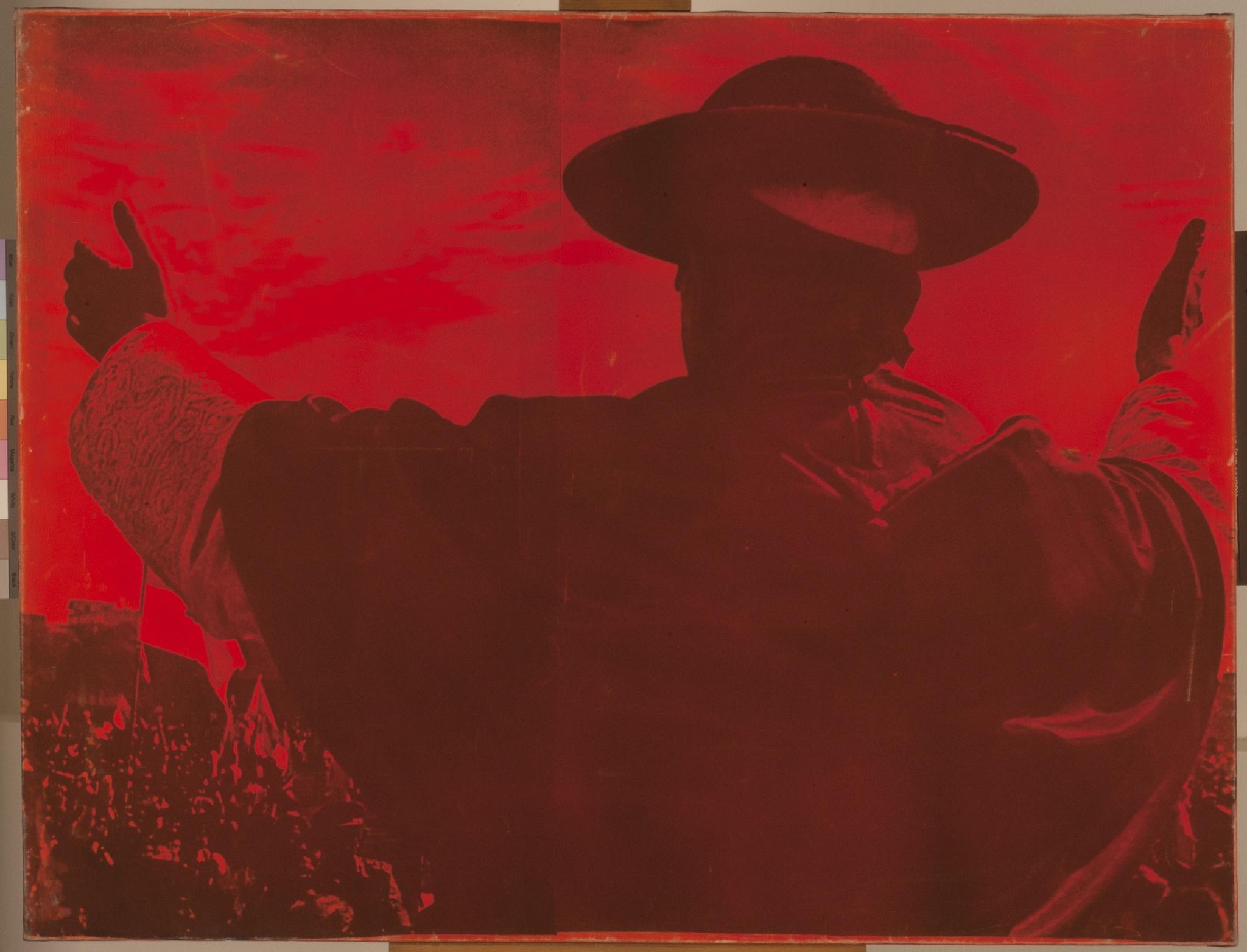
Pax Mundi (Red Pope)
1963
Photographic reproduction
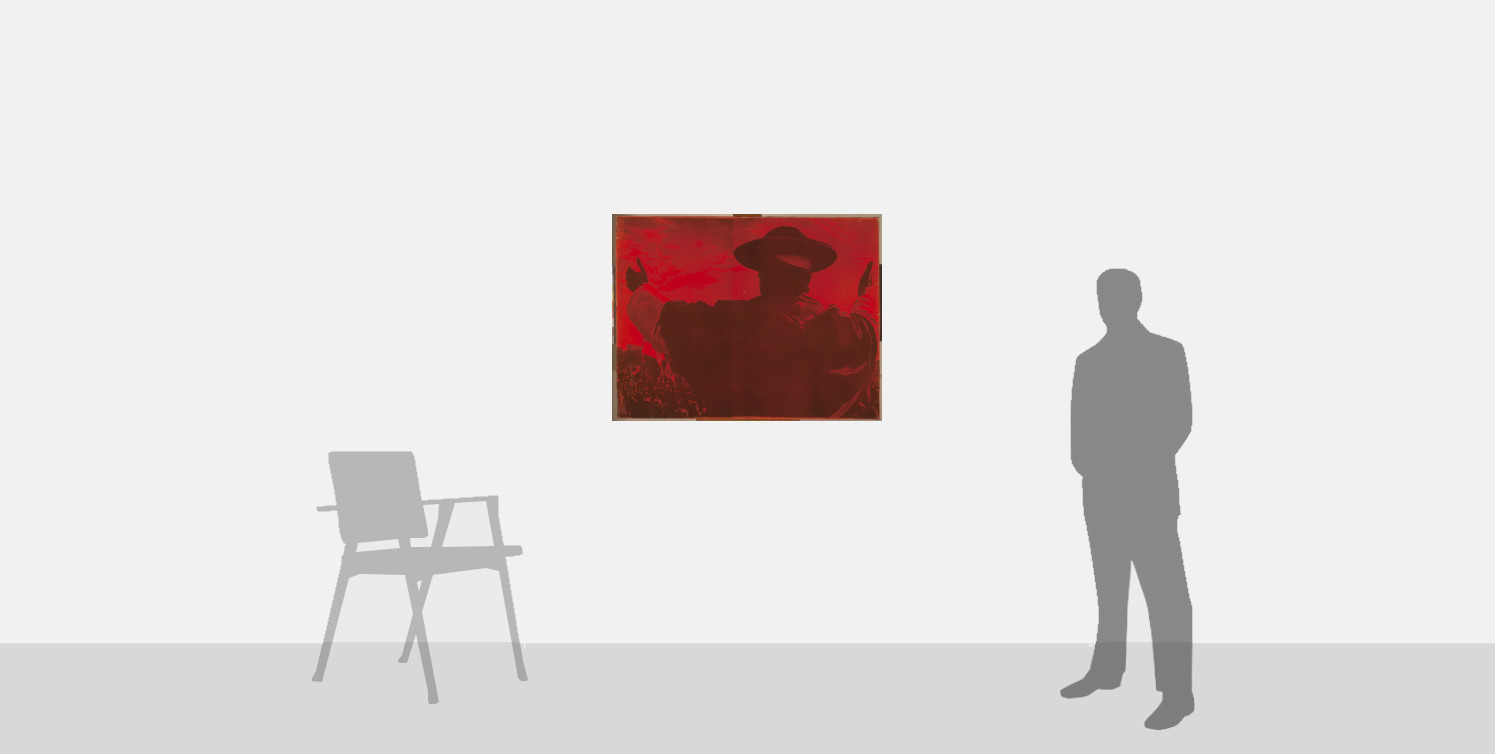
92 x 120 cm (36 1/4 x 47 1/4 in.)
Literature
Italiana ’60, exhibition catalogue, text by Anthony Iannacci and Giorgio Verzotti, Studio Marconi,
Milan, 1990, pp.70–71 (illustrated).
Retrospective. Mimmo Rotella, exhibition catalogue, Giovanni Joppolo, Galerie Thorigny, Paris, 1991.
The Maverick Mimmo Rotella, exhibition brochure by Antonella Soldaini, Robilant+Voena, Milan, 2016.
Retrospective. Mimmo Rotella, exhibition catalogue, Giovanni Joppolo, Galerie Thorigny, Paris, 1991.
The Maverick Mimmo Rotella, exhibition brochure by Antonella Soldaini, Robilant+Voena, Milan, 2016.
Description
1963 was a pivotal year for Mimmo Rotella’s career and artistic development. In May 1963, the Galleria Apollinaire in Milan held a solo show of his works, and on this occasion Pierre Restany published the first monographic book dedicated to the artist, entitled; Rotella: dal décollage alla nuova immagine. In this same year, the art critic Eugenio Battisti was working on a proposal for a new Museum of Contemporary Art for the city of Genoa, and invited the most influential contemporary artists to donate a work to this new project. Amongst those chosen were Tano Festa, Franco Angeli, Jannis Kounnelis and Cy Twombly. Mimmo Rotella was also involved in this project and donated Dalla Sicilia (1961), the first of his works to be included in a public collection.
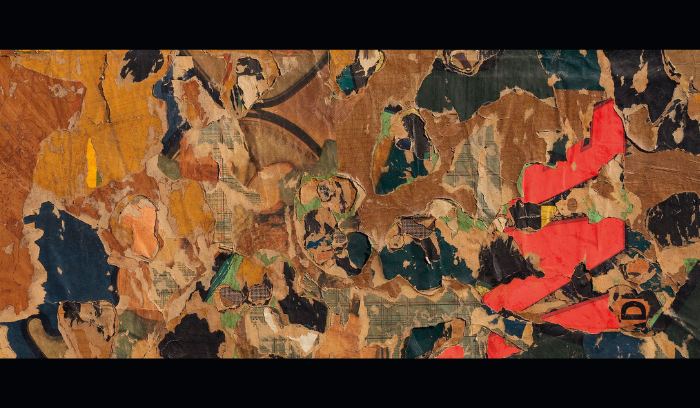
In 1963 Rotella also executed some of his most famous décollages, including Ritz, Arachidina, Cleopatra and Marilyn; the first two related to famous advertising campaigns of the time and the latter two dedicated in homage to the most famous movie stars of that decade, Liz Taylor and Marilyn Monroe.
Towards the end of 1963, Rotella’s experimentation with new methods evolved and he began to work on the reproduction of photographic images using images taken from newspapers which he then transformed, manipulating and enlarging them before transferring them onto large canvases. This marked the first step towards his “Art Typo” technique, a distinctive hallmark of his style in his artistic output in the second half of the 1960s.
Two historical events that year left a deep and lasting impression on Rotella, firstly the assassination of John Fitzgerald Kennedy and then the death of Pope John XXIII, widely known in Italy as “Il Papa Buono”, and as a consequence many of his works using this new technique are devoted to these figures. The brief papacy of Pope John XXIII had a deeply transformational effect on the Catholic church, since he instigated the Second Vatican Council which instituted fundamental reforms and led to an “aggiornamento” of its practices and systems. John XXIII was also the first of the populist popes, rejecting his predecessors' somewhat aloof stance and acquiring great popular appeal and a devoted following.
In the present work, Rotella has transformed and manipulated one of the most famous images of Pope John XXIII in the act of blessing a large crowd, saturated in a vivid red. Other works produced during this period refer to the solemn burial of the Pope.
The artwork described above is subject to changes in availability and price without prior notice.
Where applicable ARR will be added.
In 1963 Rotella also executed some of his most famous décollages, including Ritz, Arachidina, Cleopatra and Marilyn; the first two related to famous advertising campaigns of the time and the latter two dedicated in homage to the most famous movie stars of that decade, Liz Taylor and Marilyn Monroe.
Towards the end of 1963, Rotella’s experimentation with new methods evolved and he began to work on the reproduction of photographic images using images taken from newspapers which he then transformed, manipulating and enlarging them before transferring them onto large canvases. This marked the first step towards his “Art Typo” technique, a distinctive hallmark of his style in his artistic output in the second half of the 1960s.
Two historical events that year left a deep and lasting impression on Rotella, firstly the assassination of John Fitzgerald Kennedy and then the death of Pope John XXIII, widely known in Italy as “Il Papa Buono”, and as a consequence many of his works using this new technique are devoted to these figures. The brief papacy of Pope John XXIII had a deeply transformational effect on the Catholic church, since he instigated the Second Vatican Council which instituted fundamental reforms and led to an “aggiornamento” of its practices and systems. John XXIII was also the first of the populist popes, rejecting his predecessors' somewhat aloof stance and acquiring great popular appeal and a devoted following.
In the present work, Rotella has transformed and manipulated one of the most famous images of Pope John XXIII in the act of blessing a large crowd, saturated in a vivid red. Other works produced during this period refer to the solemn burial of the Pope.
The artwork described above is subject to changes in availability and price without prior notice.
Where applicable ARR will be added.