
Agostino Bonalumi
b. 1935, Vimercate, Italy
d. 2013, Desio, Italy
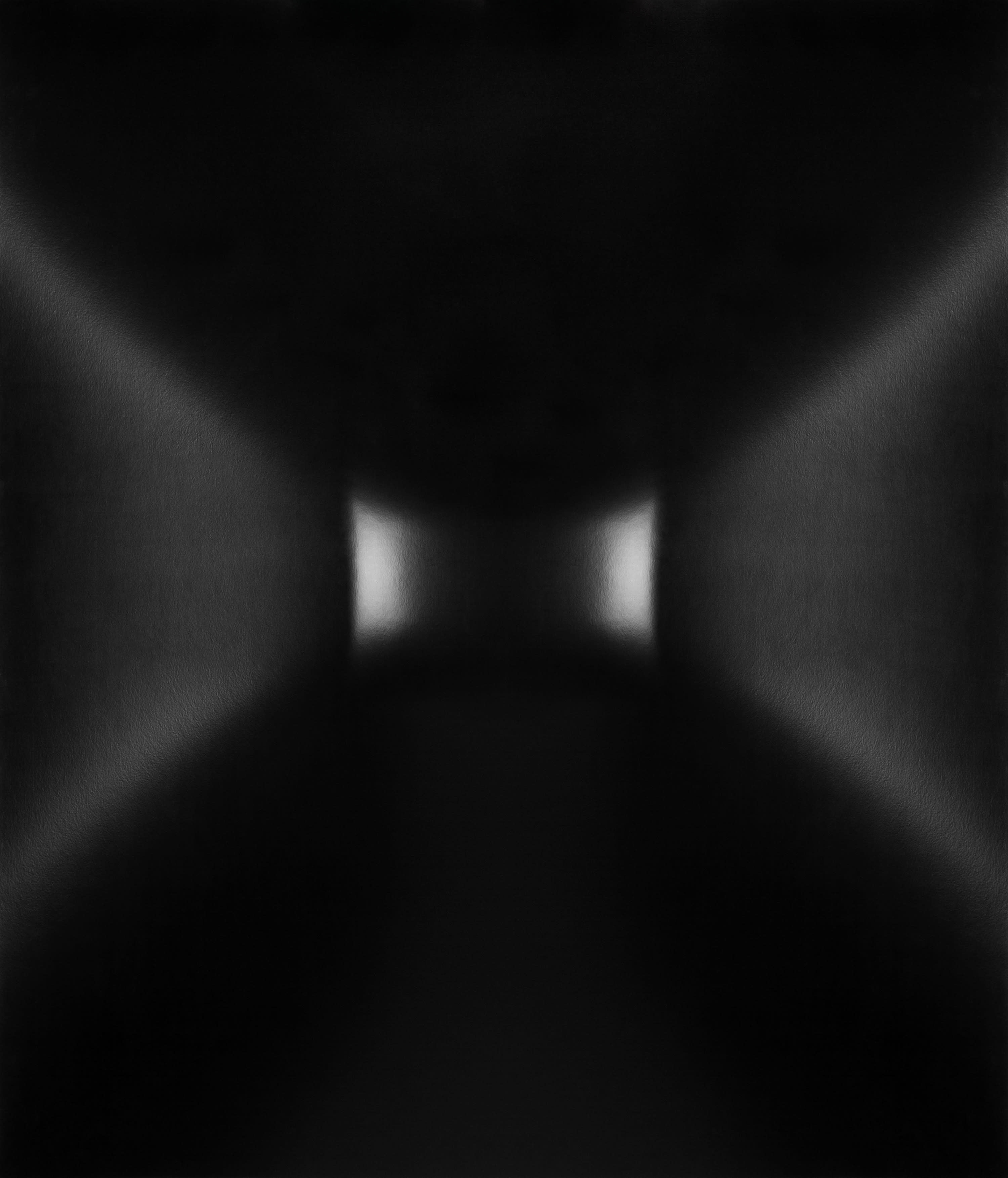
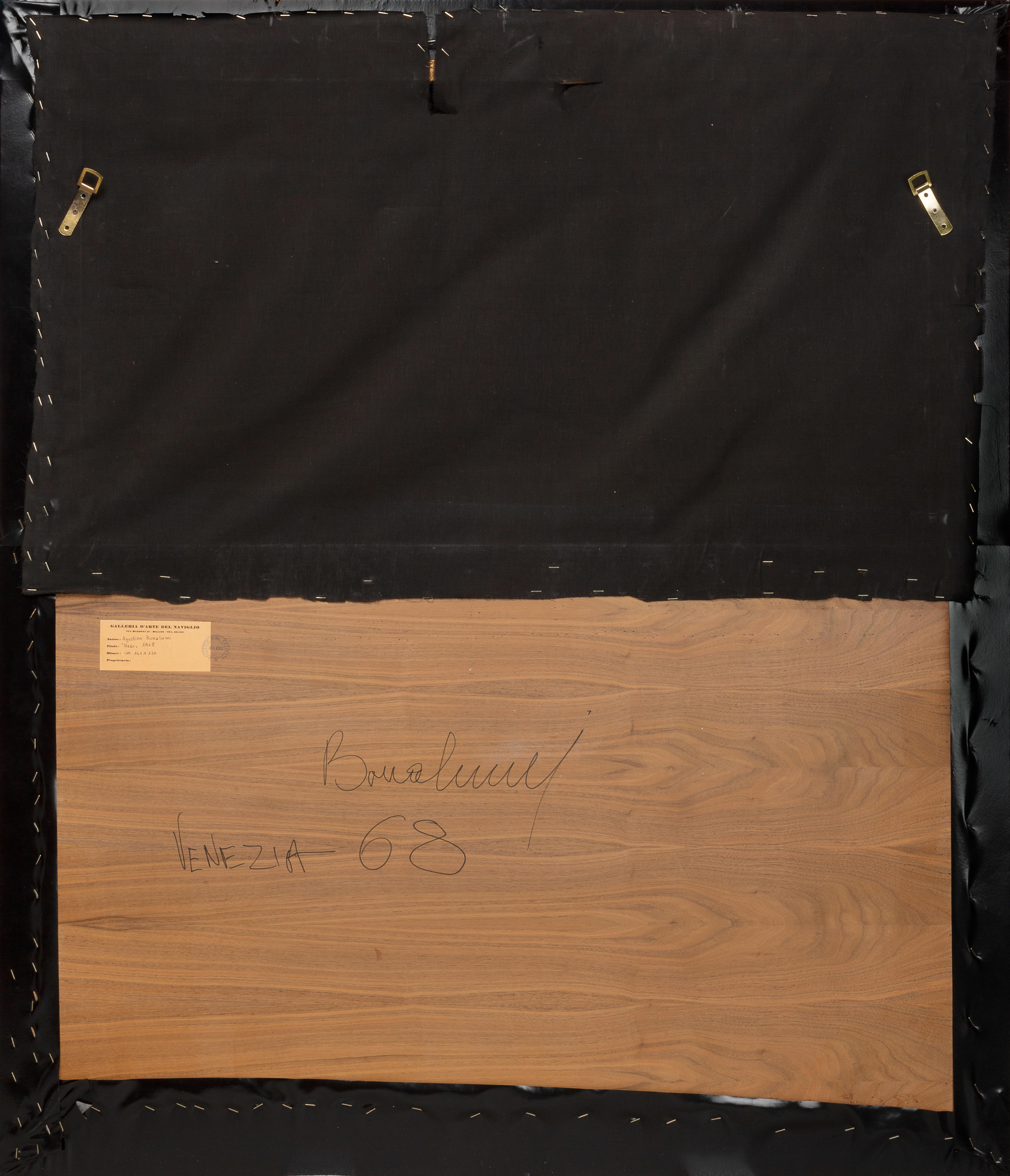
Nero (Black)
1968
Shaped ciré
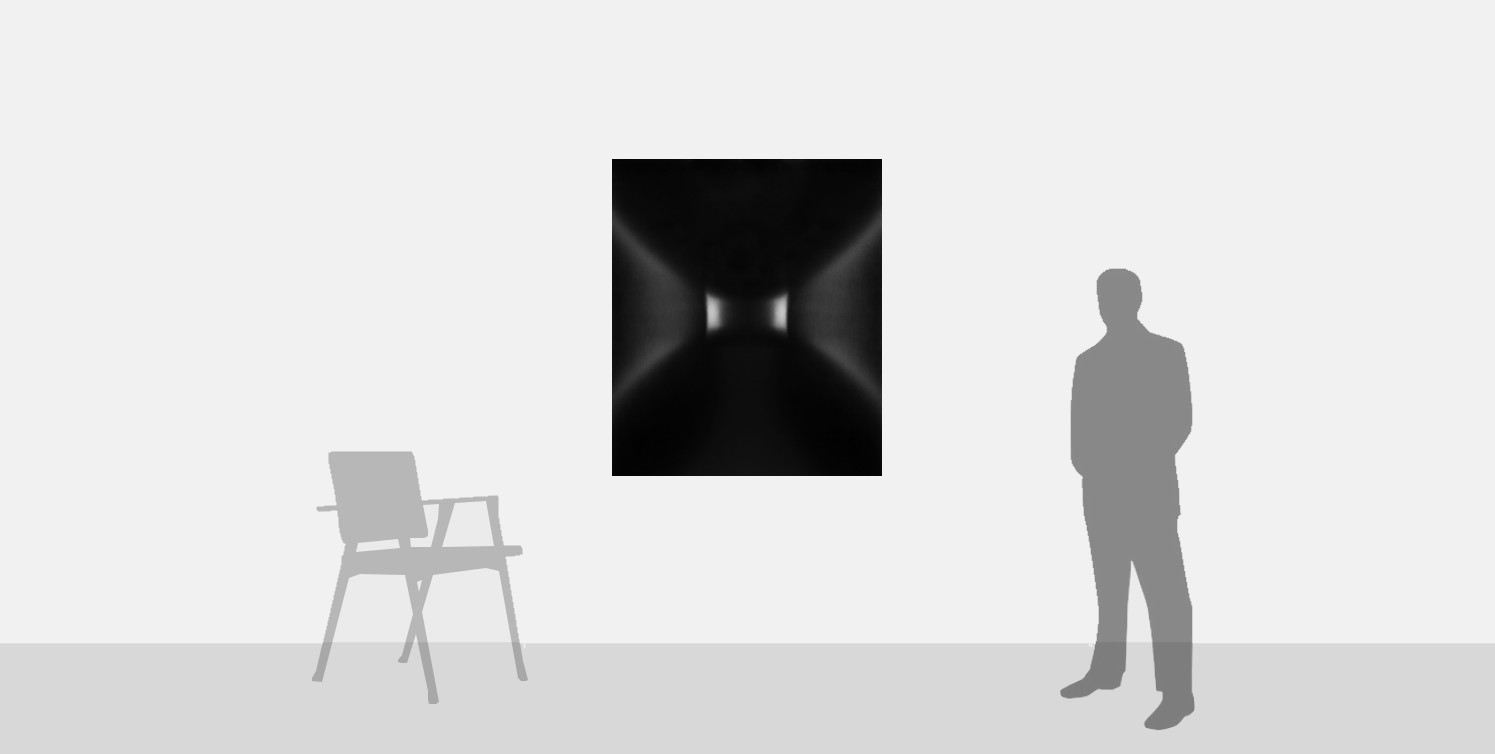
141 x 120 cm (55 1/2 x 47 1/4 in.)
Provenance
Famiglia Cardazzo Collection, Venice.
Literature
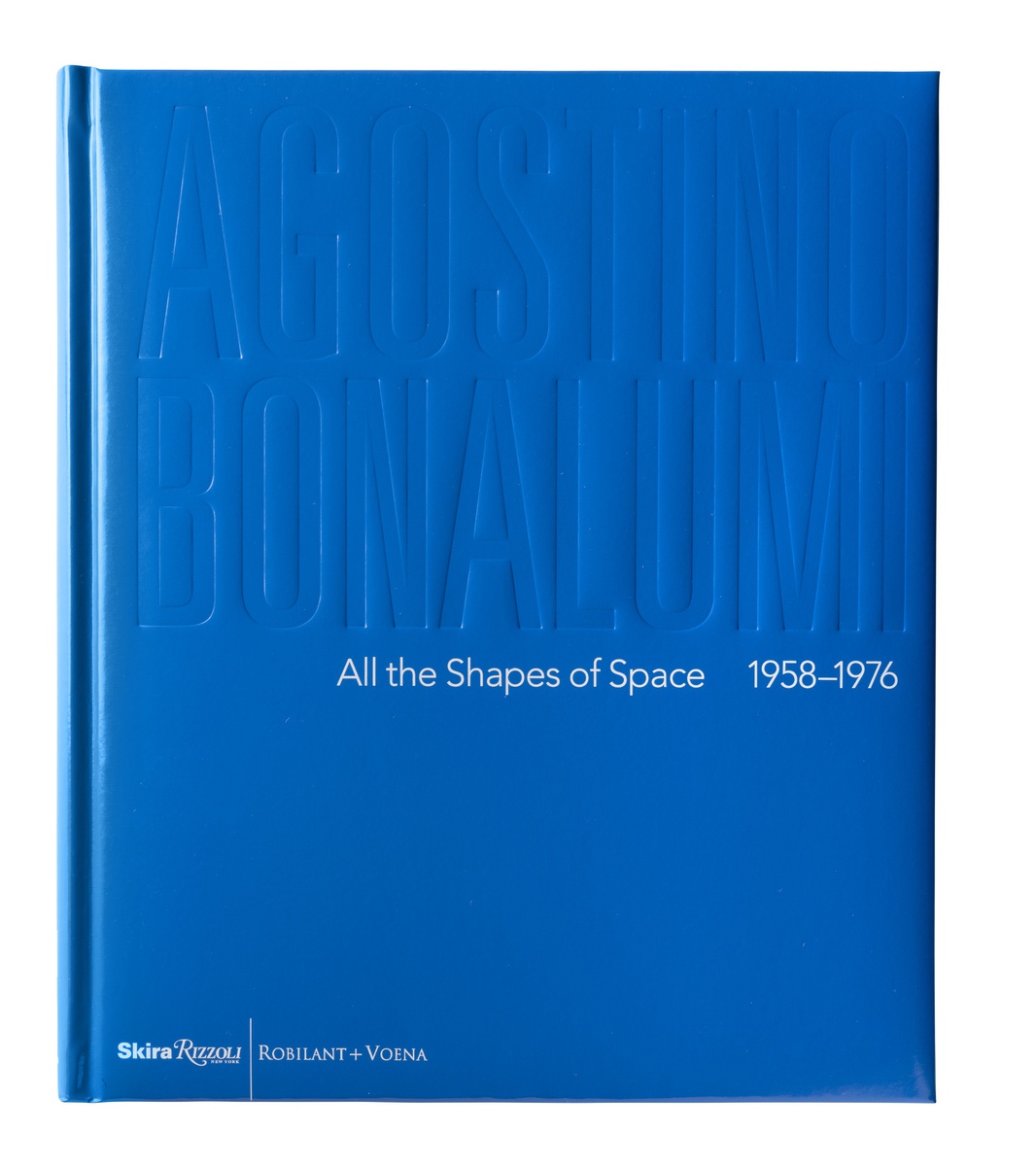
F. Pola, Agostino Bonalumi. All the Shapes of Space 1958–1976, exhibition catalogue, Robilant+Voena, London, 2013, pp. 142, 205, fig. 133.
F. Bonalumi and M. Meneguzzo, Agostino Bonalumi. Catalogo Ragionato, Milan, 2015, II, p. 421, no. 391.
Description
Agostino Bonalumi was at the forefront of the exceptional wave of Italian artists who followed in the footsteps of Lucio Fontana in the late 1950s and 1960s. Inspired by Fontana’s spatial experiments with the canvas, Bonalumi had begun working with Enrico Castellani and Piero Manzoni as early as 1958. By the mid-1960s, Bonalumi’s reputation was reaching new heights both internationally and at home, with strong links to Germany’s Zero artists and critics in Italy already beginning to recognise his importance; in 1966, the artist was invited to take part at the Venice Biennale for the first time. Bonalumi’s signature works are called Estroflessioni, in which monochrome canvases were stretched and deformed from behind to create abstract forms. Pushing the picture plane into three dimensions, Bonalumi’s paintings became sculptures, or, what the critic Gillo Dorfles called pitture-oggetti (painting-objects). Alongside Fontana with his knife, Burri with his blowtorch, and Castellani, who hammered nails into the reverse of his pictorial surfaces, Bonalumi was part of a fundamental redefinition of painting: the pictorial plane had become what American art historian Harold Rosenberg called “an arena in which to act.”
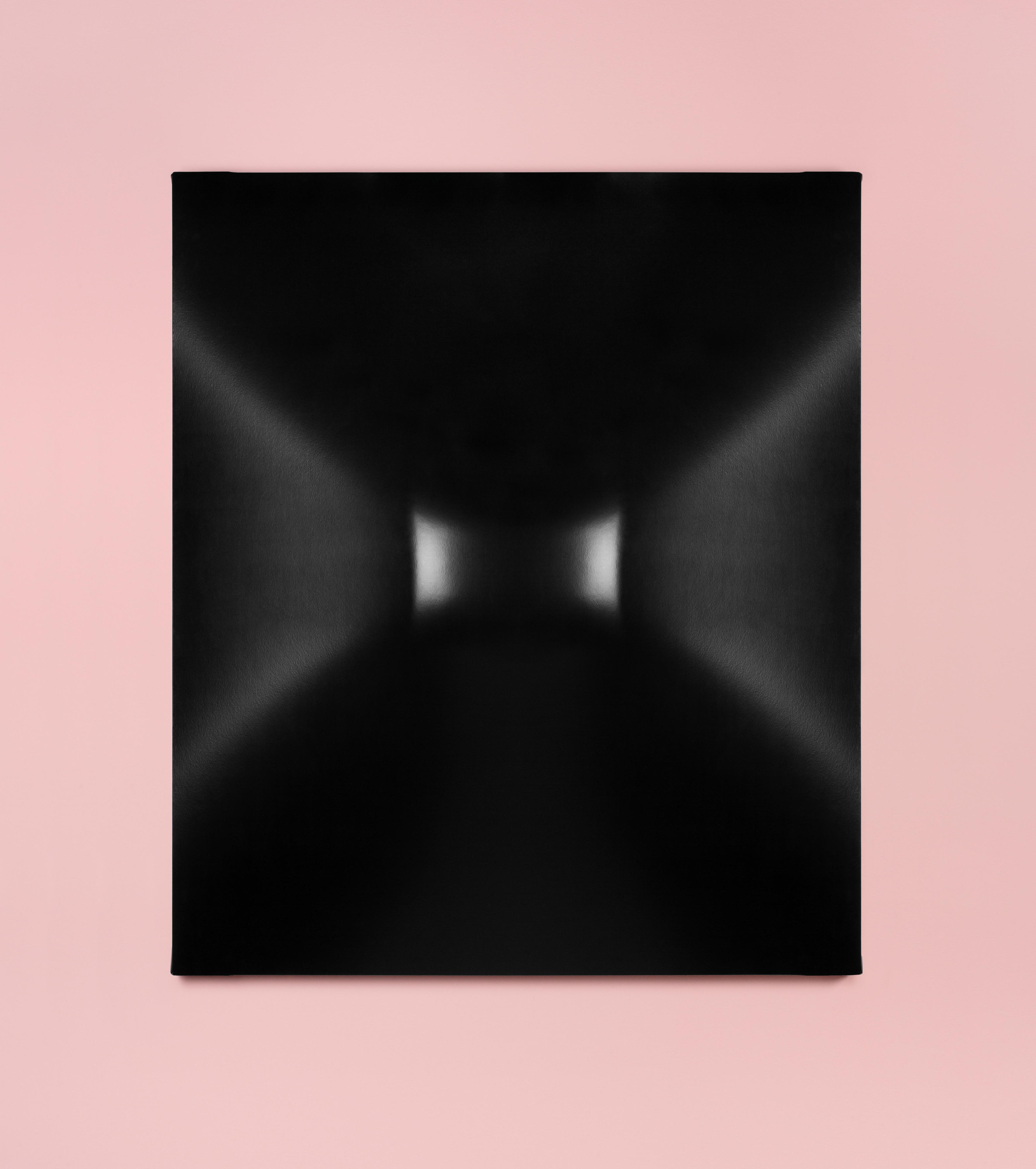
Contracting and expanding into the space of the viewer, curving and arcing in sleek black, disrupting the traditional expectations and experience of a work of art, Bonalumi’s Nero of 1968 is a striking example of the artist’s trademark estroflessioni—a vision of space and form both timeless and futuristic. Manipulating the surface of his support, Bonalumi created abstract structures that emerge from the surface of the painting to explore the space around them. The result is a kinetic, flowing visual experience that carries the eye around the work’s enigmatic contours, swelling and rippling in a strangely organic, ambiguous eruption of a sort of wave at the centre of the piece.
The present work represents a key point in the artist’s practice. 1967 was a crucial year for Bonalumi. That summer, a major exhibition curated by the most influential Italian art critics took place in Foligno. Entitled Lo spazio dell’immagine, the exhibition was a truly extraordinary event, presenting ground-breaking new work which challenged all traditional assumptions about the relationship between work a work of art and its viewer. For Foligno, Bonalumi created Blu Abitabile (Inhabitable Blue), the first of a new evolution of the estroflessioni, which came in the form of whole environments he created out of them for visitors to walk through. This immersive installation of interlocking blue elements both enveloped viewers and, at three metres high, towered above them, too. A few months later, in October, Bonalumi had his first solo show in New York, organised by Galleria Bonino; the exhibition mainly featured works that the artist had made while in the city, which the gallery purchased en bloc. While in America, Bonalumi discovered ciré, an elastic waxed fabric whose glossy finish and flexibility intrigued the artist. Bonalumi used ciré for only a short span of time, mainly between 1967 to 1971, but in doing so realized some of his most exciting creations.
The artwork described above is subject to changes in availability and price without prior notice. Where applicable ARR will be added.
Contracting and expanding into the space of the viewer, curving and arcing in sleek black, disrupting the traditional expectations and experience of a work of art, Bonalumi’s Nero of 1968 is a striking example of the artist’s trademark estroflessioni—a vision of space and form both timeless and futuristic. Manipulating the surface of his support, Bonalumi created abstract structures that emerge from the surface of the painting to explore the space around them. The result is a kinetic, flowing visual experience that carries the eye around the work’s enigmatic contours, swelling and rippling in a strangely organic, ambiguous eruption of a sort of wave at the centre of the piece.
The present work represents a key point in the artist’s practice. 1967 was a crucial year for Bonalumi. That summer, a major exhibition curated by the most influential Italian art critics took place in Foligno. Entitled Lo spazio dell’immagine, the exhibition was a truly extraordinary event, presenting ground-breaking new work which challenged all traditional assumptions about the relationship between work a work of art and its viewer. For Foligno, Bonalumi created Blu Abitabile (Inhabitable Blue), the first of a new evolution of the estroflessioni, which came in the form of whole environments he created out of them for visitors to walk through. This immersive installation of interlocking blue elements both enveloped viewers and, at three metres high, towered above them, too. A few months later, in October, Bonalumi had his first solo show in New York, organised by Galleria Bonino; the exhibition mainly featured works that the artist had made while in the city, which the gallery purchased en bloc. While in America, Bonalumi discovered ciré, an elastic waxed fabric whose glossy finish and flexibility intrigued the artist. Bonalumi used ciré for only a short span of time, mainly between 1967 to 1971, but in doing so realized some of his most exciting creations.
The artwork described above is subject to changes in availability and price without prior notice. Where applicable ARR will be added.