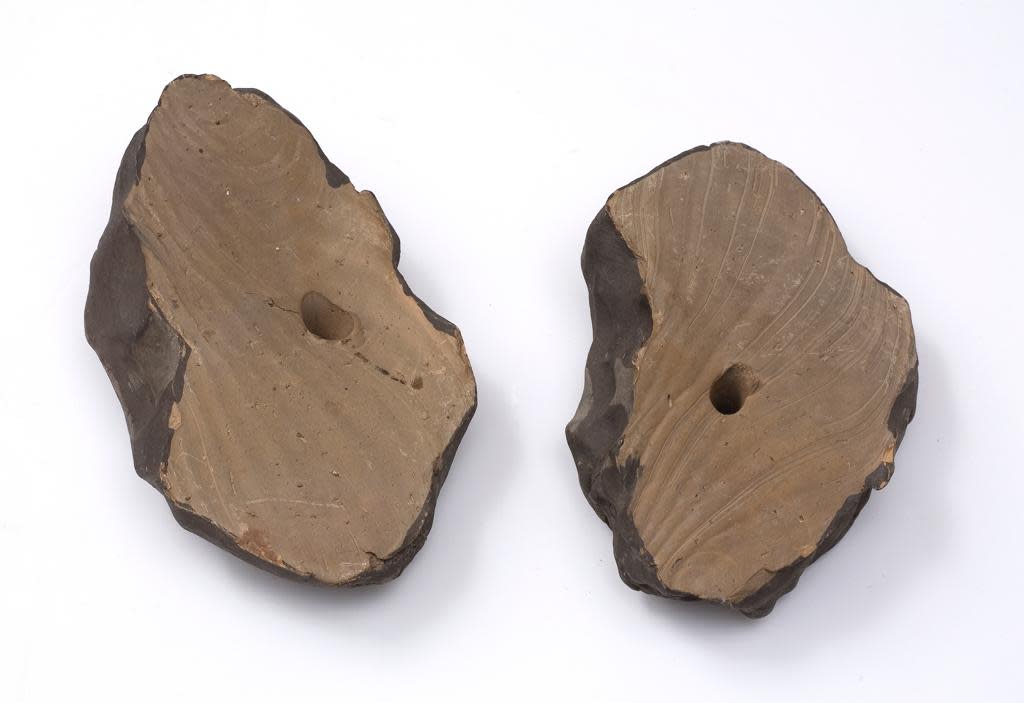


Lucio Fontana
b. 1899, Rosario de Santa Fé
d. 1968, Comabbio
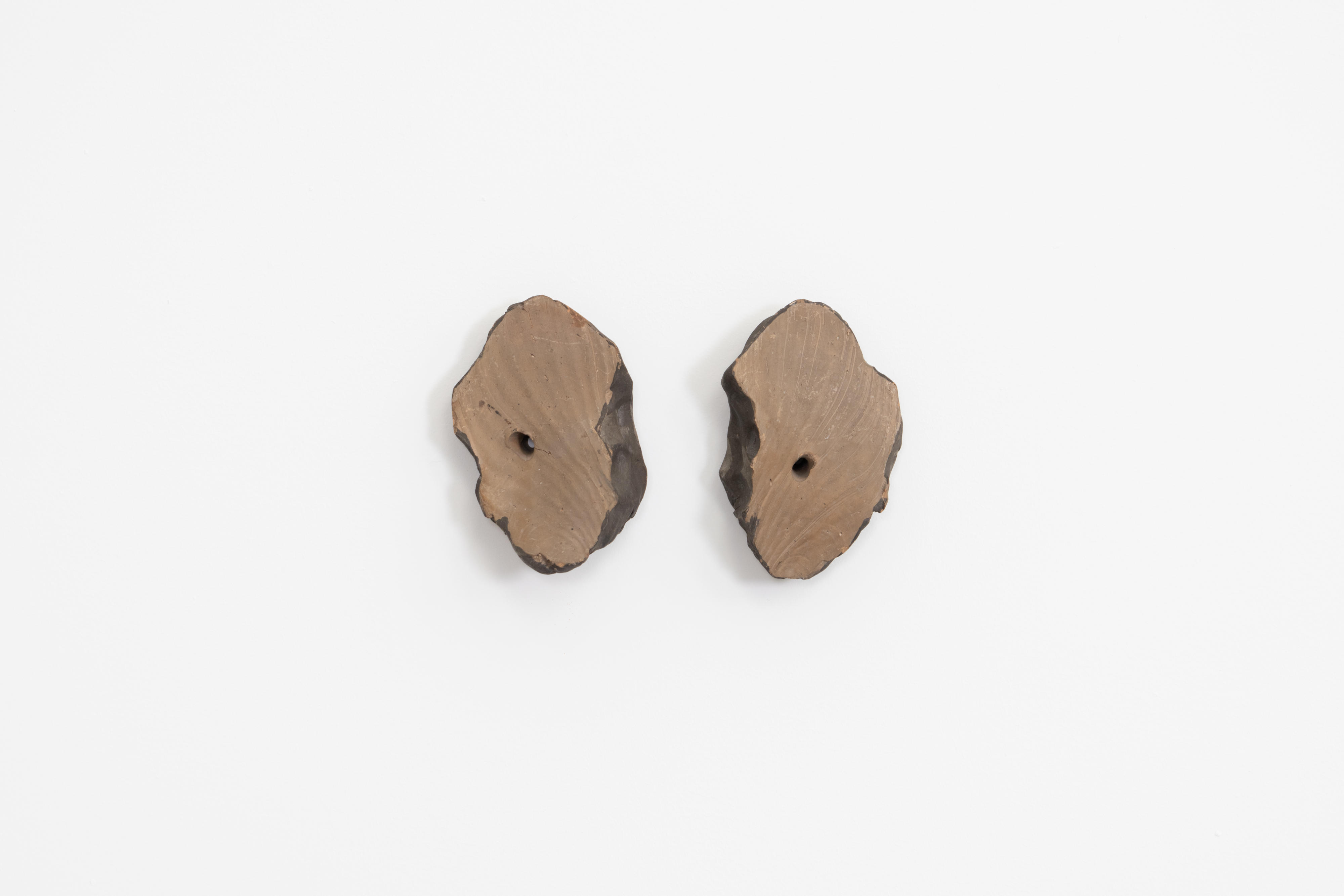
Concetto Spaziale, Natura (Spatial Concept, Nature)
1959
Terracotta
18.5 x 11.5 cm (7 1/4 x 4 1/2 in.) each
Provenance
Galleria Grossetti, Milan,
Christie’s, Milan, 24 May 2004, lot 261,
Private collection.
Literature
E. Crispolti, Lucio Fontana: Catalogo Generale, Milan, Electa, 1986, I, p. 347, no. 59 N 18–19, illustrated.
E. Crispolti, Lucio Fontana: Catalogo Ragionato di Sculture, Dipinti, Ambientazioni, Milan, Skira, 2006, I, p. 520, no. 59 N 18–19, illustrated.
Description
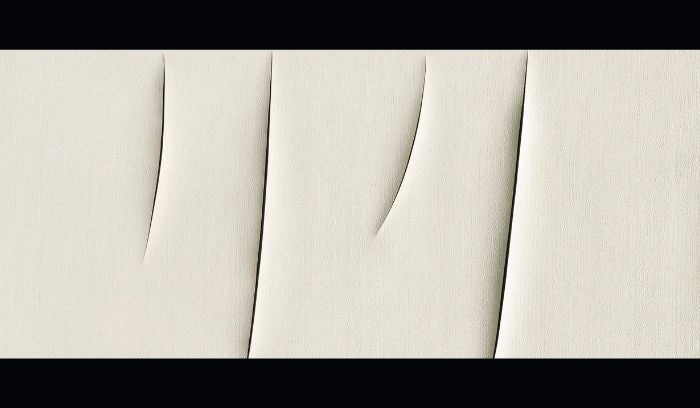
Though now renowned for his highly experimental and innovative work as Spatial artist, Lucio Fontana began his career as a sculptor. As a young man, he worked for his father's firm creating funerary busts from materials like plaster and marble, and in 1928 he began studying sculpture at the Accademia di Belle Arti di Brera, working in the traditional academic manner. Fontana soon abandoned the classical idiom prescribed by the academy and began to explore sculpture-making more freely.
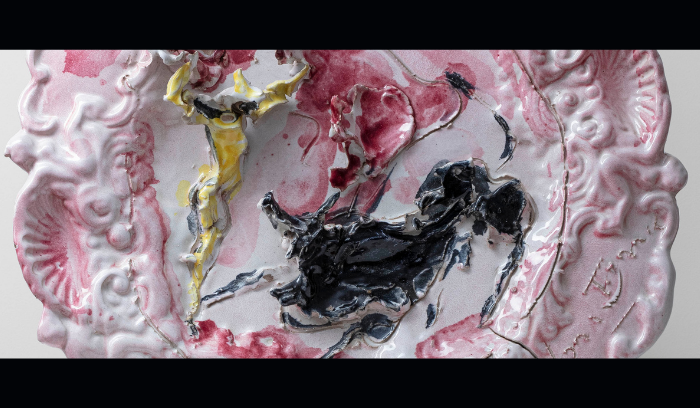
In 1935, Fontana started working in the workshop of the Futurist ceramicist Tullio Mazzotti in Albisola, a small town on the Ligurian coast. During the twentieth century Albisola became well-known as a meeting point for international artists and ceramists, growing into a hub for avant-garde art and design. At Mazzotti’s studio, Fontana was able to develop his gestural and expressive ceramics. Encompassing both abstract and figurative forms, his ceramics are among his most innovative and experimental works, at once gestural performances of artmaking and meditations upon its infinite potential.
Concetto Spaziale, Natura embodies Fontana’s life-long interest in the physical possibilities of sculptural materials. During the hot summers of 1959 and 1960 that he spent in Albisola, Fontana devoted himself to the Natura series, of which the present work is an extraordinary example. Modelled in terracotta, the two pieces were initially conceived as single-sided ‘bowls’ or complementary ‘bi-valve’ shapes, that together form a single sculpture. In terracotta, Fontana found an ideal medium to explore the relationship between space and form, its smooth plasticity allowing him to express the spatial concepts he was simultaneously pursuing in his paintings.
The present work is one of Fontana's earliest pieces from the Natura series, executed in 1959. Composed of an oval form that seems to have been torn in two, it resembles wood or rock with its dark colours and undulating ridges. The work’s simple execution does not detract from the power of its presence, and its meaning remains enigmatic. Its rugged form recalls both an ancient past as well as hinting at something extra-terrestrial, part of the new space age to which the artist often referred. Fontana would later enlarge the dimensions of these works, which he informally called ‘balloons’, further developing the aspect of ‘cosmological matter’ created during the birth of the universe.
The artwork described above is subject to changes in availability and price without prior notice.