
Mimmo Rotella
b. 1918, Catanzaro, Italy
d. 2006, Milan, Italy
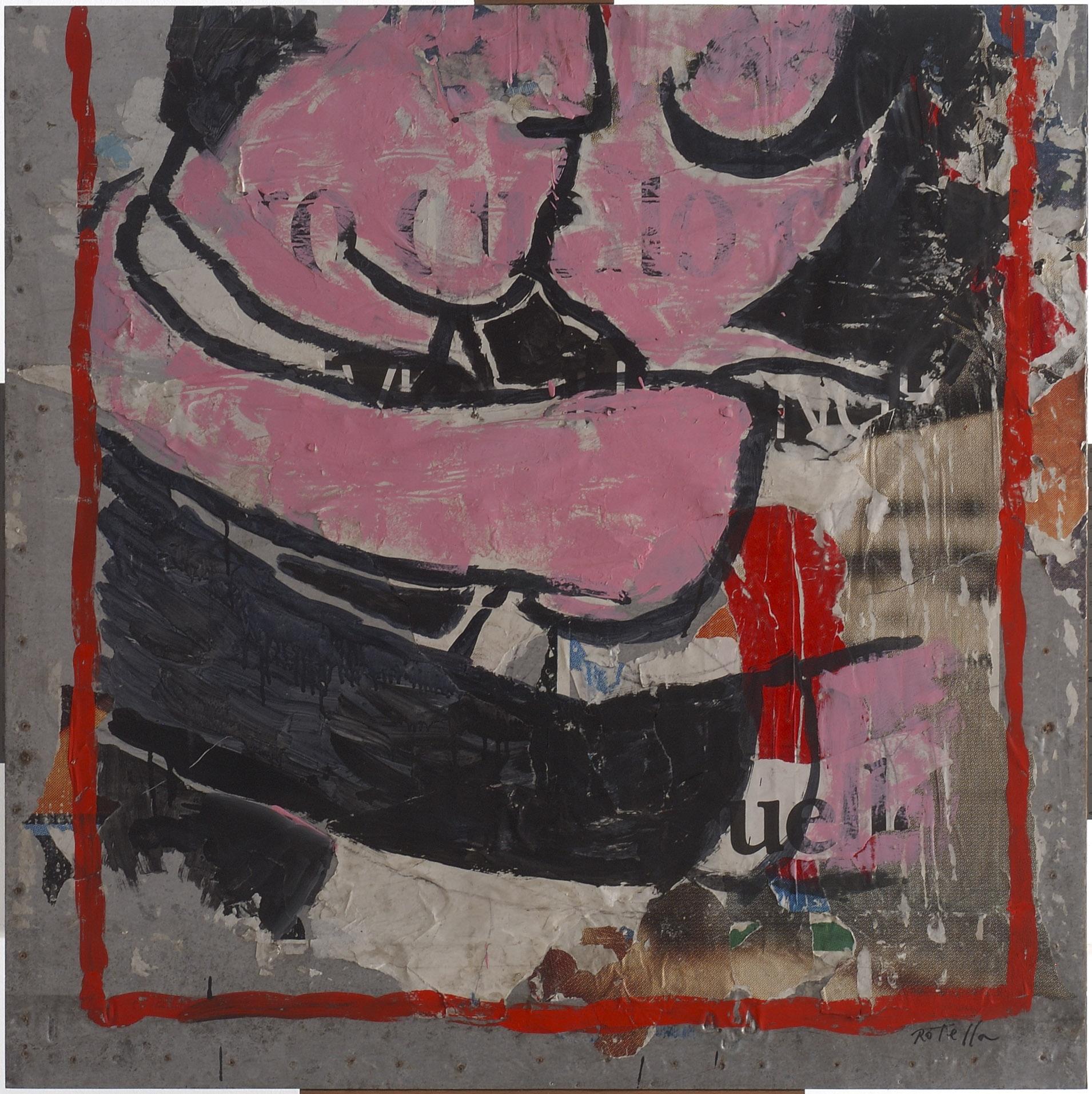
Il Bacio al Parco (The Kiss in the Park)
1993
Acrylic and décollage on zinc
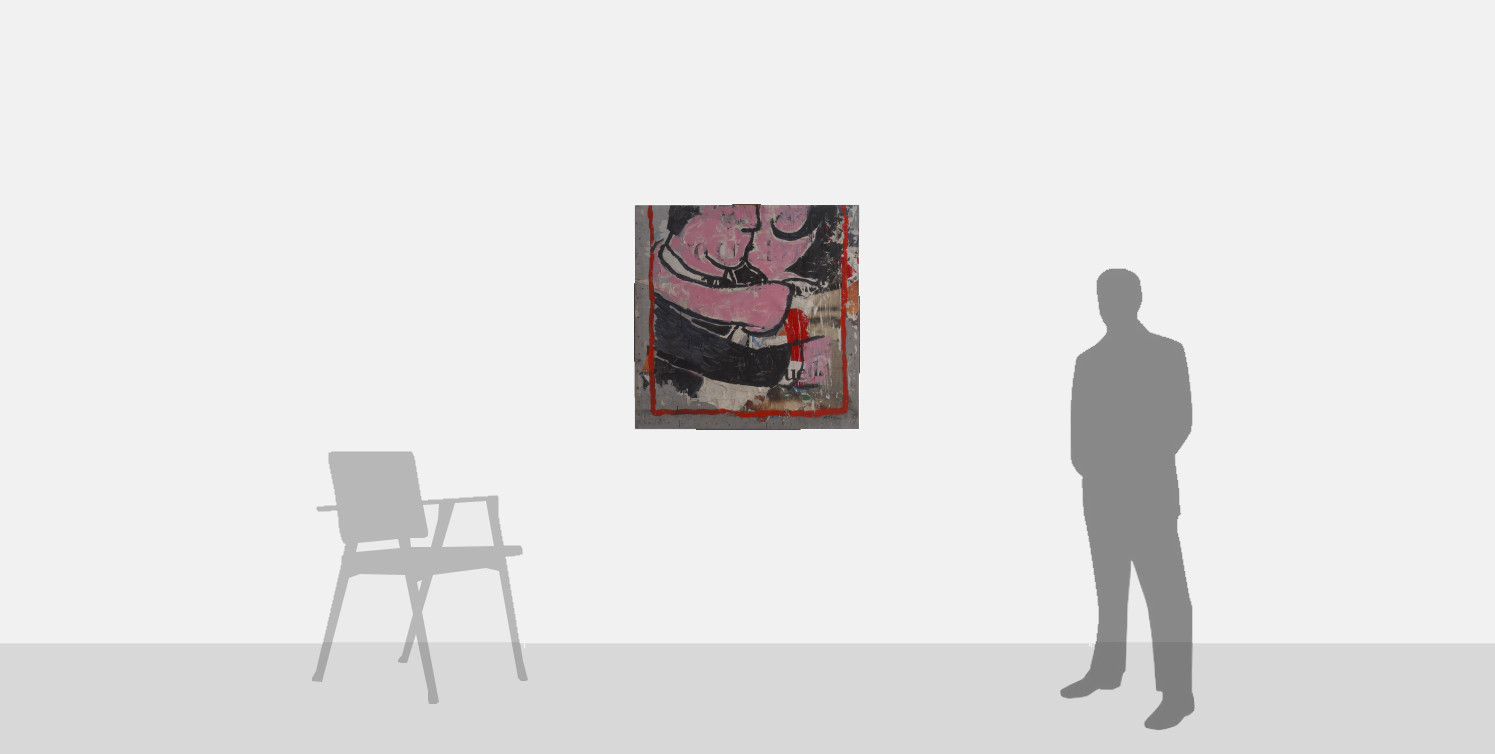
100.5 x 100.5 cm (39 5/8 x 39 5/8 in.)
Provenance
Private collection.
Literature
R. Barilli and T. Sicoli, Rotella, exh. cat. Museo Civico Palazzo Zagarese, Rende, Consenza, 1996, p. 83, illustrated.
A. Soldaini, Mimmo Rotella, exh. cat. Robilant+Voena, London, 2015, pp. 189, 209, no. 111, illustrated.
Description
"The sovrapitture are the attempt to combine décollage with painting. The idea came to me thinking about the time in the fifties when I was bewitched by the sight of the writing that workers scribbled over posters during a break: their, I don’t know… accounts, sketches of the work to be completed. Thirty years later, I transformed this intuition into painting. But I think of painting in a modern way, not in a traditional one."–Mimmo Rotella, quoted in L. Mattarella, “Una conversazione con Mimmo Rotella”, in P. Mascitti and V. Sanfo, Mimmo Rotella, fotografie 1926–2001, Naples, 2003, pp. 124-25
In Mimmo Rotella's sovrapitture, the artist used acrylic paint to intervene graphically or pictorially upon the surfaces of the posters that had long been his preferred medium, sometimes kept intact and in other instances torn and collaged together. Rotella’s first exhibition devoted to this group of works was Rotella: Sovrapitture, held in 1986 at the Galleria Niccoli in Parma.
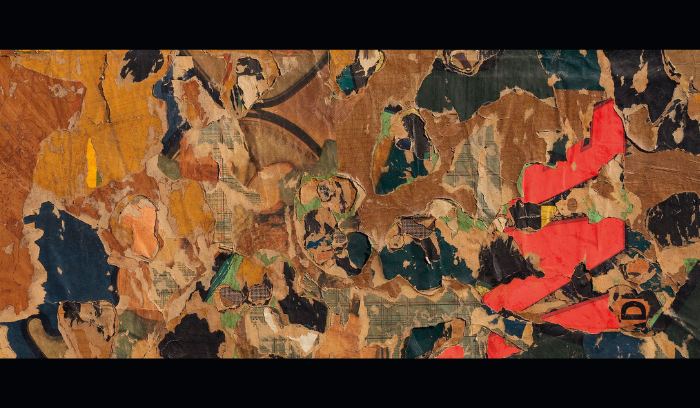
Rotella's sovrapitture represent a new stage in the evolution of his signature décollage technique, begun in the 1950s, whereby the artist ripped worn posters from the outdoor walls of Rome, tore and sliced them further in his studio and then reassembled or collaged them onto prepared canvases. The early 1980s were marked by a resurgence in figurative and narrative art, which often united highly expressionistic, heavily impastoed, bravura painting with Pop-inflected iconography, often infused with sexually voyeuristic undercurrents. Il Bacio al Parco, 1993, demonstrates Rotella's commercially savvy response to these wider developments. In his depiction of an intimate moment between a man and a woman, Rotella deployed thick acrylic colours to render their forms in a manner somewhere in between figuration and abstraction, creating a sort of mural painting on top of a billboard, replacing and displacing the elegant and mannered cinematic clinch one might expect to see on a movie poster with something more boldly modern.
The artwork described above is subject to changes in availability and price without prior notice. Where applicable ARR will be added.
In Mimmo Rotella's sovrapitture, the artist used acrylic paint to intervene graphically or pictorially upon the surfaces of the posters that had long been his preferred medium, sometimes kept intact and in other instances torn and collaged together. Rotella’s first exhibition devoted to this group of works was Rotella: Sovrapitture, held in 1986 at the Galleria Niccoli in Parma.
Rotella's sovrapitture represent a new stage in the evolution of his signature décollage technique, begun in the 1950s, whereby the artist ripped worn posters from the outdoor walls of Rome, tore and sliced them further in his studio and then reassembled or collaged them onto prepared canvases. The early 1980s were marked by a resurgence in figurative and narrative art, which often united highly expressionistic, heavily impastoed, bravura painting with Pop-inflected iconography, often infused with sexually voyeuristic undercurrents. Il Bacio al Parco, 1993, demonstrates Rotella's commercially savvy response to these wider developments. In his depiction of an intimate moment between a man and a woman, Rotella deployed thick acrylic colours to render their forms in a manner somewhere in between figuration and abstraction, creating a sort of mural painting on top of a billboard, replacing and displacing the elegant and mannered cinematic clinch one might expect to see on a movie poster with something more boldly modern.
The artwork described above is subject to changes in availability and price without prior notice. Where applicable ARR will be added.