

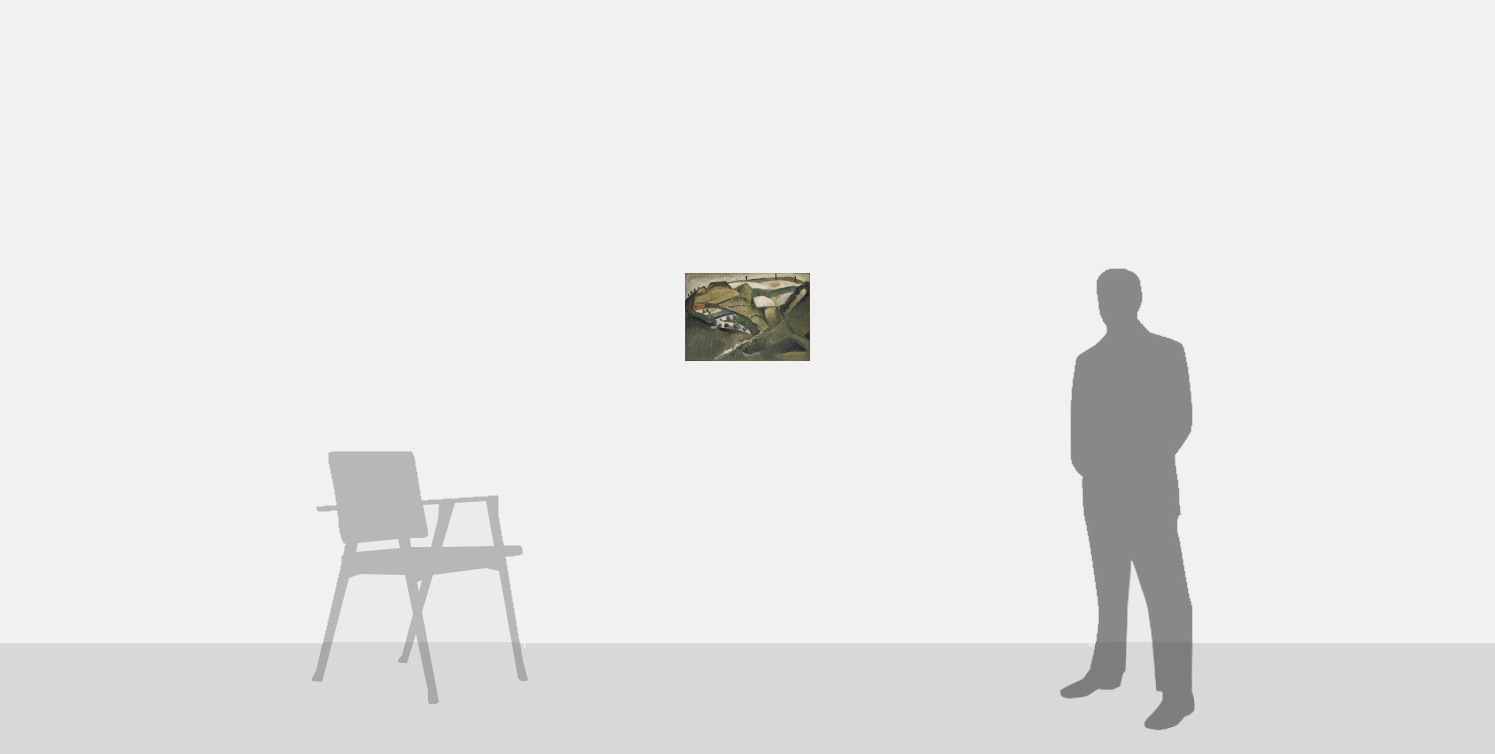

Giorgio Morandi
b. 1890, Bologna, Italy
d. 1964, Bologna, Italy
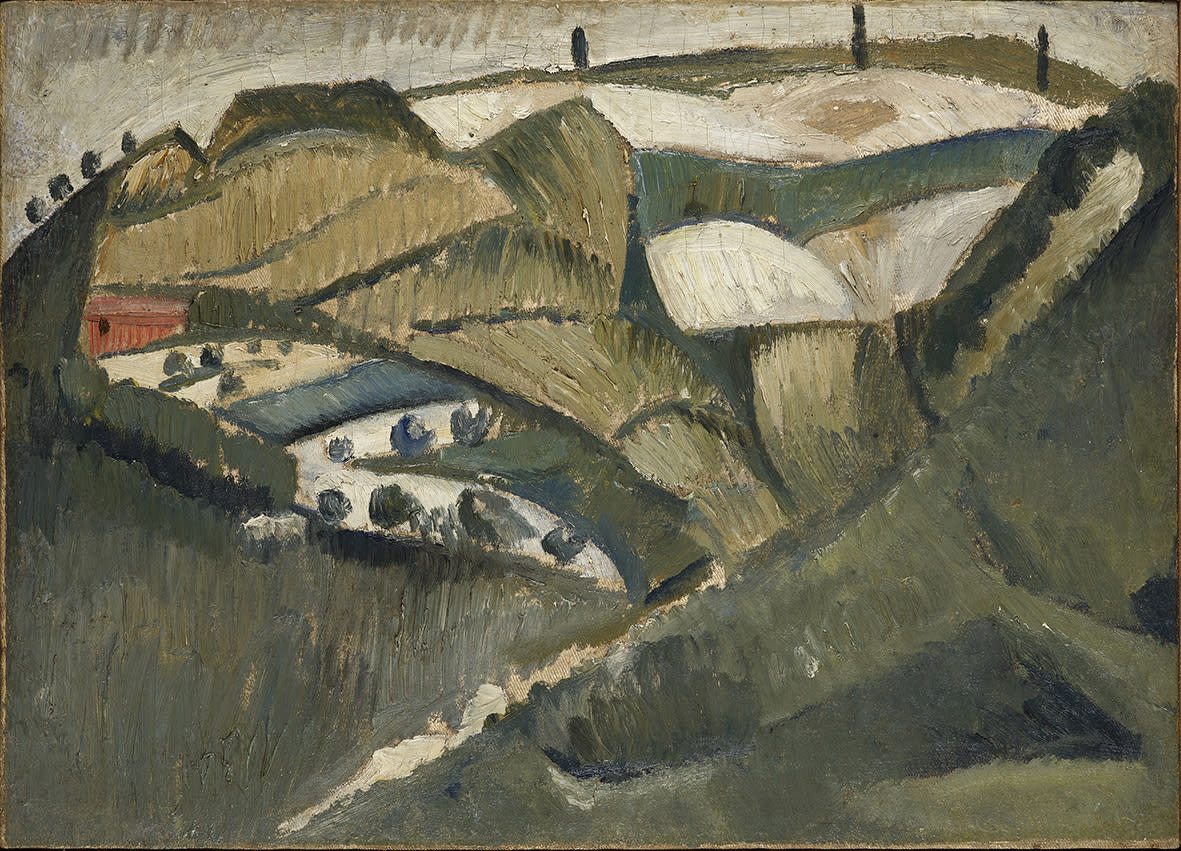
Paesaggio (Landscape)
1913
Oil on canvas
39 x 55.5 cm (15 3/8 x 21 7/8 in.)
Provenance
Savini collection, Milan,
Galleria del Milione, Milan,
E. Accame collection, Turin,
Private collection, Bologna.
Literature
L. Vitali, Giorgio Morandi pittore, Milan, 1964, no. 3.
L. Vitali, Morandi – Catalogo generale, Milan, 1977 (second edition, Milan, 1983), no. 9.
Description
In 1913, his last year as a student at the Academy of Fine Arts in Bologna, Morandi spent the summer for the first time in the small village of Grizzana in the Bolognese Apennines, together with his family. The views of the hills surrounding the village would stay with the artist for the rest of his life and, as Maria Cristina Bandera writes, would become his own Montagne Sainte-Victoire.
The reference to Cézanne is clearly intentional: the French artist was one of the key models, if not the sole model, for the young Morandi, who studied Cézanne's works in detail in the black and white illustrations in Vittorio Pica's publication Gli Impressionisti Francesi, published in 1908. Morandi's first encounter with Cézanne was even earlier, through photos circulating among the young students at the Bolognese academy as well as articles published in the avant-garde newspaper La Voce.
From his window, the artist, then twenty-three years old, studied the harsh landscape of the Apennines and reduced it to its essentials, depriving it, as is the case throughout his work, of any human presence.
As is well known, Morandi was a severe critic of his own early creations and destroyed a considerable number of his works. This period in his artistic career, so particular and so strongly reminiscent of Cézanne, is represented by a very limited number of paintings, four from 1913 (Vitali, nos. 8–11) and two the following year (Vitali, nos. 16–17), all belonging to some of the most famous collections of the twentieth century, such as Jucker, Jesi and Mattioli.