
Jeff Koons
b. 1955, York, PA
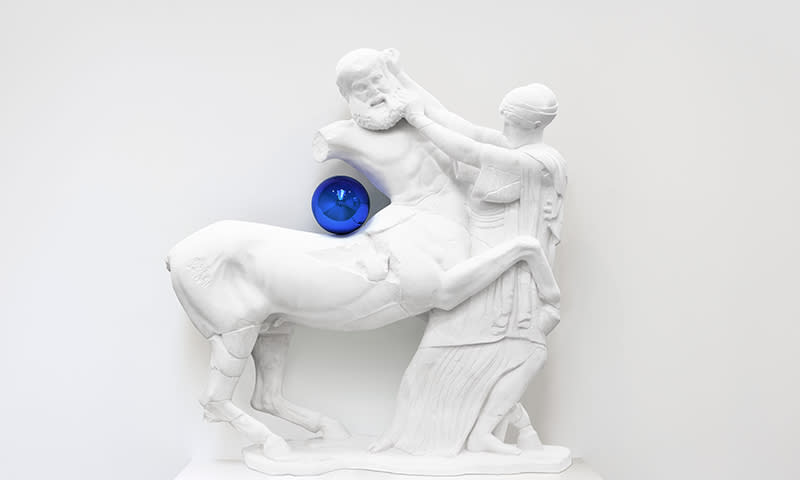
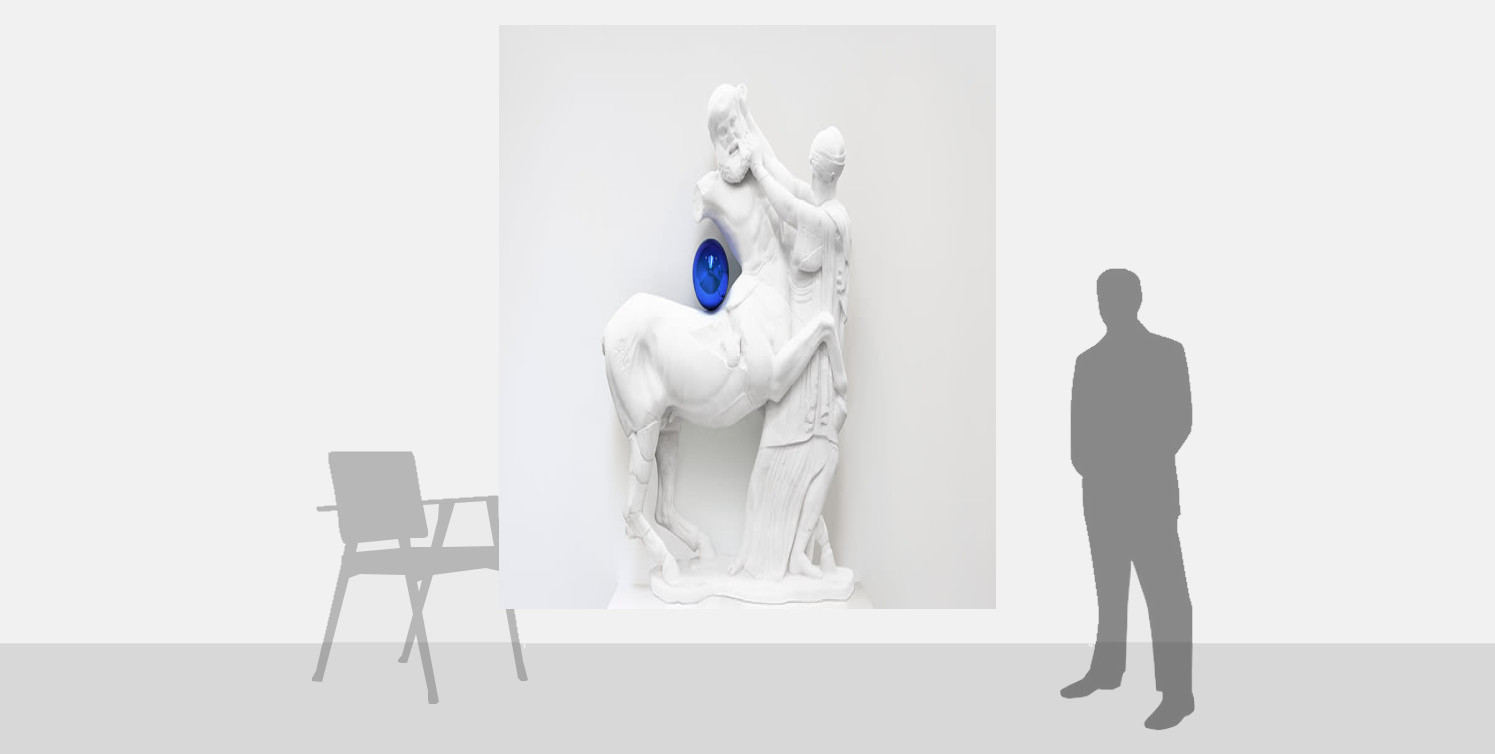
Gazing Ball (Centaur and Lapith Maiden)
2013
Plaster and glass
259.8 x 221 x 68.6 cm (102 x 87 x 27 in.)
Pedestal: 25.4 x 243.8 x 76.2 (10 x 96 x 30 in.)
Edition 1 of 3 plus 1 Artist Proof
Provenance
David Zwirner, New York;
Private Collection.
Description
Jeff Koons’s Gazing Ball series takes its name from the mirrored spherical ornaments frequently found on lawns, gardens, and patios around the artist’s childhood home in Pennsylvania. Their unique visual qualities allow viewers to see around corners, absorbing them and their surroundings within one image. Koons began to incorporate highly reflective curved surfaces in his sculptures from the mid-1980s onwards, and the gazing balls can be seen to echo the consummate attention to detail and materiality found throughout his oeuvre.
Many of his sculptures have a deep link with the classical tradition, showing Koons’s personal reflection on masterpieces of the Western art historical canon. In Gazing Ball (Centaur and Lapith Maiden), Koons refers to the Phidias frieze from the Parthenon, often regarded as one of the cornerstones of our civilisation. The specific model for Koons’s sculpture is methope X from the southern frieze, depicting the battle between the Centaurs and the Lapiths, today in the collection of the Musée du Louvre. In the ancient model this was one of the most violent moments of the myth: as one of the centaurs attempts to rape Hippodamia, the bride of Pirithous, the king of the Lapiths.
Koons, while paying homage to Phidias, re-imagines the ancient model with a contemporary and disenchanted regard, adding the blue gazing ball and choosing a bright white colour for the plaster.