
Pietro Consagra
b. 1920, Mazara del Vallo, Italy
d. 2005, Milan, Italy
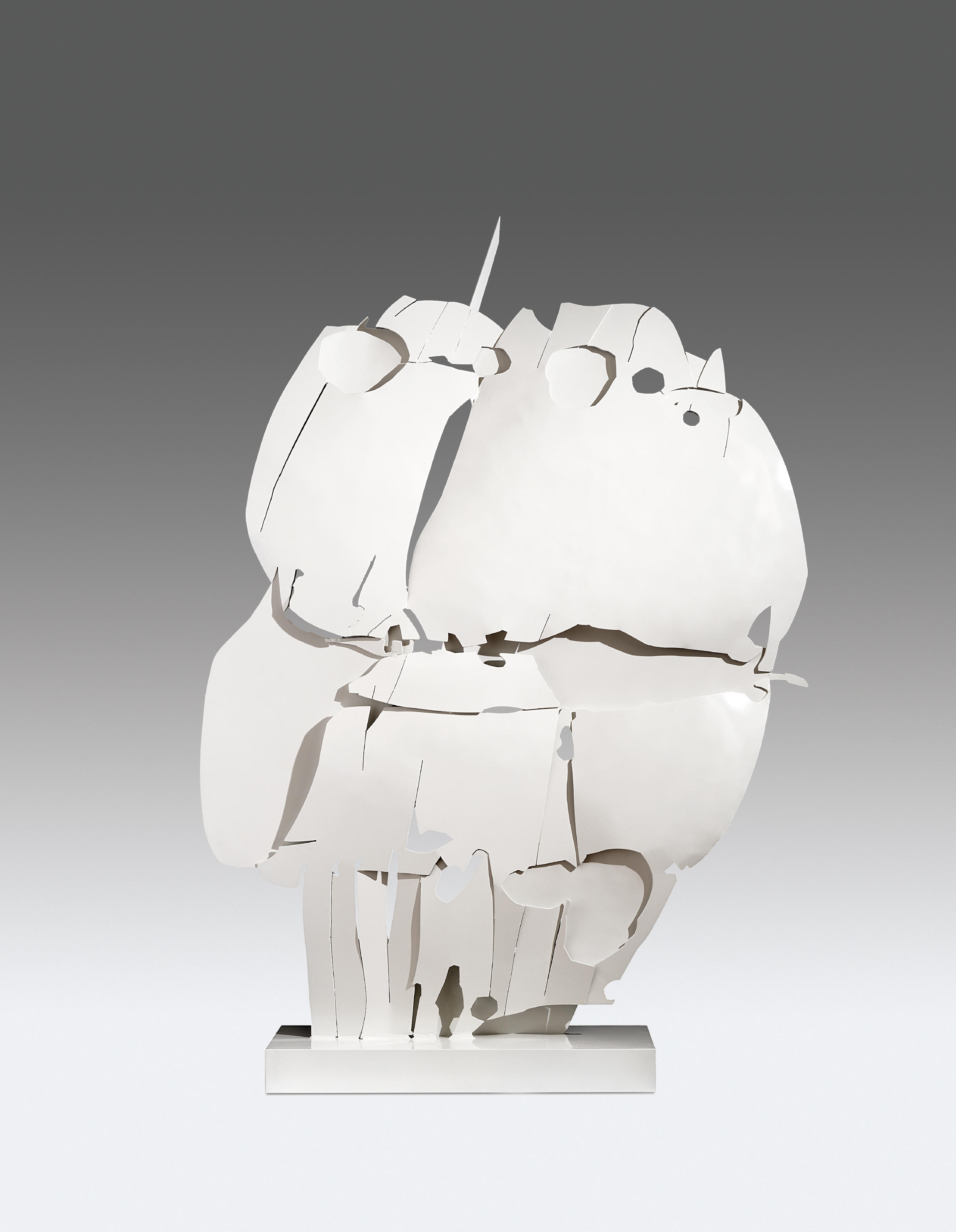
Ferro Trasparente Bianco V (Transparent White Iron V)
1966
Painted iron
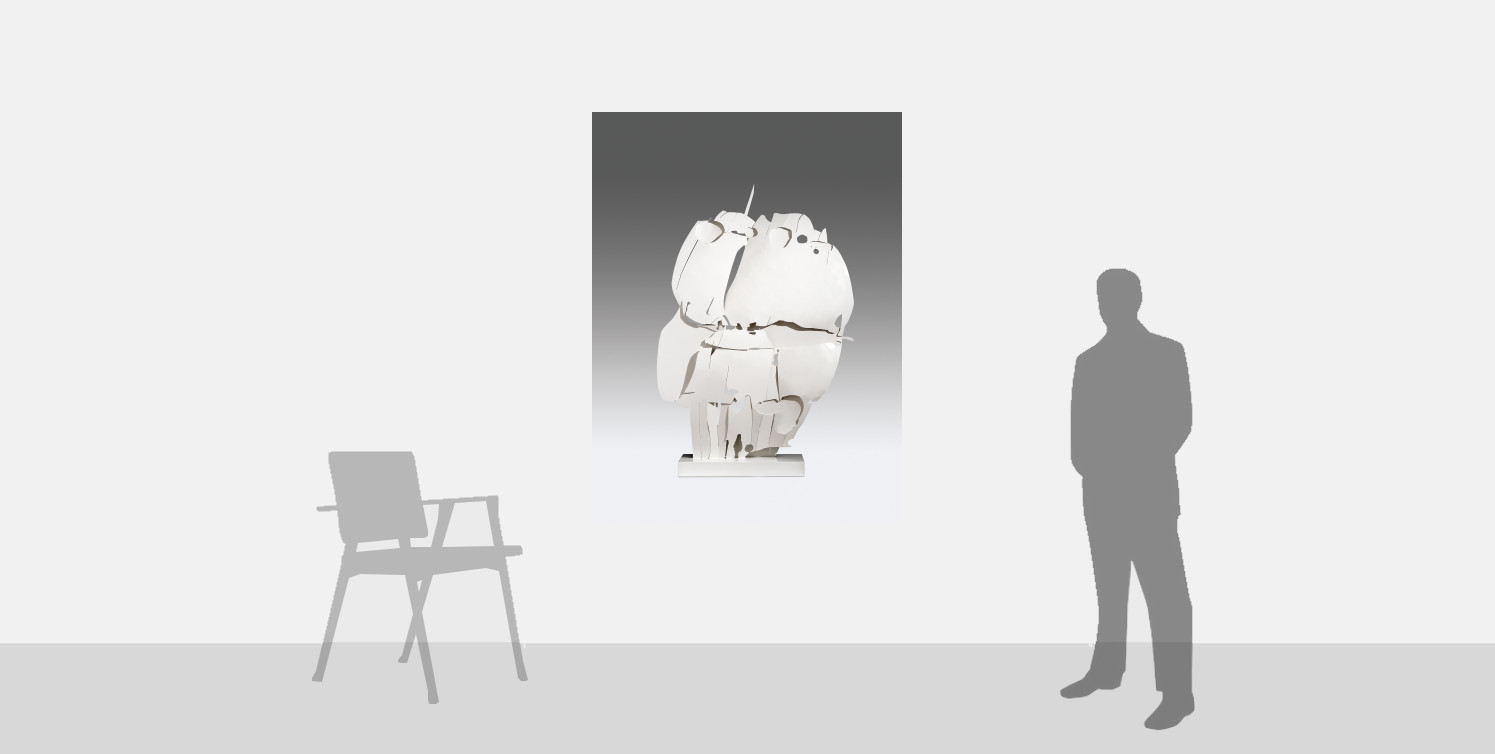
183 x 138 x 7 cm (72 x 54 3/8 x 2 3/4 in.)
Provenance
Private Collection, Palermo
Private Collection, Milan.
Private Collection, Milan.
Literature
Pietro Consagra, Poema frontale, exh. cat. Galleria Quattro Venti Proposte d'Arte Contemporanea, Palermo, 1973.
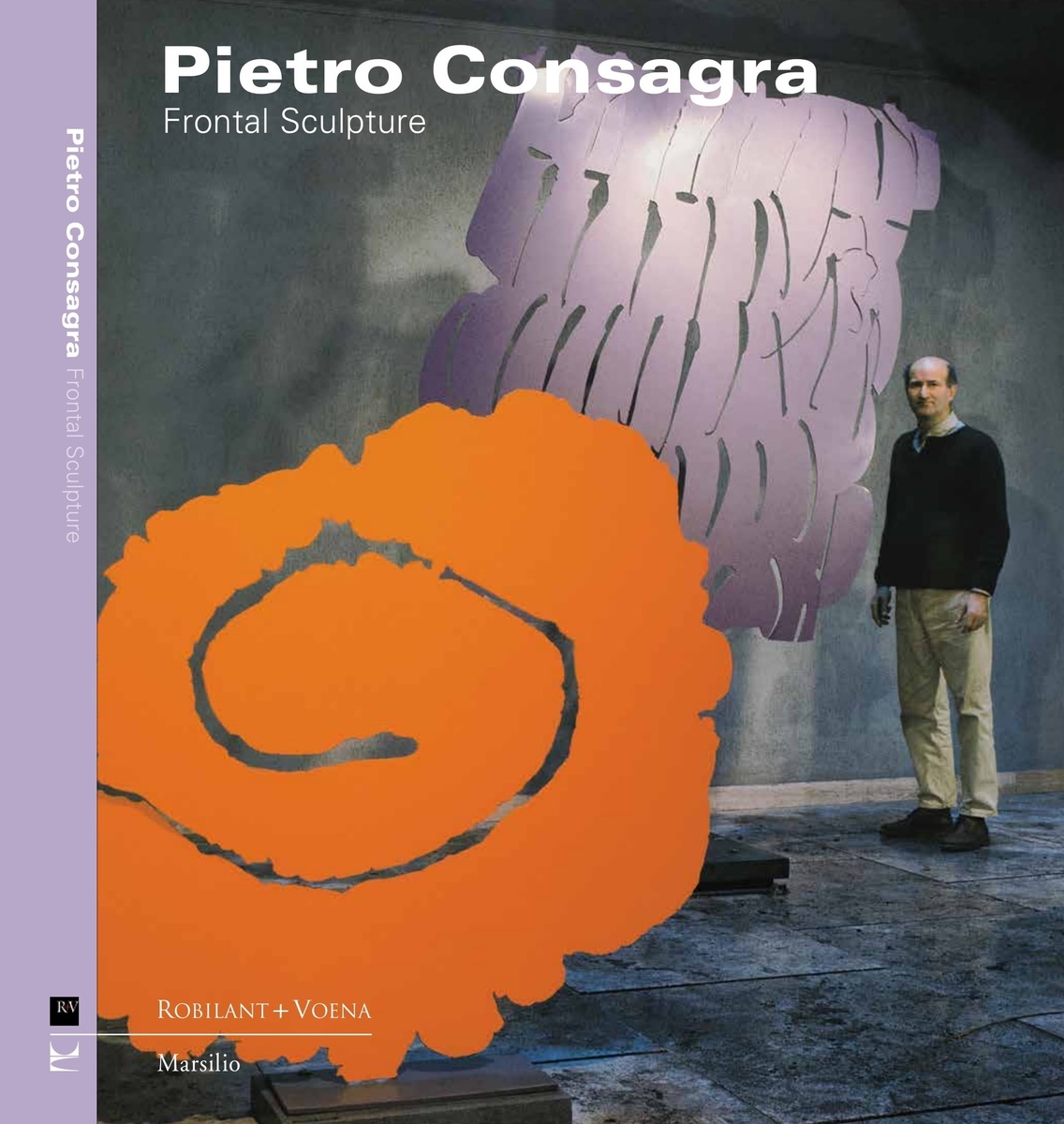
F. Pola, ed., Pietro Consagra. Frontal sculpture 1947–1967, exh. cat. Robilant + Voena, London, p. 128, no. 121, illustrated in colour.
M. Meneguzzo and G. Di Milia, Pietro Consagra, exh. cat. Galleria Tega, Milan, 2016, p. 73, illustrated in colour.
Description
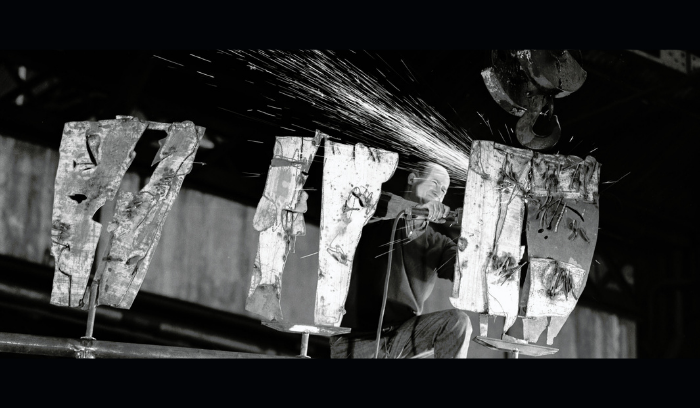
Pietro Consagra is one of Europe’s most renowned postwar sculptors. Born in 1920 in Mazara del Vallo, Sicily, he moved to Rome in 1944, the “open city” that was beginning its civic and material reconstruction after World War II. Consagra developed his highly distinctive vision for a new form of sculpture after a formative visit to Paris in 1946, which marked the beginning of an active dialogue with the international avant-garde. He soon thereafter realised his first abstract sculptures; they were not modelled as a whole, but instead constructed of silhouetted forms built of overlapping planes.
In 1952 Consagra began to execute the Colloqui (Dialogues) series which can be considered as some of the most emblematic alternatives offered by European sculpture to Informal Art. Made of bronze, iron or wood, they consisted of two (and, later, sometimes even three) vertical elements placed in such a way as to form a dynamic contrast with each other, within a perimeter that tended to be square or rectangular.
The colour period started with the Piani sospesi (Suspended Planes) in 1964 and 1965, exhibited for the first time at the Quadriennale in Rome in November of the latter year. The works in this series comprise planes of wood or aluminium that are cut, perforated and painted on both sides, with a further space that can be perceived through them. They are of minimal thickness, with curved margins, designed to be suspended from above, staggered, moving in the air and visible on both sides. The bifrontal quality of Consagra's sculptures further emphasises the direct and immediate relationship between the artwork and the observer.
In 1965 and 1966 came the Ferri trasparenti (Transparent Iron Works) which are made of large sheets of painted iron that are thin, curved and swollen, not stratified, but extended in a unitary image with undulating profiles, with slits that the space filters through. Originally created for an urban dimension, in most cases they can rotate, in an imaginary interaction with the environment, as “trees of a utopian humanism”.
This new period of Consagra’s frontal sculpture, which took shape in the first half of the 1960s, was marked by conflicting tensions, even as he continued to receive honours and show his works in exhibitions such as the solo event at the Galeria Bonino in Buenos Aires in November 1962. His increasing fame in the international art system gave him a sense of intolerance for his own work, for he was driven by an inner desire for change and for a turning point that he felt was needed in order to adapt to a rapidly changing society.
The artwork described above is subject to changes in availability and price without prior notice.
Where applicable ARR will be added.
In 1952 Consagra began to execute the Colloqui (Dialogues) series which can be considered as some of the most emblematic alternatives offered by European sculpture to Informal Art. Made of bronze, iron or wood, they consisted of two (and, later, sometimes even three) vertical elements placed in such a way as to form a dynamic contrast with each other, within a perimeter that tended to be square or rectangular.
The colour period started with the Piani sospesi (Suspended Planes) in 1964 and 1965, exhibited for the first time at the Quadriennale in Rome in November of the latter year. The works in this series comprise planes of wood or aluminium that are cut, perforated and painted on both sides, with a further space that can be perceived through them. They are of minimal thickness, with curved margins, designed to be suspended from above, staggered, moving in the air and visible on both sides. The bifrontal quality of Consagra's sculptures further emphasises the direct and immediate relationship between the artwork and the observer.
In 1965 and 1966 came the Ferri trasparenti (Transparent Iron Works) which are made of large sheets of painted iron that are thin, curved and swollen, not stratified, but extended in a unitary image with undulating profiles, with slits that the space filters through. Originally created for an urban dimension, in most cases they can rotate, in an imaginary interaction with the environment, as “trees of a utopian humanism”.
This new period of Consagra’s frontal sculpture, which took shape in the first half of the 1960s, was marked by conflicting tensions, even as he continued to receive honours and show his works in exhibitions such as the solo event at the Galeria Bonino in Buenos Aires in November 1962. His increasing fame in the international art system gave him a sense of intolerance for his own work, for he was driven by an inner desire for change and for a turning point that he felt was needed in order to adapt to a rapidly changing society.
The artwork described above is subject to changes in availability and price without prior notice.
Where applicable ARR will be added.