
Lucio Fontana
b. 1899, Rosario de Santa Fé
d. 1968, Comabbio
Concetto Spaziale (Spatial Concept)
1961–62
Glazed ceramic
40 x 26 x 5 cm (15 3/4 x 10 1/4 x 2 in.)
Provenance
Acquired from the artist in the 1960s by the previous owner.
Description
“My father was a good sculptor, I wanted to be a sculptor too, I would have liked to be a painter, too, like my grandfather, but I realized that these specific art terms are not for me and I felt like a Spatial artist. That’s exactly it. A butterfly in space excites my imagination: having freed myself from rhetoric, I lose myself in time and begin my holes.”—Lucio Fontana
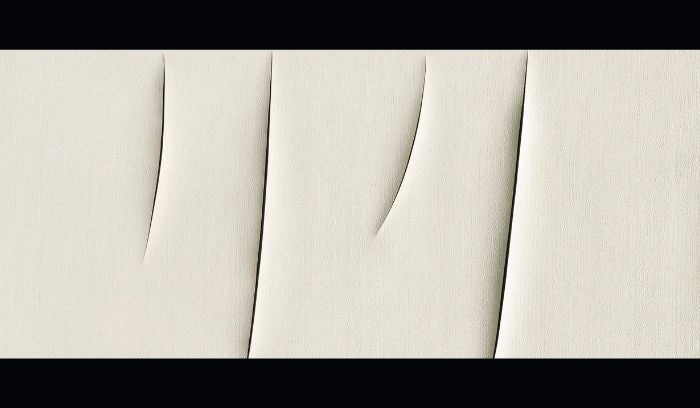
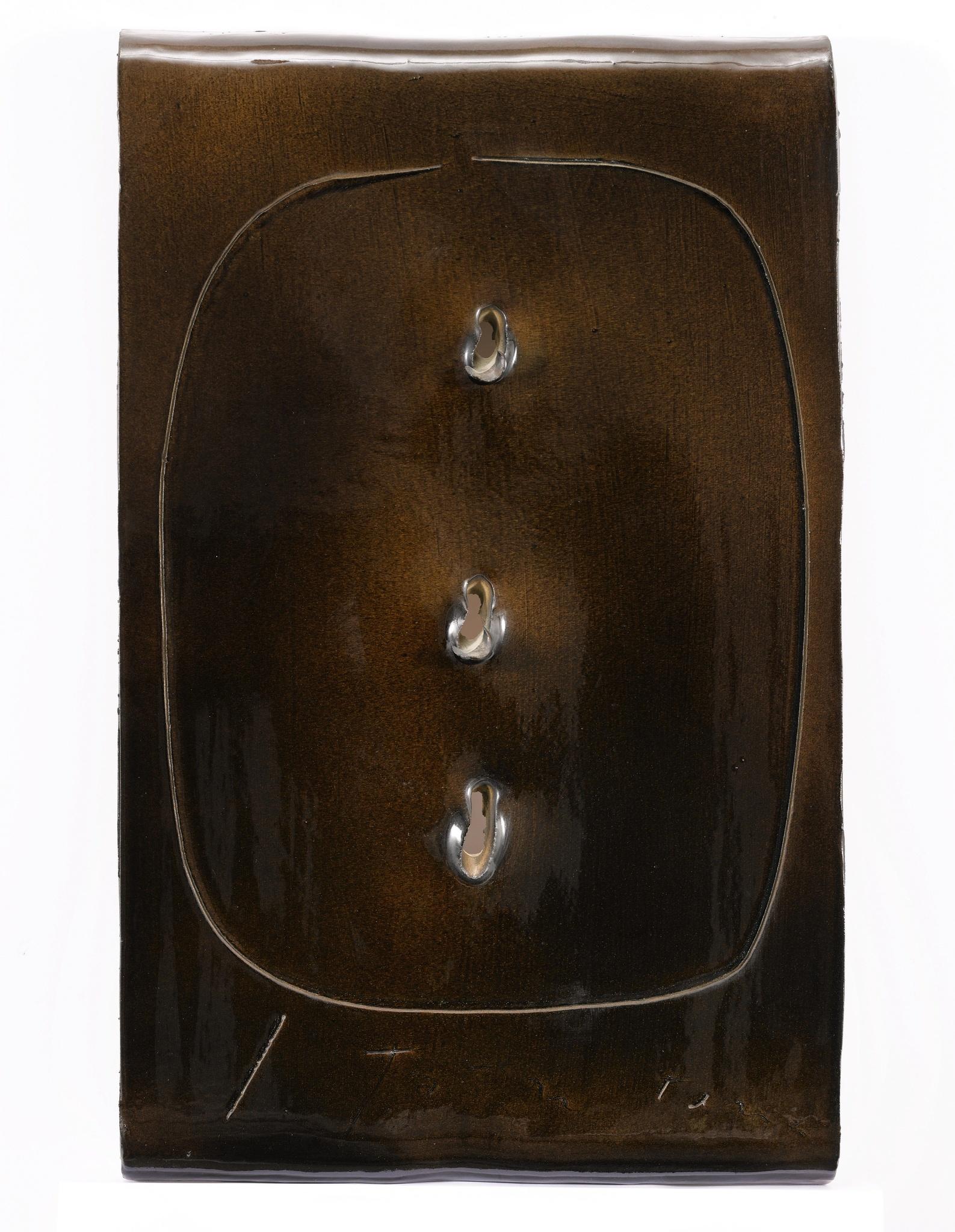
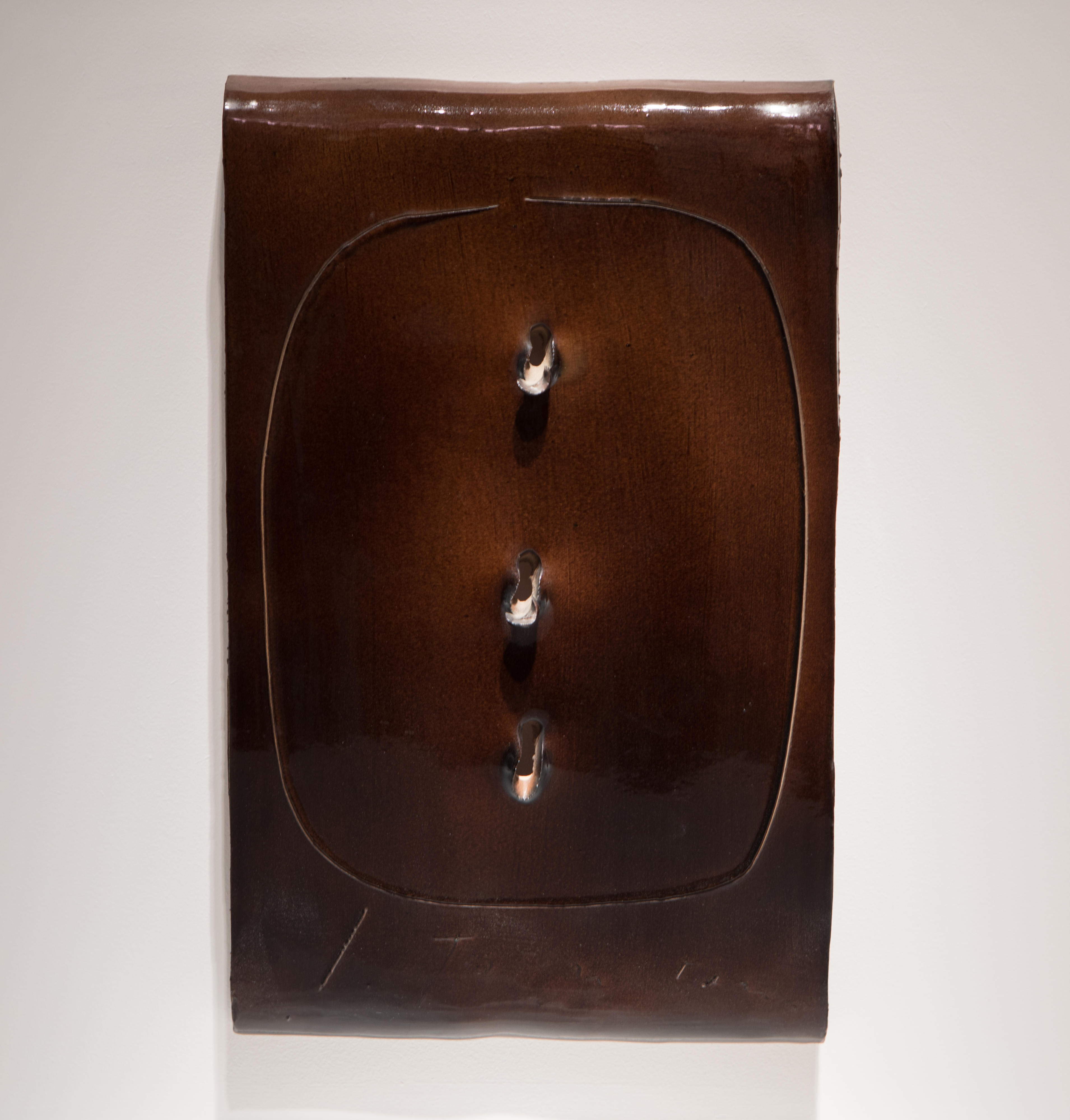
After the terrible destruction following two world wars, Fontana asked himself, “What can I now paint?” He felt a need to start again, from the beginning. On returning to Milan from Argentina in 1948, Fontana embarked on his Concetti Spaziali (spatial concepts), his signature series of monochromatic works riddled with buchi (holes) and tagli (cuts), the deep lacerations in the canvases revealing dark realms of mystery and possibility. Complementing them are series of monochrome ceramics, their surfaces slashed and punctured, are at once brutal and serene. With its lustrous surface marked by three of his signature buchi perfectly executed and enclosed within an incised oval, Concetto Spaziale (1961–62) is a beautiful example of the artist’s spatial sculptures.
Fontana’s buchi initially appeared in his works on canvas around 1948–49, and he continued to experiment with them until his death in 1968; he first translated this gestural motif into his ceramics for the first time in 1951. Created around 1961–62, Concetto Spaziale is a perfect foil for the series of works Fontana created following his first and only visit to New York. Fontana was awestruck by the Manhattan skyline, and realized that he would need to use new materials—namely sheets of metal—to capture the futuristic magnificence of the city’s skyscrapers. Scratching, piercing, and slashing sheets of copper and aluminium, he captured the dynamism and luminosity of the American metropolis. Fontana glazed the terracotta in a rich, glossy brown consonant with copper or brass, while the edges of the buchi glow with silver in a clear emulation of his contemporary work in metal.
The artwork described above is subject to changes in availability and price without prior notice. Where applicable ARR will be added.
After the terrible destruction following two world wars, Fontana asked himself, “What can I now paint?” He felt a need to start again, from the beginning. On returning to Milan from Argentina in 1948, Fontana embarked on his Concetti Spaziali (spatial concepts), his signature series of monochromatic works riddled with buchi (holes) and tagli (cuts), the deep lacerations in the canvases revealing dark realms of mystery and possibility. Complementing them are series of monochrome ceramics, their surfaces slashed and punctured, are at once brutal and serene. With its lustrous surface marked by three of his signature buchi perfectly executed and enclosed within an incised oval, Concetto Spaziale (1961–62) is a beautiful example of the artist’s spatial sculptures.
Fontana’s buchi initially appeared in his works on canvas around 1948–49, and he continued to experiment with them until his death in 1968; he first translated this gestural motif into his ceramics for the first time in 1951. Created around 1961–62, Concetto Spaziale is a perfect foil for the series of works Fontana created following his first and only visit to New York. Fontana was awestruck by the Manhattan skyline, and realized that he would need to use new materials—namely sheets of metal—to capture the futuristic magnificence of the city’s skyscrapers. Scratching, piercing, and slashing sheets of copper and aluminium, he captured the dynamism and luminosity of the American metropolis. Fontana glazed the terracotta in a rich, glossy brown consonant with copper or brass, while the edges of the buchi glow with silver in a clear emulation of his contemporary work in metal.
The artwork described above is subject to changes in availability and price without prior notice. Where applicable ARR will be added.