
Domenico Fiasella
b. 1589, Sarzana, Italy
d. 1669, Genoa
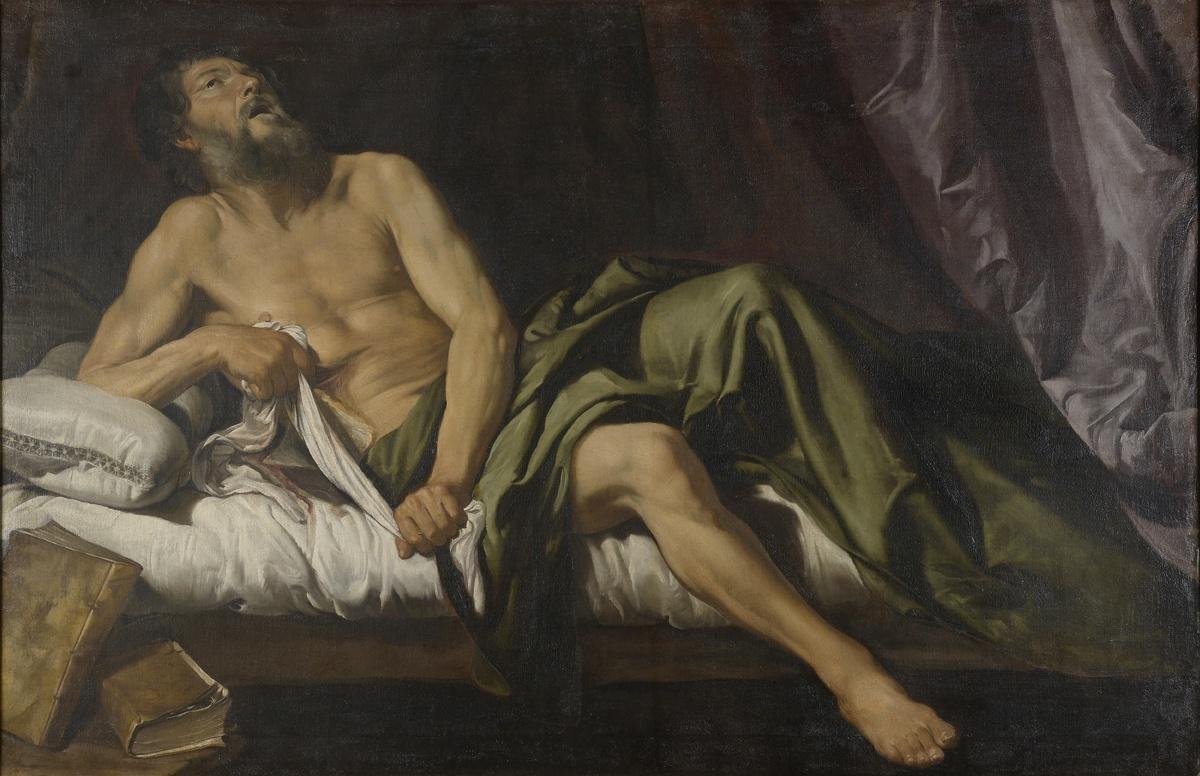
Cato
c. 1620
Oil on canvas
120 x 184 cm (47 1/4 x 72 1/2 in.)
Provenance
Collection Agapito Centurione, Genova (XVII CEntury)
by inheritance, to his son Cristoforo Centurione
Private Collection, Sestri Levante;
Marco Riccomini, Milan;
Private Collection, Milan.
Literature
A.Orlando, Artemisia a Genova (e il ruolo di Domenico Fiasella tra Roma e Genova) in Artemisia Gentileschi e il suo tempo (exh. cat.), MIlano: Skira, 2016, p. 49.
Description
Around the year 1600, from his native Sarzana, Domenico Fiasella moved to Genoa where he joined the atelier of Aurelio Lomi first and then the one of Giovan Battista Paggi. Towards the end of the first decade of the seventeenth century, thanks to the protection of the Bishop of Sarzana Giovanni Battista Salvago, he moved to Rome where he remained until 1615. The stay in the papal capital will prove decisive for the Italian painter who completed his training by studying the works realised by Bolognese painters such as Carracci, Reni and Domenichino and those made by Caravaggio and his followers Orazio and Artemisia Gentileschi. The painter was able to examine their works in the collection of Marquis Giustiniani, his patron during his Roman years.
In 1616 the artist was back in Sarzana and the following year in Genoa, where he established himself as one of the most successful painters and subsequently numerous commissions were entrusted by both public and private. The frescoes representing the Stories of Esther in the Doge's Palace Giacomo Lomellini at the Zecca are an example that can be dated 1620.
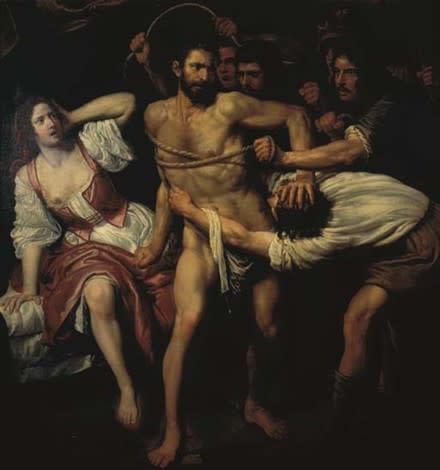
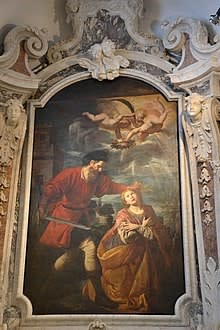
The Death of Cato can also be linked to this date. Orazio Gentileschi’s legacy is particularly evident in the naturalism of the bust of the Roman politician and in the sheets on which he is laying down. The latter element seems to be taking inspiration from a composition by Artemisia Gentileschi. Belonging to the same period are works such as Fainting Nicandro from the Cattaneo Adorno collection of Genoa and the Capture of Samson which was auctioned at Christie's in Rome on 15 June 2005 and represents one of the most remarkable discoveries of recent years (Fig. 1). This painting shares with the Death of Cato an intense naturalism and a refined elegance in the garment and in the drapery while in the Martyrdom of Santa Barbara in St. Mark's church in Molo, dated 1622 (Fig. 2), the figure of the executioner closely resembles that of the last defender of the Roman Republic.
In 1616 the artist was back in Sarzana and the following year in Genoa, where he established himself as one of the most successful painters and subsequently numerous commissions were entrusted by both public and private. The frescoes representing the Stories of Esther in the Doge's Palace Giacomo Lomellini at the Zecca are an example that can be dated 1620.
The Death of Cato can also be linked to this date. Orazio Gentileschi’s legacy is particularly evident in the naturalism of the bust of the Roman politician and in the sheets on which he is laying down. The latter element seems to be taking inspiration from a composition by Artemisia Gentileschi. Belonging to the same period are works such as Fainting Nicandro from the Cattaneo Adorno collection of Genoa and the Capture of Samson which was auctioned at Christie's in Rome on 15 June 2005 and represents one of the most remarkable discoveries of recent years (Fig. 1). This painting shares with the Death of Cato an intense naturalism and a refined elegance in the garment and in the drapery while in the Martyrdom of Santa Barbara in St. Mark's church in Molo, dated 1622 (Fig. 2), the figure of the executioner closely resembles that of the last defender of the Roman Republic.