
Gioacchino Assereto
b. 1600, Genoa, Italy
d. 1649, Genoa, Italy
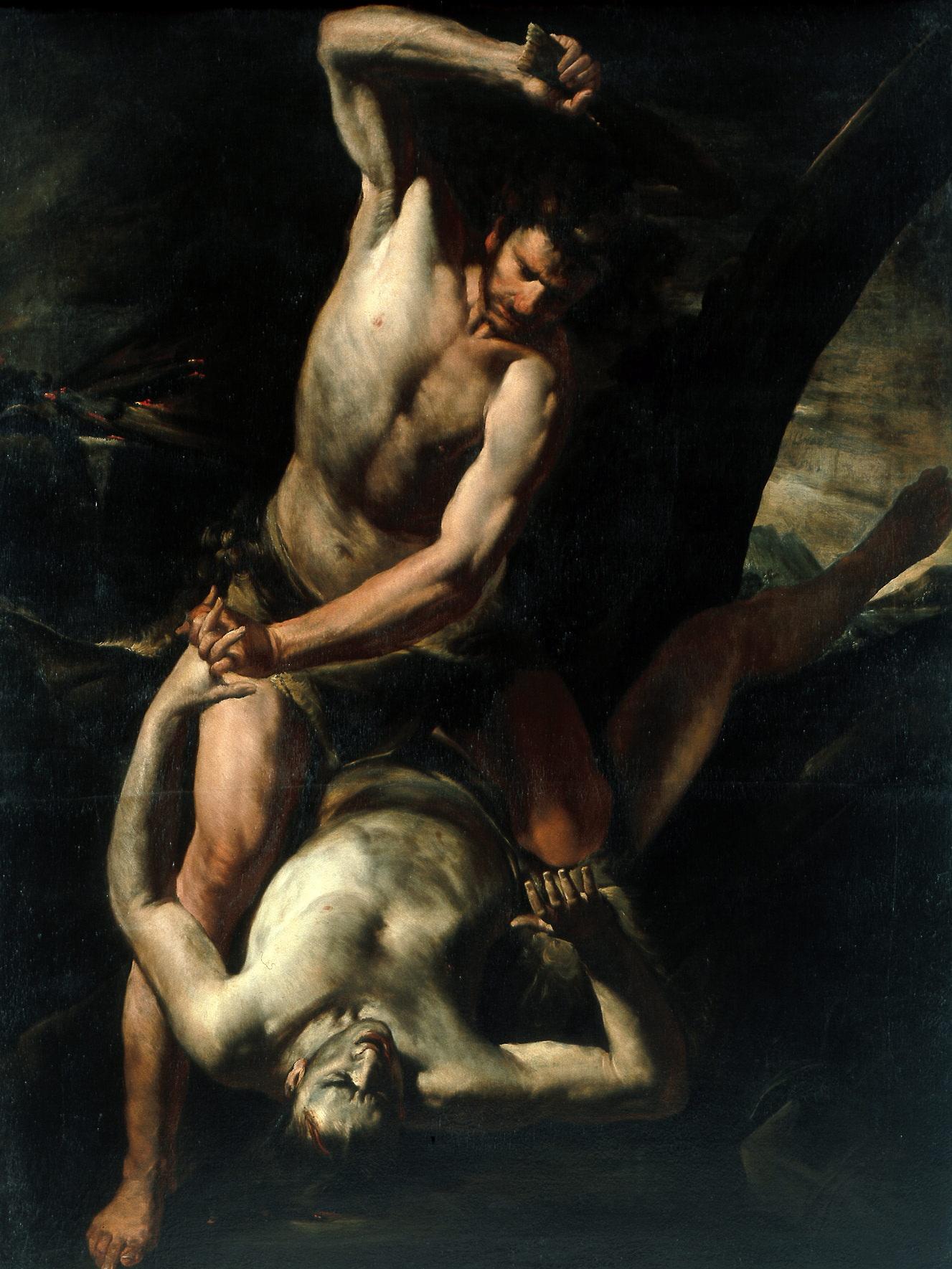
Cain Slaying Abel
c. 1640–50
Oil on canvas
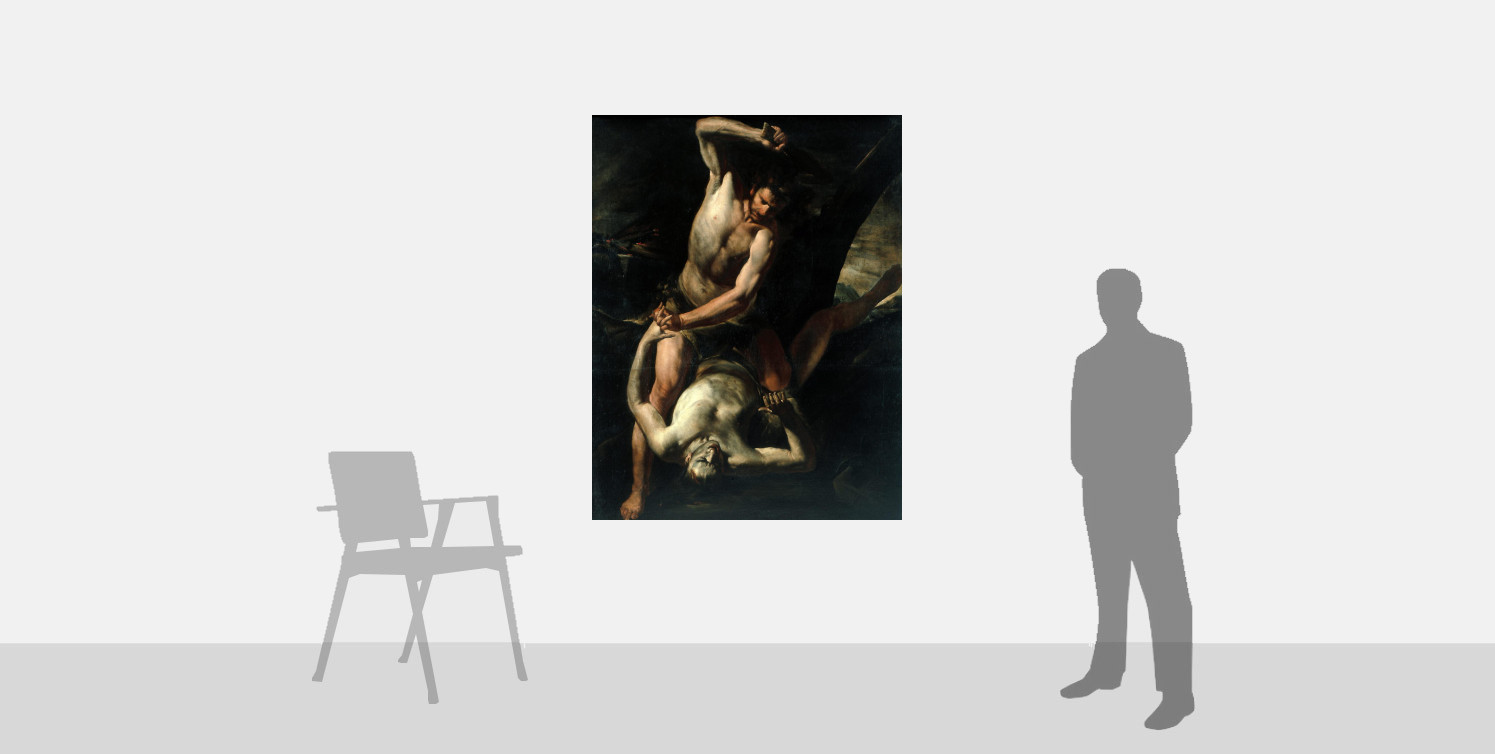
180 x 138 cm (70 7/8 x 54 3/8 in.)
With frame: 195 x 154 x 9 cm (76 3/4 x 60 5/8 x 3 1/2 in.)
Provenance
Private collection, Genoa
From 2003, Koelliker collection, Milan
Literature
A. Orlando in V. Sgarbi, ed., Il Male. Esercizi di pittura crudele, exh. cat. Palazzina di Caccia di Stupinigi, Turin, 2005, pp. 326–27, no. 65.
A. Orlando, Dipinti genovesi dal Cinquecento al Settecento. Collezione Koelliker, Turin, 2006, pp. 84–87.
T. Zennaro, Gioacchino Assereto (1600–1650) e i pittori della sua scuola, Soncino, 2011, vol. 1, p. 406, cat. A113.
Description
Imposing in scale and highly dramatic in its rendering of a vicious Old Testament narrative, Gioacchino Assereto’s Cain Slaying Abel dates from the 1640s, the apex of the artist’s career. A preeminent protagonist of the Genoese Baroque, Assereto rendered his subjects with powerful realism and intensity, favouring the revolutionary chiaroscuro effects embraced by many painters of the era, and combining it with a distinctive silvery colouring found especially throughout his flesh tones. The dynamic composition of the present canvas is enriched by the expressive brushwork that was a hallmark of the last decade of the artist’s career, alongside the canvas’s reduced palette and darker tonalities. Such characteristics demonstrate Assereto’s keen awareness of his fellow Lombard painters, especially Cerano, Morazzone, and Giulio Cesare Procaccini, who often worked for Genoese patrons, as well as his first-hand knowledge of Roman Caravaggism, following his sojourn in Rome in 1639.
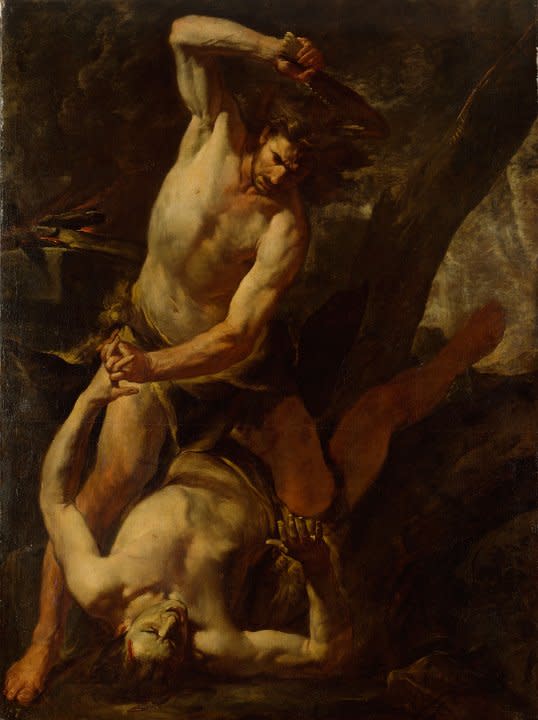
Cain Slaying Abel was first published in 2005 by Anna Orlando, and it joins the signed version in the Herzog Anton Ulrich Museum in Braunschweig which Orlando also dates to the 1640s (fig. 1). The subject is taken from the Book of Genesis 4: 1–18. Cain and Abel were the sons of Adam and Eve. Cain, a farmer, and Abel, a shepherd, offered sacrifices to God. Abel offered '...the firstlings of his flock, and of their fat: and the Lord had respect to Abel, and to his offerings. But to Cain and his offerings he had no respect...'. Enraged by God’s rejection and by jealousy of his brother, Cain murdered Abel, striking him with an animal’s jawbone, and was then banished by God to a life of wandering. In Assereto’s painting, Cain towers over the prostrate Abel, ready to strike a fatal blow, while the sacrificial altar smoulders at the left of the composition.
This violent subject surged in popularity during the first part of the seventeenth century. Though Caravaggio himself never painted the narrative, many of his followers took up the theme, which proffered an ideal opportunity to deploy the bold lighting effects and dramatic foreshortenings that many of them preferred. The present painting seems likely inspired in particular by renditions of the subject by Assereto’s Lombard predecessors, including Daniele Crespi, Giulio Cesare Procaccini, and Giuseppe Vermiglio. At the same time, Assereto’s rendering of the pair of nearly nude male figures inextricably locked in a death grip recalls the assertion of the artist’s early biographer Raffaele Soprani that the young painter, having attended the drawing academy that met in the home of Giovanni Carlo Doria, became accustomed to having his models pose in 'natural positions and in the nude'. Striking in Assereto’s conception are the brothers’ clasped hands. Gesture was perhaps the most potent expressive tools in the painter’s vocabulary, and here the hands seem to join the narrative’s protagonists in a fatal, eternal, and universal struggle between good and evil, the dialogue at the very heart of the Judeo-Christian verse.
The present sheet is accompanied by an expertise written by Anna Orlando.
Fig. 1. Gioacchino Assereto, Cain and Abel, c. 1640–50, oil on canvas, Herzog Anton Ulrich Museum, Braunschweig.
The artwork described above is subject to changes in availability and price without prior notice.
Where applicable ARR will be added.