
Mat Collishaw
b. 1966, Nottingham, United Kingdom
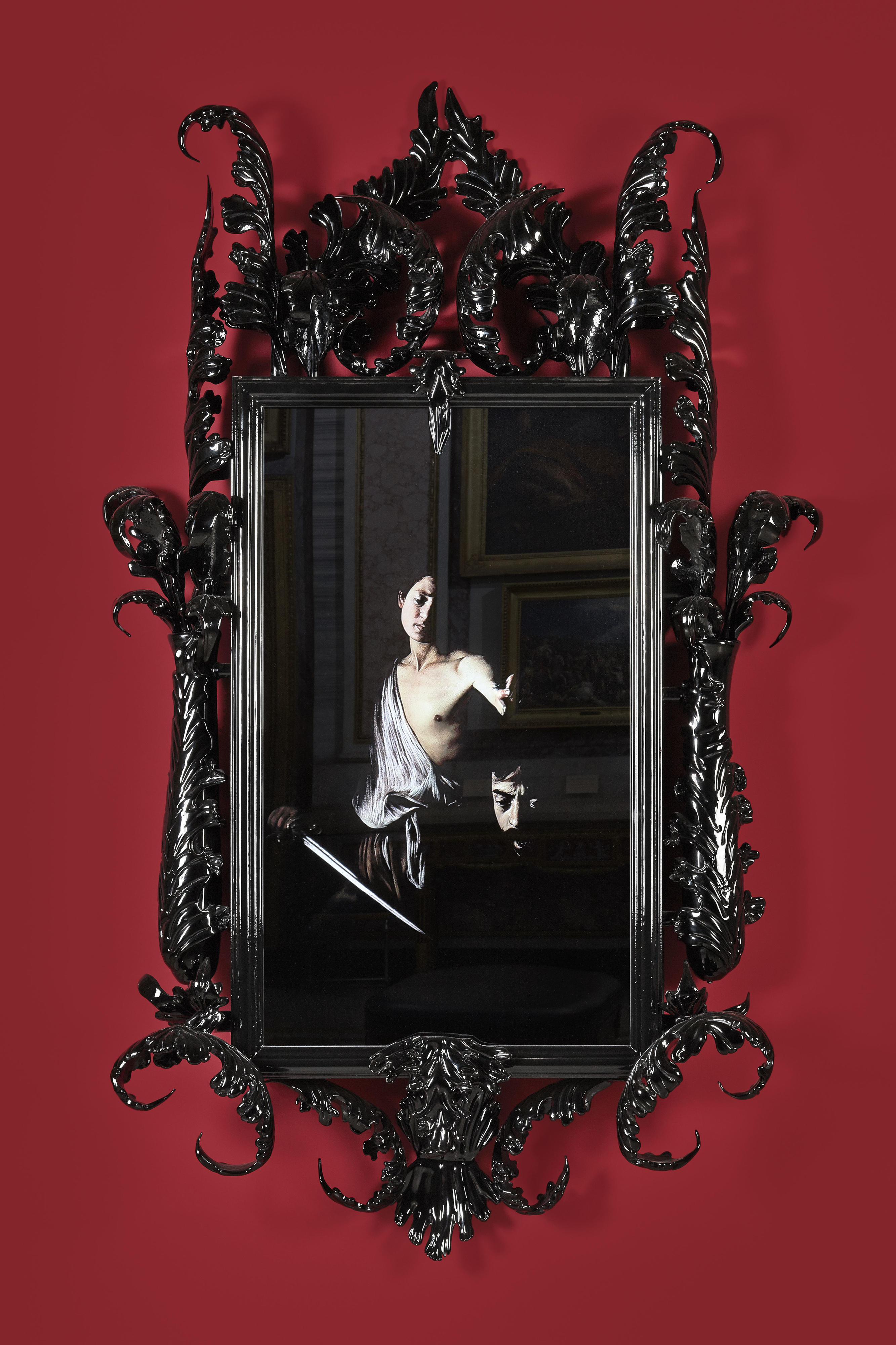
Black Mirror, Hydrus
2014
Mixed media: black Murano Glass, surveillance mirror, steel, wood, lacquer, ultra-HD screen, and hard drive.
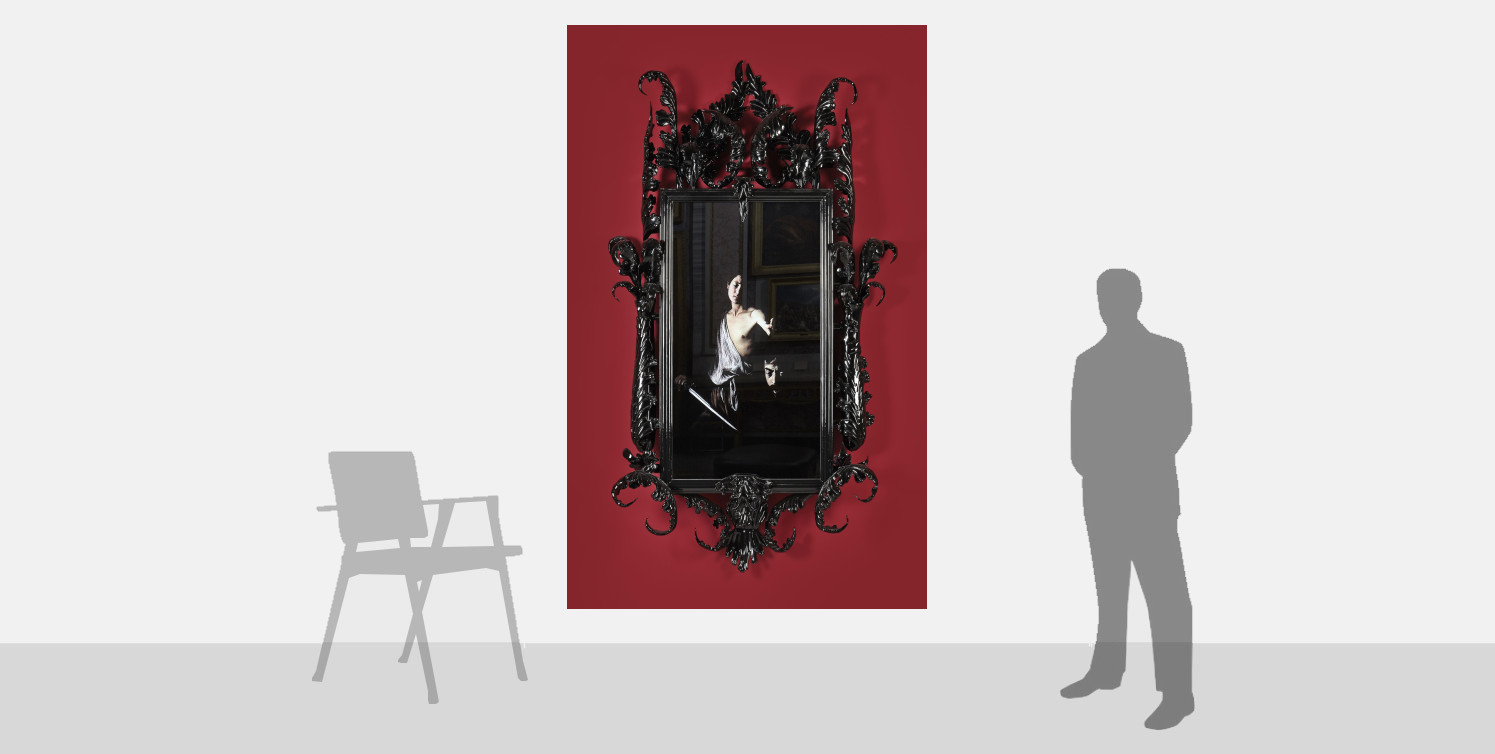
260 x 160 x 40 cm (102 3/8 x 63 x 15 3/4 in.)
Edition 1 of 2 + 1 AP
Provenance
The artist;
Private collection.Literature
Marco Constantini, Mirror Mirror, exh. cat. MUDAC/Musée de design et d’arts appliqués contemporains, Lausanne, p.98–99, another edition of the present work, illustrated in colour
Anna Coliva, Valentina Ciarallo, and Andrew Graham-Dixon, Black Mirror, exh. cat. Villa Borghese, Rome, 2015, illustrated in colour.
Description
An important member of the Young British Artists, Mat Collishaw creates work that confronts issues of moral ambiguity with formally stunning and alluring imagery. Coupling references to art history, literature and the Victorian era with modern imaging technology, the Collishaw creates powerful images and objects that often re-contextualize the impact of traditionally disturbing and sinister subject matter. At once poetic and morbid, his sculptures, installations, and photo-based works expose elements of beauty within the darkest fantasies, blurring the lines between seduction and repulsion, observation and exploitation, reality and artifice.
Collishaw sought in his Black Mirror series to create striking and powerful contemporary dialogues with the paintings of the revolutionary Italian Baroque master Caravaggio (1571–1610), known for using live models, creating dramatic effects through the contrast of dark with light, and giving potent form to often gut-wrenching, subjects and narratives. Collishaw has drawn inspiration by Caravaggio throughout his artistic career and is convinced of the Baroque painter’s enduring relevance. He has explained that “[he] wanted to go back to the moment when Caravaggio was immortalizing the humble models in front of him—turning them from living, breathing human beings into icons of Western painting.” Moreover, Collishaw found that adopting and adapting Caravaggio’s dark backgrounds and single light sources were especially conducive to achieving his desired effect.
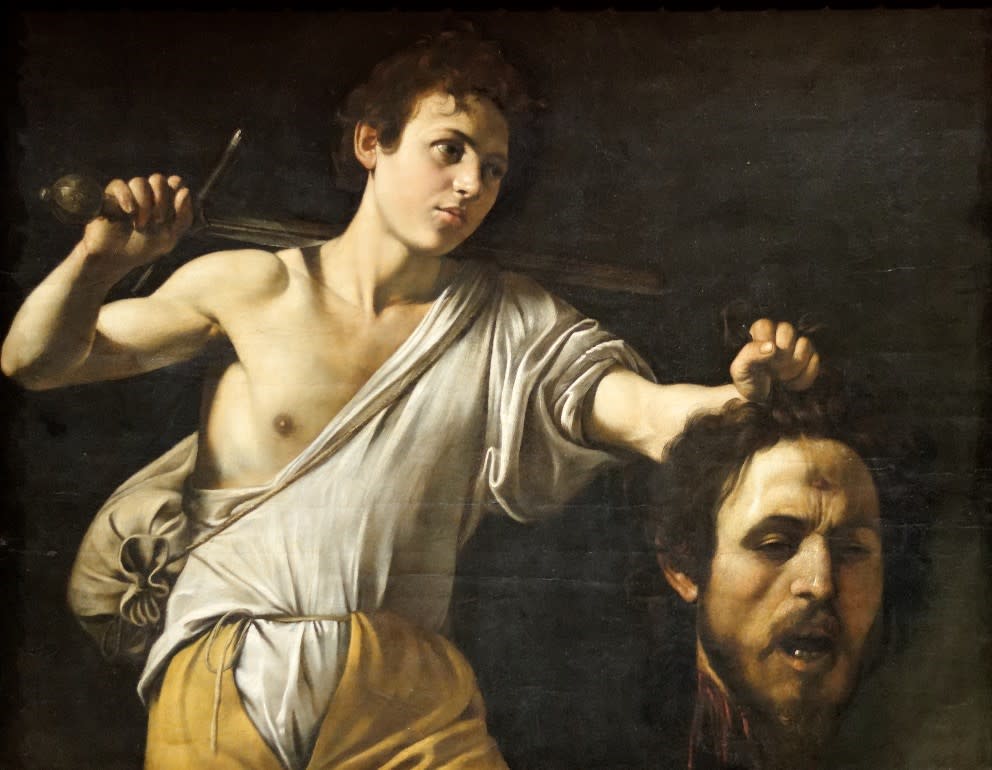
The works in the Black Mirror series consist of ornate black Murano-glass picture frames encasing black two-way mirrors, which reflect the viewer and their surroundings. Between the mirrors Collishaw has created a purgatorial space in which the figures in the paintings move like apparitions. In the present work, entitled Hydrus, Collishaw was inspired by Caravaggio’s painting of David with the Head of Goliath (Fig. 1). According to Collishaw, “appearing from behind the mirror is this shimmering image of a man or a woman holding a slightly jittery pose, a chimerical spirit-presence coming back to haunt you through the mirror.”
Collishaw explains that Caravaggio is “one of those artists you don’t need to read about and study because, as a painter, he’s so visceral: he just hits you right there,” he explains. “When Caravaggio was painting, the common people weren’t going to church looking for lessons in aesthetics and art history. They just wanted a relationship with God. And Caravaggio gave it to them in a language they could understand. He’s so brutally real. He doesn’t embellish or decorate things, but gives you life as it is—with dirty feet right in your face.”
Collishaw’s works are at once reflections of the instinctual human attraction to images of mortality or death and studies in manipulating the viewer’s experience. Like Caravaggio, Collishaw achieves dramatic engagement with the viewer in his art, but Collishaw has taken advantage of the emotive opportunities presented by modern technology.
Please note that the availability and price of the above work are subject to change without prior notice. Where applicable ARR will be added.