



Artemisia Gentileschi
b. 1593, Rome
d. 1654, Naples
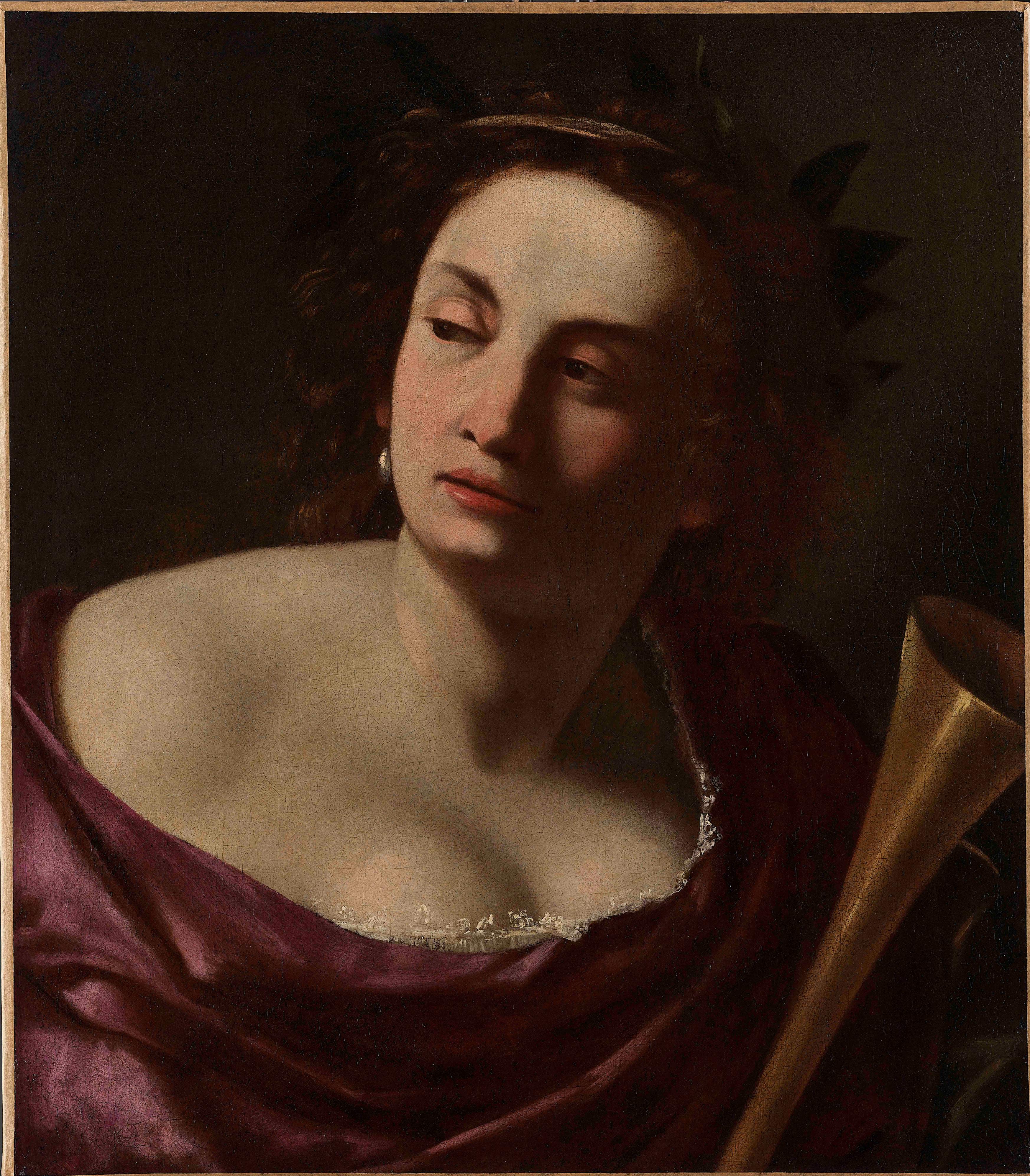
Allegory of Fame
Oil on canvas
57 x 51 cm / 22.4 x 20.1 in
Provenance
Milan, Koelliker collection.
Literature
G. Papi, “Artemisia Gentileschi and the Authority of
Art” di Roger Ward Bissel, in “The Burlington Magazine” 2000, pp. 450-453;
F.
Moro, in La donna nella pittura italiana del Sei e Settecento, catalogue of the exhibition, Turin 2003, pp.
192-193; G. Papi, La Schola del Caravaggio. Dipinti dalla Collezione
Koelliker, catalogue of the exhibition, Milan, 2006 pp. 128-129;
R. Contini in Artemisia Gentileschi, catalogue of the
exhibition ed. by R. Contini - F. Solinas, Milan 2011- Paris 2012,
respectively, pp. 200-201, 150-151.
Description
The present painting represents an Allegory of Fame, whose allegorical attribute in the present painting is the shining musical instrument; the trumpet. The work was previously described by Gianni Papi in an article published in 2000, as well as being studied extensively by the scholar Roberto Contini at a number of more recent exhibitions in both Milan and Paris. As Contini revealed, the painting was part of a series of heroines, Saints and allegorical figures, portrayed in both half and full-length and which regularly featured in works by Artemisia Gentileschi works from 1620.
The chronology of Artemisia's production is still a problematic issue, but a number of comparisons seem to confirm Contini's suggestions, stating that the present work can be chronologically dated to the beginning of her Neapolitan period; around 1630-35. Nicola Spinosa however, who recently analysed the painting, suggested an earlier date, possibly the 1620s, after taking into consideration the most obvious Capitoline influence. The impression left by her relationship with Simon Vouet, with whom she had a deep professional cooperation, is evident in that Vouet's work permeates her painting and vice versa, especially in their similar approach to Caravagessque illumination.
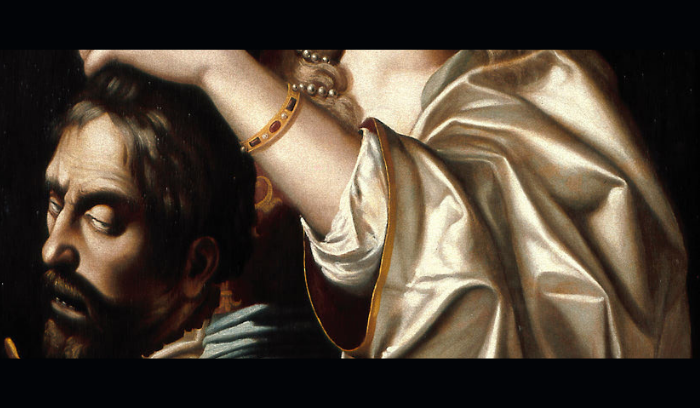
The present work can be compared to other works by Artemisia such as Magdalen in Scuderie del Quirinale, Rome (fig 1) or Herodias at the National Gallery of Palazzo Corsini (fig.2). Amongst the artist’s production Allegory of Fame can be more closely compared to works such as Magdalene in a private collection in Los Angeles or Delilah and Samson from the Banco di Napoli Collections (today Intesa San Paolo, fig 3).
Another work that seems reasonably similar to our Allegory of Fame is The Allegory of Painting from the Kensington Palace collection, (fig. 4) probably painted between 1638 and 1639, during Artemisia’s journey to London. There are similarities in the drapery, the triune lace emerging from the undergarment and the woman’s appearance with a half-opened mouth and a straight, perfect nose.
The chronology of Artemisia's production is still a problematic issue, but a number of comparisons seem to confirm Contini's suggestions, stating that the present work can be chronologically dated to the beginning of her Neapolitan period; around 1630-35. Nicola Spinosa however, who recently analysed the painting, suggested an earlier date, possibly the 1620s, after taking into consideration the most obvious Capitoline influence. The impression left by her relationship with Simon Vouet, with whom she had a deep professional cooperation, is evident in that Vouet's work permeates her painting and vice versa, especially in their similar approach to Caravagessque illumination.
The present work can be compared to other works by Artemisia such as Magdalen in Scuderie del Quirinale, Rome (fig 1) or Herodias at the National Gallery of Palazzo Corsini (fig.2). Amongst the artist’s production Allegory of Fame can be more closely compared to works such as Magdalene in a private collection in Los Angeles or Delilah and Samson from the Banco di Napoli Collections (today Intesa San Paolo, fig 3).
Another work that seems reasonably similar to our Allegory of Fame is The Allegory of Painting from the Kensington Palace collection, (fig. 4) probably painted between 1638 and 1639, during Artemisia’s journey to London. There are similarities in the drapery, the triune lace emerging from the undergarment and the woman’s appearance with a half-opened mouth and a straight, perfect nose.